2026 Best Water Label Machine for Bottled Water?

Choosing the 2026 Best Water Label Machine for Bottled Water depends on more than headline speed. A line labeling clear PET bottles at high volume has different needs from a small plant handling several bottle sizes. The right Water Label Machine should apply labels straight, repeatably, and with minimal interruption. Small errors show quickly on a clear bottle.

This guide compares practical features that affect daily production: container range, label materials, adjustment time, operator controls, and available maintenance support. It also considers how well a machine handles changes in bottle shape and production speed. Ask suppliers for verified performance data, then test representative bottles and labels where possible. Water droplets and condensation can affect label placement or adhesion, so real production conditions matter. A neat sample in a showroom is not enough.

There is no perfect pick. That matters. A fast machine may be difficult to adjust, while a flexible model may need more floor space or operator attention. This overview helps buyers match equipment to their actual line, rather than choosing by speed claims alone. Compare the manufacturer’s stated limits with your bottle dimensions, label specifications, and expected output. Confirm how changeovers work and what routine cleaning requires. Some details are easy to overlook. A careful trial can reveal them before installation, though it cannot predict every production issue. Use the comparison as a starting point, and verify critical claims directly with the supplier.
2026 Best Water Label Machine for Bottled Water?

How Bottled Water Labeling Machines Work

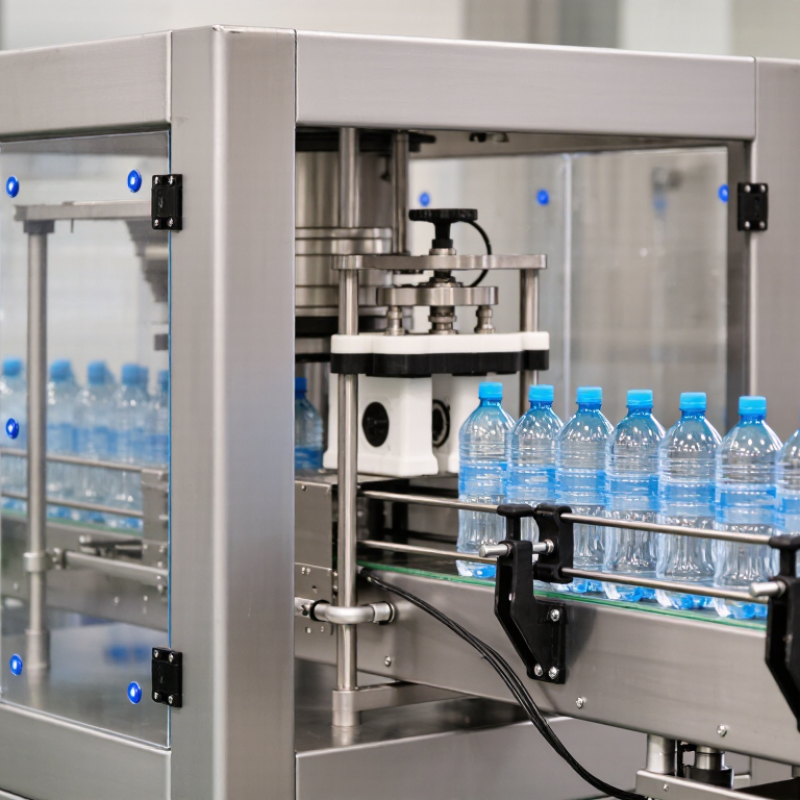
A bottled-water labeler turns a moving stream of containers into consistently marked products. A conveyor guides each bottle toward a timing screw or starwheel, which spaces containers before application. A photoelectric sensor detects bottle position and triggers the label feed. Timing matters.

With pressure-sensitive labels, rollers peel each label from its backing and press it onto the bottle. Wrap belts or rotating rollers smooth the label around the curved surface. Cold-glue systems apply adhesive before placing the label; sleeve systems feed film over the container, then use heat to shrink it into place. The machine type depends on the bottle shape, label material, line speed, and changeover needs.

IBWA’s 2024 industry statistics, based on Beverage Marketing Corporation research, put U.S. bottled-water consumption at 16.4 billion gallons in 2023. That scale makes reliable spacing and repeatable application important on high-volume lines. Operators still need to check roll tension, label position, and seams during production. A sensor can reject bottles with missing or misaligned labels, but it cannot correct every setup issue. Small errors show. A slightly skewed label may pass inspection, especially on a clear bottle. Test runs with actual bottles and labels can reveal problems that machine settings alone miss.

Labeling Technologies for Different Bottle Shapes

For 2026, the best water label machine is the one matched to the bottle, not simply the fastest model. Grand View Research valued the global bottled-water market at USD 303.9 billion in 2024 and projected 6.7% annual growth through 2030. That scale makes reliable changeovers important. Shape changes everything.

Cylindrical bottles suit wraparound systems: pressure-sensitive labels offer flexible design changes, while roll-fed film can support high-volume runs. Square bottles need careful label placement around flat panels and corners; otherwise, edges may lift or labels may wrinkle. Contoured bottles often call for shrink sleeves, which conform closely to curves and shoulders. They also require heat-shrink equipment, so the line needs more space and process control. Small details matter.

Water lines bring another complication: condensation. Labels applied to cold, wet bottles may slip or lose adhesion, so operators should test the actual bottle, adhesive, and line speed together. For mixed shapes, quick-adjust guides and repeatable sensor settings can save changeover time. Yet extra automation is not always the answer. A simpler machine may be easier to clean and maintain, while still meeting a plant’s real output needs. Test before choosing.

2026 Best Water Label Machine for Bottled Water? - Labeling Technologies for Different Bottle Shapes

Bottle Shape Suitable Labeling Technology Typical Label Coverage Key Advantages Points to Consider Best-Fit Production Needs
Round cylindrical bottle Pressure-sensitive wraparound labeling Partial wrap or full wrap Flexible label design; no steam tunnel or hot-melt adhesive required; well suited to changing label artwork. Accurate bottle spacing and orientation help prevent skewing, wrinkles, or inconsistent overlap. Small to high-volume lines that need straightforward product or label changeovers.
Round bottle for high-volume production Roll-fed wraparound labeling with hot-melt adhesive Full wrap Uses labels supplied on a roll and can support high-speed continuous production; label material can be economical in large runs. Requires adhesive application and careful setup; economical performance depends on production volume and label design. Large, steady production runs of consistently shaped bottles.
Square or rectangular bottle Front-and-back pressure-sensitive labeling One label on each of two faces, or a combined front-and-back label Displays information on broad, flat panels and can accommodate distinct front and back designs. Bottle orientation and panel positioning are important; labels may wrinkle if they extend across sharp corners. Lines packaging water in bottles with flat labeling panels.
Oval or flattened bottle Front-and-back pressure-sensitive labeling with bottle alignment One or two labels on the flatter sides Provides readable label placement on shaped bottles without covering the entire container. May need bottle guides or orientation control to keep labels centered on the intended panels. Flexible runs with distinctive bottle shapes and moderate label coverage.
Contoured, waisted, or uniquely shaped bottle Shrink-sleeve labeling Partial or full-body coverage Conforms to curved surfaces and can cover areas that are difficult to label with flat pressure-sensitive labels. Requires sleeve application and a heat-shrink process; heat settings and bottle material compatibility must be validated. Products needing extensive graphics or coverage across complex contours.
Rigid cylindrical bottle in a very large, consistent run Cut-and-stack labeling Partial wraparound Can be suited to high-volume production using pre-cut labels and adhesive applied during the labeling process. Requires label handling and adhesive control; less convenient when label designs change frequently. Long production runs with stable bottle and label specifications.
Mixed shapes or frequent product changeovers Configurable pressure-sensitive labeling system Depends on label station and bottle format Can accommodate multiple bottle formats when guides, tooling, and label recipes are designed for the range. Confirm the machine’s format range, adjustment method, and changeover time with the supplier using actual bottles. Facilities producing several water bottle sizes or shapes on shared equipment.

Selection note: Actual throughput, label accuracy, and changeover time depend on bottle dimensions, label material, adhesive, line layout, and machine configuration. Validate any proposed system with production samples and the required line speed.

Key Factors in Choosing a Water Labeling Machine in 2026

2026 Best Water Label Machine for Bottled Water?

Key Factors in Choosing a Water Labeling Machine in 2026

Choosing a water labeling machine starts with the bottle, not the catalog. Round PET bottles, square containers, and glass bottles can behave differently on a moving conveyor. Test labels on filled bottles under realistic line conditions. A short run can reveal wrinkles, slipping, or crooked seams. Small flaws matter.

Match the machine’s working speed to your actual production rate, not just its advertised maximum. Check how it handles brief stops and restarts. If bottle sizes change often, ask how quickly operators can adjust guides and replace label rolls. Look closely at sensor and roller access. Cleaning should not require awkward reaching.

Label stock and adhesive deserve as much attention as the machine itself. Test the exact label on the exact bottle, including in cold conditions where condensation may affect adhesion. Confirm the supported label width, roll size, and placement direction, then check compatibility with nearby filling and coding equipment. Ask about fault alerts and rejected bottles. Speed is tempting to prioritize, but a specification sheet alone is not proof. Verify performance with a practical trial, and consider whether replacement parts and maintenance support will be available when the line is waiting.

Comparing Machine Types by Speed, Accuracy, and Production Scale

For bottled water, the right label machine depends on container shape, target speed, and the space available on the production line. A wraparound pressure-sensitive system suits many cylindrical bottles and can handle quick product changes. Front-and-back applicators work better when labels must sit on two flat panels. Sleeve systems cover more of the bottle, but usually need extra equipment and process control.

Speed figures need context. A machine’s rated bottles per minute may not match a line handling wet bottles, frequent stops, or several container sizes. Ask suppliers to test your actual bottle and label materials at the intended line speed. Watch the labels as bottles pass the applicator: wrinkles, skew, or lifted edges can reveal problems that a headline speed hides. Small details matter.

Accuracy depends on stable bottle spacing, reliable sensors, and consistent label placement. A simple machine may be easier to maintain at modest output, while a high-speed line often needs automatic feeding and precise synchronization. Changeovers deserve attention, too; they can consume more time than expected. Not every plant needs maximum speed. A slower, well-matched machine can reduce rejected bottles, though setup may still feel fiddly. Request measured placement tolerances and changeover times before comparing quotes.

Installation, Operation, and Labeling Quality Control

2026 Best Water Label Machine for Bottled Water?

Installation, Operation, and Labeling Quality Control

A water label machine performs best when its frame sits level and stable. Before installation, check the conveyor height and confirm bottles move without wobbling. Align the infeed guide, label roll, and applicator with the bottle path. Keep the sensor area clean and free from glare. Small shifts matter.

During operation, begin at a moderate conveyor speed and test several bottles. Watch how each container passes the sensor and how the label meets its surface. Check for wrinkles, tilted placement, or loose edges. If labels drift, pause and adjust one setting at a time. Don’t rush this. Changing speed, tension, and sensor position together makes the cause harder to identify.

Labeling quality control should include regular checks, not just a quick look at startup. Inspect bottles from the beginning, middle, and end of a run, especially after changing a roll. Record speed, tension, and any adjustments so operators can repeat a stable setup. A simple visual check may miss weak adhesion, so gently press label edges and look for lifting. No setup stays perfect. Dust, condensation, or bottle variation can still affect results, and those conditions deserve another check.

Subscribe To Our Newsletter

Join our mailing list to receive the latest news and updates from our team.

You have Successfully Subscribed!