
2026 Best Wood Cutting Chain Saw for Global Buyers
Choosing the right Wood Cutting Chain Saw in 2026 requires more than comparing engine power or retail price. Global buyers need equipment that performs reliably across forests, farms, workshops, and changing weather conditions. A saw that feels powerful on a product page may struggle with wet hardwood, uneven logs, or long working sessions.
This guide examines practical factors that affect real purchasing decisions. These include cutting capacity, chain speed, motor or engine performance, vibration control, weight, maintenance access, and replacement-part availability. We also consider regional power standards, shipping conditions, warranty support, and supplier communication. These details matter when equipment must travel across borders and serve different working environments.
Experience often reveals what specifications hide. A balanced saw can feel safer and less tiring during repeated cuts. A sharp, correctly tensioned chain can matter more than impressive headline power. However, no single model suits every buyer. That point is easy to overlook. Fuel-based and battery-powered designs also involve different operating costs, noise levels, service needs, and environmental considerations. Buyers should verify local requirements and follow the manufacturer’s instructions before use.
The following overview is designed for importers, distributors, professional users, and informed retailers. It focuses on measurable performance, practical durability, and dependable supplier evidence rather than exaggerated claims. Product testing information may vary between brands. Some published figures deserve careful checking. A strong purchase decision combines specifications, hands-on evaluation, safety features, after-sales support, and the actual demands of the worksite. That approach helps global buyers select a Wood Cutting Chain Saw with greater confidence in 2026.
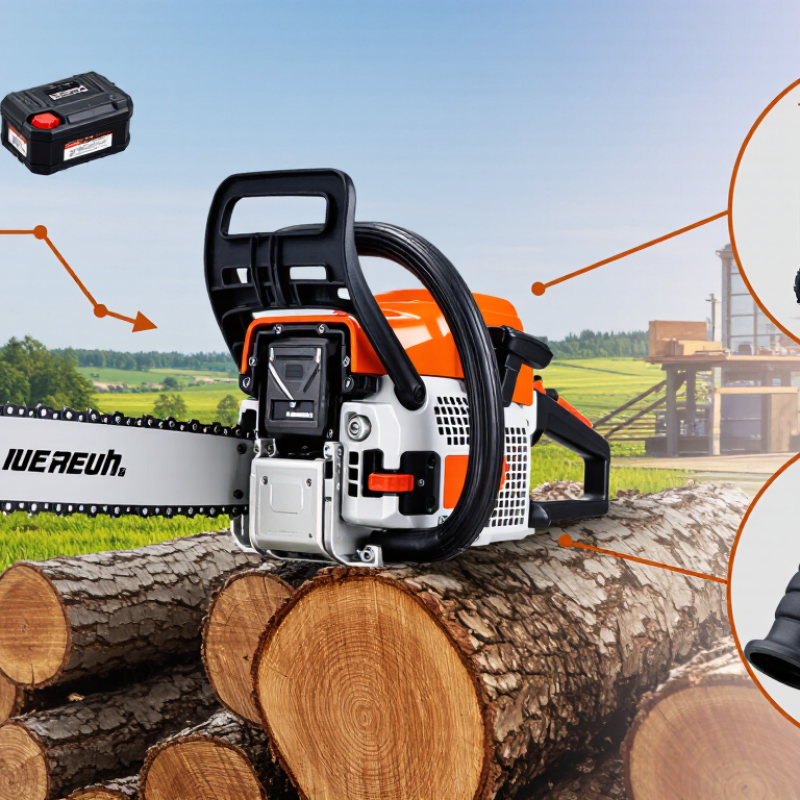
What Makes a Wood-Cutting Chainsaw Effective in 2026
An effective wood-cutting chainsaw in 2026 starts with controlled cutting, not maximum power. For firewood and medium logs, a balanced motor reduces fatigue and improves accuracy. A suitable bar length should match the wood diameter, with extra length avoided. Oversized bars often make handling harder.
Chain pitch, gauge, and sharpness strongly affect cutting speed. A sharp, properly tensioned chain should produce clean chips, not fine dust. Automatic oiling helps maintain smooth movement during repeated cuts. Reliable chain braking, a visible oil window, and comfortable anti-vibration handles also matter. These details may seem ordinary. They decide daily usability.
Battery-powered models can offer quiet operation and simpler starting, but cold weather may reduce runtime. Corded models suit fixed work areas, while fuel-powered machines can support longer sessions with careful maintenance. However, greater power does not remove kickback risks. A secure grip, protective equipment, and clear operating instructions remain essential. I would also inspect spare-chain availability before purchasing internationally. A good saw becomes less useful when compatible parts are difficult to find. Even experienced users sometimes overlook this practical weakness. Regular cleaning, bar inspection, and chain sharpening usually influence results more than advertised power figures.
2026 Best Wood Cutting Chain Saw for Global Buyers - What Makes a Wood-Cutting Chainsaw Effective in 2026
| Power Category | Recommended Wood-Cutting Use | Typical Technical Range | What Makes It Effective | Important Buyer Considerations | Best Fit |
|---|---|---|---|---|---|
| Compact Battery Lightweight saw | Pruning, small branches, light firewood and occasional garden work. | Guide bar: 25–35 cm (10–14 in) Chain pitch: commonly 1/4 in or 3/8 in low-profile Tool weight: approximately 2.5–4.5 kg | Low vibration, simple starting, quiet operation and easy handling in confined spaces. | Check battery availability, charging time, replacement battery cost and protection against moisture and dust. | Homeowners and occasional users |
| Mid-Size Battery General-purpose saw | Firewood cutting, storm cleanup, small-to-medium trees and regular property maintenance. | Guide bar: 35–45 cm (14–18 in) Battery system: commonly 36–60 V class Tool weight: approximately 4.5–7 kg | Instant electric start, consistent torque, reduced routine maintenance and no direct exhaust emissions during operation. | Compare usable cutting time under load rather than no-load runtime. A spare battery is useful for extended work. | Residential users and light professional work |
| Electric Corded Continuous-power saw | Repeated cutting near a suitable outdoor power supply, including logs and prepared lumber. | Motor output: commonly 1.5–2.5 kW Guide bar: 35–45 cm (14–18 in) Power supply: regional mains voltage | Continuous operation without battery replacement, steady power and relatively low routine servicing. | Extension-cord size, outdoor electrical protection, cable management and local voltage compatibility are essential. | Workshops, farms and fixed work areas |
| Light Petrol Portable saw | Firewood, land maintenance, medium branches and occasional tree felling where portability is important. | Engine displacement: approximately 30–45 cm³ Guide bar: 30–40 cm (12–16 in) Fuel tank: typically 0.25–0.45 L | High portability, quick refuelling and reliable use away from electrical infrastructure. | Consider fuel quality, cold-start performance, noise, exhaust emissions, servicing access and spare-part supply. | Rural property owners and mobile users |
| Professional Petrol High-output saw | Frequent firewood production, large-diameter logs, storm recovery and demanding forestry work. | Engine displacement: approximately 45–70 cm³ Guide bar: 40–60 cm (16–24 in) Power-to-weight ratio: a key selection factor | Strong cutting performance, rapid chain speed, durable construction and effective cooling during long work cycles. | Training, protective equipment, operator fatigue, vibration exposure, fuel handling and scheduled maintenance must be planned. | Trained professional operators |
| Large-Diameter Heavy-duty saw | Large logs, hardwood processing and specialized felling applications requiring a long guide bar. | Engine displacement: commonly above 60 cm³ Guide bar: 50–75 cm (20–30 in), application dependent Higher total operating weight | High torque, long-bar compatibility, robust clutch and cooling systems, and durable power transmission. | A longer bar increases weight and kickback exposure. Match bar length to wood diameter and operator capability. | Specialized forestry and sawmill preparation |
| Pole Saw Elevated cutting tool | Removing overhead branches without using a chainsaw at ground level. | Cutting head: commonly 20–30 cm (8–12 in) Reach: approximately 2.5–4 m, depending on configuration Lower cutting capacity than standard saws | Improved reach, compact cutting head and reduced need for ladders when used from a stable position. | Control, balance, overhead hazards and falling-branch direction are critical. It is not a substitute for tree-climbing equipment. | Tree and landscape maintenance |
| Safety and Control Required features | Relevant to every power category and especially important for inexperienced or occasional operators. | Chain brake, hand guard, throttle lockout, chain catcher, secure handles and effective anti-vibration design. | These features help reduce injury risk and improve control during kickback, slips and unexpected chain movement. | Confirm compliance with applicable local safety requirements and read the operating manual before use. | All global buyers |
| Chain and Bar Cutting system | Determines cutting speed, finish, efficiency and suitability for softwood, hardwood or dirty wood. | Common chain pitches: 1/4 in, 3/8 in low-profile, 3/8 in and 0.404 in Chain gauge must match the guide bar groove. | A sharp, correctly tensioned and properly lubricated chain cuts faster, uses less power and produces less heat. | Verify replacement-chain availability, sharpening-tool compatibility and correct file size for the selected chain. | Buyers planning regular maintenance |
| Global Purchase Ownership factors | Important when purchasing across different climates, electrical systems and service markets. | Check voltage and frequency, battery compatibility, metric or imperial adjustment tools, warranty terms and spare-part logistics. | Local support and available consumables can reduce downtime more effectively than a small difference in advertised power. | Confirm documentation language, shipping restrictions for fuel products or batteries, and country-specific conformity requirements. | International buyers and distributors |
Technical ranges are representative selection guidelines rather than specifications for a particular product. Actual performance depends on wood species, diameter, chain sharpness, bar length, weather, maintenance and operator technique.