
Choosing among the 2026 Top Barite Drywall Radiation Shielding Suppliers requires more than comparing product prices. Hospitals, dental clinics, laboratories, and imaging centers need panels that support safe, practical, and code-conscious construction. Barite Drywall Radiation Shielding can offer a cleaner alternative to loose shielding materials when manufacturers provide consistent density, accurate thickness, and reliable installation guidance.
Details matter.
A strong supplier should explain panel composition, shielding performance, moisture resistance, edge treatment, and load requirements. For example, a 12-millimeter panel may look manageable in a showroom, yet several panels can create substantial wall weight. Buyers should confirm framing capacity, joint design, ceiling conditions, and delivery protection before ordering. Product samples, technical drawings, test reports, and traceable quality records can reveal more than attractive catalog images.
This overview evaluates suppliers through practical experience, technical evidence, manufacturing capability, and customer support. It considers whether companies assist with room planning, provide clear documentation, and respond effectively when project conditions change. Regional availability also matters, because damaged corners or delayed replacement panels can interrupt construction schedules. Still, no supplier list is universally perfect. Performance depends on room design, radiation type, installation quality, and local professional review. A product page cannot replace a qualified radiation shielding assessment.
Readers should independently verify current certifications, test methods, warranties, and applicable building requirements before selecting a supplier. The strongest candidates combine dependable materials with transparent communication. They also acknowledge limitations instead of promising effortless protection. That honesty may seem less impressive, but it supports safer decisions and more reliable project outcomes.
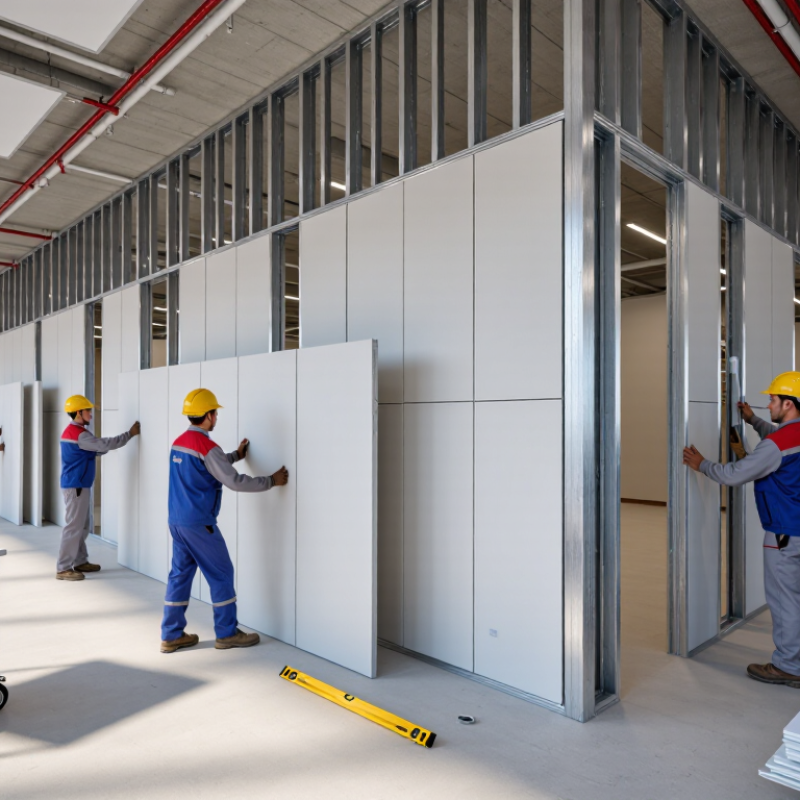
Barite drywall uses barium sulfate to increase mass inside a gypsum-based radiation shielding panel. A listed density of 4.0–4.5 g/cm³ indicates a heavy shielding material, not an automatic performance guarantee. Density helps absorb and scatter diagnostic X-rays. However, attenuation also depends on panel thickness, tube voltage, beam direction, and installation quality.
In supplier evaluations, request tested attenuation data for the intended kVp range. A panel designed for general radiography may not suit every imaging room. Check whether reported values describe the complete board or only the barite compound. That detail matters. Joint treatment needs equal attention. Small gaps around outlets, doors, or service penetrations can weaken an otherwise dense wall. I would inspect drawings, product test reports, and site samples before approval. A visual inspection alone is not enough.
Reliable suppliers should provide traceable batch information, dimensional tolerances, handling guidance, and clear installation procedures. Heavy boards also require suitable framing and fasteners. This point is sometimes overlooked. During a site review, measure actual coverage and confirm that cut edges receive proper shielding treatment. The 4.0–4.5 g/cm³ range is a useful starting point, but it should not replace a room-specific shielding calculation. Even experienced teams can miss scattered radiation paths. Reflective review is necessary.
2026 Top Barite Drywall Radiation Shielding Suppliers
Shielding design for 60–150 kVp imaging begins with the actual workload, not a standard panel thickness. Record weekly exposures, tube current, exposure time, and expected future growth. A busy radiography room needs a different barrier from a low-use dental imaging room. Small details matter.
Measure the distance from the X-ray tube to each barrier. Also identify whether a wall receives the primary beam or only scattered radiation. Occupancy behind the wall changes the design. A control room may require more protection than a storage area. Corridors, offices, and public spaces deserve careful review. Barite drywall can support effective shielding, but density, joints, fasteners, seams, and service penetrations affect performance. Suppliers should provide verified attenuation data, installation limits, and clear quality-control documents. A qualified medical physicist should confirm the calculations against local radiation-protection requirements.
A neat spreadsheet can mislead.
Workload estimates are often uncertain. Future equipment settings may also change. I would document assumptions, then add a reasonable safety margin without treating it as a substitute for analysis. On-site surveys after installation can reveal gaps around doors, outlets, and ducts. Reliable suppliers cooperate with designers, installers, and inspectors. Their value is not only the panel. It is traceable evidence, practical support, and willingness to question an attractive but weak design.
2026 Top Barite Drywall Radiation Shielding Suppliers
Panel specifications deserve more than a catalog glance. Thickness may range from standard board sizes to much heavier custom panels, but thicker does not automatically mean safer. Barite-filled drywall can vary in density, moisture content, and aggregate distribution. Ask for stated thickness in millimeters, weight per square meter, and allowable dimensional tolerances.
ASTM C1396 is relevant to gypsum board quality and manufacturing requirements. However, it does not independently prove radiation shielding performance. Lead equivalence must be reported separately, usually in millimeters of lead at a stated X-ray energy or kVp. Request test conditions, laboratory records, joint details, and installation drawings. A panel’s shielding value can change at seams, corners, outlets, and service penetrations. These weak points are often overlooked.
Tips: Compare weight using the same panel area. Confirm whether the quoted figure is dry or conditioned weight. Request independent test documentation, not only marketing tables. Have a qualified radiation shielding professional review the room design. A practical warning: very heavy panels may improve attenuation, yet create lifting, framing, and wall-loading concerns. I have seen specifications that looked precise but omitted joint treatment. That omission matters. Recheck every number against the project’s equipment, workload, distance, and local code requirements.
| Specification Class | Nominal Panel Thickness | Typical Core Density | Estimated Panel Weight per m² | Estimated Panel Weight per ft² | Indicative Lead-Equivalence Target at 100 kVp | ASTM C1396 Compatibility | Recommended Documentation |
|---|---|---|---|---|---|---|---|
| Standard high-density barite board | 12.5 mm (1/2 in) | 2.20–2.60 g/cm³ | 27.5–32.5 kg/m² | 5.6–6.7 lb/ft² | Approximately 0.30–0.60 mm Pb | May be produced to applicable gypsum-board requirements when the manufacturer declares compliance; shielding performance is additional to ASTM C1396. | Product data sheet, density report, thickness tolerance, and radiation attenuation test report identifying the test kVp. |
| Enhanced shielding board | 15.9 mm (5/8 in) | 2.20–2.60 g/cm³ | 35.0–41.3 kg/m² | 7.2–8.5 lb/ft² | Approximately 0.40–0.80 mm Pb | 5/8-inch gypsum-board thickness is commonly recognized in ASTM C1396 product categories; verify the specific barite-core construction. | ASTM C1396 declaration, ASTM C473 physical-property data where applicable, and project-specific shielding calculations. |
| Heavy-duty radiation shielding board | 19.0 mm (3/4 in) | 2.30–2.80 g/cm³ | 43.7–53.2 kg/m² | 9.0–10.9 lb/ft² | Approximately 0.50–1.00 mm Pb | Thickness and edge details should be checked against the selected ASTM C1396 board type and the tested installation system. | Independent attenuation report, compressive-strength data, screw pull-through data, and installation instructions. |
| Maximum-thickness shielding board | 25.0 mm (approximately 1 in) | 2.30–2.80 g/cm³ | 57.5–70.0 kg/m² | 11.8–14.3 lb/ft² | Approximately 0.70–1.30 mm Pb | Confirm whether the product is classified as gypsum board under ASTM C1396 or requires a project-specific material approval. | Full technical submittal, structural support review, handling instructions, and attenuation values at the actual operating energy range. |
| Supplier and Product Qualification Criteria | |||||||
| Dimensional consistency | Thickness tolerance declared by the manufacturer | Uniform density across the panel | Weight should be calculated from measured density and thickness | Non-uniform density can reduce predictable shielding performance | Review applicable dimensional and physical-property requirements under ASTM C1396/C1396M | Require batch identification and quality-control records | |
| Edge and joint design | Tapered, square, or reinforced edges | Barite core must remain continuous at edges | Joint treatment must not create an unshielded gap | Lead equivalence applies only to the tested assembly and joint configuration | Installation should also be reviewed against ASTM C840 principles where applicable | Obtain joint details, fastener spacing, sealant requirements, and penetration-treatment drawings | |
| Framing and support | Use framing rated for the calculated dead load | High-density panels are substantially heavier than ordinary gypsum board | Allow for panel, framing, fastener, and finish loads | Structural movement can open joints and compromise shielding continuity | Coordinate with ASTM C645 framing requirements when steel framing is used | Require a load calculation and maximum permitted stud spacing | |
| Radiation test reporting | Test energy must be stated | Report material density and specimen thickness | Include measured rather than nominal values where available | Lead equivalence is energy-dependent and is not a universal constant | ASTM C1396 does not by itself establish radiation shielding equivalence | Accept only reports identifying beam quality, geometry, measurement method, and uncertainty | |
| Fire and moisture performance | Verify the complete wall assembly | Core composition may affect handling and finishing | Do not infer fire rating from panel thickness alone | Radiation shielding and fire-resistance ratings are separate properties | Request the applicable tested assembly rather than relying on a board-only claim | Require fire-rating evidence, SDS, storage instructions, and indoor-use limitations | |
The 2026 leading barite drywall suppliers should offer more than heavy panels and attractive delivery promises. Their technical teams should explain how product data supports NCRP Report No. 147 shielding calculations.
Ask for density records, thickness tolerances, and batch traceability. A reliable supplier can show test reports from qualified laboratories. These reports should address radiation attenuation, dimensional stability, moisture resistance, and bond performance. Samples should match production material, not a special demonstration batch.
QA details matter.
Production capacity also deserves close review. Confirm monthly output, reserve stock, packaging methods, and realistic lead times. A supplier with several production lines may still struggle during project peaks. That weakness should be discussed openly. Certifications can strengthen confidence, but only when their scope matches the actual facility and product. Check certificate dates, issuing bodies, audit status, and documented quality procedures.
Do not accept vague compliance language. NCRP 147 is guidance for shielding design, not a blanket approval for every drywall system. The supplier should cooperate with a qualified medical physicist and provide complete technical documentation. I would also request installation guidance, replacement procedures, and records for nonconforming batches. One overlooked gap can affect a busy imaging room. Supplier claims should remain testable, traceable, and specific.
Supplier comparison should begin with delivered cost, not the quoted panel price. Barite drywall pricing changes with thickness, density, cut size, testing, and order volume. A standard panel may appear affordable, while custom dimensions increase waste and handling charges. Request a clear quotation with material cost, packaging, inland transport, insurance, and destination fees. Pricing should include batch testing or certification where required. Otherwise, comparison becomes unreliable.
MOQ can range from a few sample sheets to several pallets. Small projects often pay more per panel. Large orders may receive better pricing but require secure storage. Typical lead times vary from two to eight weeks, depending on production capacity and raw material availability. Ask whether lead time starts after payment, drawing approval, or technical confirmation. That detail is often missed.
Logistics deserve equal attention. Barite panels are heavy, so floor loading, pallet strength, forklift access, and edge protection matter. Damaged corners can delay installation and create unexpected replacement costs.
Reliable suppliers provide packing photos, tracking details, installation guidance, and responsive technical support. They should also share product data, safety information, and consistent batch records.
A low quote can still be the wrong choice. My own comparison checklist would weigh service and delivery risk more heavily next time.
Join our mailing list to receive the latest news and updates from our team.