
Choosing a Cast Iron Butterfly Valve is not just a matter of matching pipe size. Buyers must compare valve type, seat material, pressure rating, operating method, and installation conditions. A wafer valve may suit a compact, tightly supported line, while a lug-style body can offer more flexibility during maintenance. Flanged designs may be preferable where robust end connections matter. Small details count: check the face-to-face dimension, disc clearance, flow direction, and whether the lining suits the fluid and temperature. A valve that fits the drawing can still disappoint in service.
Valve applications engineer Michael Hayes puts the buyer’s task this way: “Match the valve to the operating conditions, not just the pipe.” Treat that as a practical rule, not a substitute for the manufacturer’s data sheet. Confirm the rated pressure and temperature, seat compatibility, actuator requirements, and installation limits before ordering. For water service, for example, buyers may need to distinguish between resilient-seat and metal-seat designs; the right choice depends on operating demands and verified product specifications. There is no universal best type. Even experienced teams can overlook maintenance access or assume two similar-looking valves share the same ratings. They may not. This guide compares common cast iron butterfly valve types and the trade-offs buyers should examine. One caveat: product names and configurations can vary by manufacturer, so verify every critical detail with current technical documentation. That extra check is rarely wasted.
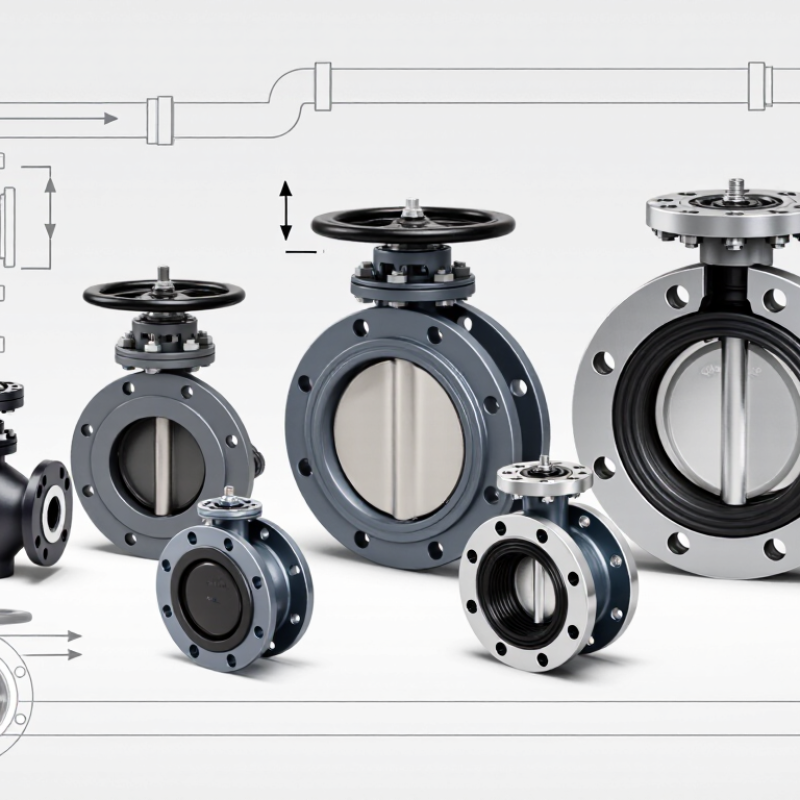
A cast iron butterfly valve is a quarter-turn valve that controls flow with a circular disc inside its body. Turn the handle or actuator, and the disc rotates on a shaft, moving from a position across the pipe to one aligned with the flow. A quarter turn. The compact design needs less space than many gate valves, making it practical in water distribution, building services, and other applications within its rated conditions.
The cast iron body provides a sturdy housing, but the material alone does not define the valve’s performance. Disc and seat materials, coating, pressure rating, temperature range, and connection style all matter. For example, a resilient seat may help provide a tight shutoff in a water line, while an unsuitable seat can wear or leak under demanding conditions. Not always. “Cast iron” is an easy label to trust too quickly; buyers should check the product data against the actual fluid and operating conditions. Installation details matter, too: a disc that cannot open fully may restrict flow or contact nearby pipework. This simple mechanism still deserves careful specification.
Cast-iron butterfly valves use a rotating disc to regulate or isolate flow. Wafer, lug, and flanged describe common body-end configurations. The chart compares ASTM A126 cast-iron classes by their minimum tensile strength—a material property, not a valve pressure rating.
ASTM A126 class values shown: Class A, 21,000 psi; Class B, 31,000 psi; Class C, 41,000 psi. Actual valve pressure and temperature limits depend on the valve design, size, materials, and applicable rating standard; confirm them in the product specifications.
A cast iron butterfly valve regulates flow with a circular disc fixed to a rotating shaft. Turning the handwheel or actuator rotates the disc through roughly 90 degrees. Open, the disc aligns with the flow; closed, it turns across the passage and presses against a seat.
A quarter-turn. The body is cast iron, but the disc, shaft, and seat materials can differ by design.
In practice, the disc remains in the flow path, even when fully open, so it creates some resistance. Small movement matters. At partial opening, flow changes can be nonlinear, and throttling may increase pressure loss or seat wear. The U.S. Department of Energy’s 2006 Improving Pumping System Performance sourcebook estimates that pumping systems use 25–50% of energy in some industrial facilities. That figure concerns pumping systems, not valves, but it shows why unnecessary throttling deserves attention.
For selection, check the valve’s pressure and temperature ratings, seat material, and intended service. Cast iron alone does not define its operating limits. A resilient seat may seal well in compatible water service, but fluid chemistry and temperature can change that. I would also verify the required shutoff performance and actuator torque against the actual pressure differential. A valve can look properly sized on paper and still operate poorly if those details are missed.
Common Cast Iron Butterfly Valve Types
Cast iron butterfly valves are commonly classified by their end connection and disc-seat design. Wafer valves sit between pipe flanges and are held in place by through-bolts. Their compact bodies suit tight equipment rooms, but they usually need support from both flanges. Lug valves have threaded inserts around the body. They can simplify removal of downstream piping, though dead-end service is acceptable only when the valve is rated for it. That detail is easy to miss.
Flanged valves bolt directly to matching pipe flanges, making alignment and removal straightforward in larger lines. Another common choice is the concentric, resilient-seated design: the disc rotates through a soft seat, often selected for water or compatible low-pressure services. Seat material matters. EPDM and NBR respond differently to temperature and process fluids, so confirm compatibility rather than relying on a familiar name.
For higher pressures or more demanding control, buyers may consider offset-disc designs, but cast iron body limits and the complete valve rating still apply. Check the pressure-temperature chart, face-to-face dimensions, operating torque, and flange drilling against the actual system. A valve that fits the pipe may still be unsuitable for the medium. Small installation assumptions can become costly.
| 2026 Top Cast Iron Butterfly Valve Types for Buyers - Common Cast Iron Butterfly Valve Types | ||||||
|---|---|---|---|---|---|---|
| Valve Type | Typical Construction | Common End Connection | Seat and Disc Notes | Typical Service | Buyer Considerations | Pressure-Rating Guidance |
| Concentric Resilient-Seated Wafer | The disc rotates around a shaft centered in the body and disc. The valve fits between two pipeline flanges. | Wafer body; held in place by the flange bolts or studs. It generally does not provide independent end-of-line support. | Common seat materials include EPDM for many water services and NBR for some oil-related services. Disc materials and coatings vary by design. | Building water systems, HVAC, irrigation, and general low-pressure water lines. | Check flange drilling, face-to-face dimensions, flow direction requirements, and whether the design allows dead-end service. | Ratings vary by design and size. Some products are rated around 150 psi; confirm the valve’s published rating and applicable standard. |
| Concentric Resilient-Seated Lug | Uses a centered disc and replaceable or molded resilient seat, with threaded lugs around the body. | Lug body; each pipeline flange bolts to the valve body independently. | Seat and disc options depend on the fluid, temperature, and manufacturer’s design. | Water distribution, HVAC, and systems where a valve may need to be removed from one side of the line. | Confirm whether the specific valve is approved for dead-end service and whether it can withstand the pressure on the remaining connected side. | Do not assume a lug valve is suitable for dead-end service. Check its pressure rating for the intended installation and direction of pressure. |
| Concentric Resilient-Seated Flanged | Centered-disc design with integral flanges on both sides of the valve body. | Flanged ends, commonly selected to match the pipeline flange standard and class. | Resilient seats support shutoff in suitable services; elastomer compatibility and temperature limits must be verified. | Water treatment, utility piping, and larger-diameter lines where a bolted flanged connection is preferred. | Match flange dimensions, drilling, pressure class, face-to-face length, and installation space. | Ratings are design- and size-specific. Verify the stated valve rating and the rating of the connected piping components. |
| Double-Offset High-Performance | The shaft is offset from the disc centerline and seat plane to reduce seat contact during rotation. Availability with a cast iron body depends on the product design. | Often lug or flanged; connection options vary. | May use a resilient or other engineered seat. Materials and temperature limits vary substantially by design. | Selected industrial, utility, or process services requiring a different operating or sealing design from a basic concentric valve. | Check body material, seat construction, fluid compatibility, temperature, operating torque, and whether the valve is intended for throttling or isolation. | Ratings vary widely. Confirm the exact pressure-temperature rating rather than relying on the “high-performance” description. |
| Manual Lever-Operated Configuration | An operating option commonly used with smaller valves; it may be paired with wafer or lug bodies. | Depends on the selected valve body and pipeline connection. | Seat and disc selection follows the underlying valve design. | Small or accessible lines that do not require remote or automated operation. | Check handle clearance, locking positions, operating torque, and whether a gear operator is needed for the valve size or service. | The operating method does not determine the pressure rating; use the rating for the complete valve assembly. |
| Gear-Operated Configuration | A handwheel and gearbox reduce the effort needed to operate larger or higher-torque valves. | Can be supplied with compatible wafer, lug, or flanged body designs. | Seat and disc materials depend on the selected valve construction and application. | Larger-diameter lines and installations where controlled, lower-effort manual operation is useful. | Confirm gear ratio, operating time, mounting orientation, access, and compatibility with any future actuator. | Gear operation does not increase the valve’s pressure capability; verify the body and seat rating separately. |
| Selection note: “Wafer,” “lug,” and “flanged” describe connection or body styles; “concentric” and “double-offset” describe disc-and-shaft geometry; lever and gear operation describe actuation. These categories can overlap. Cast iron grade, pressure-temperature limits, dimensions, seat materials, and dead-end suitability vary by product. Confirm the valve’s technical documentation, applicable piping standard, fluid compatibility, and local code requirements before purchase. | ||||||
Cast iron butterfly valves control flow with a quarter-turn disc, making them compact and relatively easy to operate. Wafer-style bodies fit between pipe flanges and suit space-limited water lines or HVAC systems. Lug-style bodies use threaded inserts, which can allow a section of pipe to be removed while the opposite side remains connected, if the valve is designed for that service. A practical choice.
Flanged-body valves bolt directly to matching pipe flanges and can be easier to align in larger pipelines. For common water duties, resilient-seated designs use an elastomer seat to provide tight shutoff. They are often used in municipal distribution, irrigation, and building services. Higher-performance offset designs may handle more demanding pressure or temperature conditions, but suitability depends on the body material, trim, seat, and operating limits. Cast iron is not ideal for every fluid or environment; verify compatibility rather than relying on the valve style alone.
Tips: Check pressure and temperature ratings, disc clearance, and flange dimensions before purchase. Ask how the valve performs in your actual media. Small details matter. A seat that works well in clean water may wear faster in abrasive flow, and that is easy to overlook.
Choosing a cast iron butterfly valve starts with the service, not the catalog photo. Identify the fluid, operating pressure, temperature range, and expected flow. For clean water or HVAC service, a resilient seat may be suitable; abrasive solids or certain chemicals can shorten its life. Check material compatibility with the actual fluid. “General purpose” is not a specification.
Match the valve style to the piping and maintenance plan. Wafer valves fit between flanges and save space, while lug-style bodies can allow more flexible pipe isolation when installed as specified. Verify the line size, flange drilling, face-to-face dimensions, and pressure rating against the system drawings. Small mismatches become expensive. Seat and disc materials matter, too. A stainless steel disc may offer better corrosion resistance than a standard option, but the full assembly still needs review.
Think about operation before ordering. Hand levers suit smaller valves that are opened occasionally; larger sizes may need a gearbox or actuator. Confirm required closing torque and available power, rather than guessing from pipe diameter. Ask for the datasheet, applicable test information, and installation limits. There is no universal best valve, which makes selection less tidy than a simple ranking suggests. Recheck the assumptions with the system designer, especially when temperatures, solids, or pressure surges are involved.
Join our mailing list to receive the latest news and updates from our team.