7 Best Paper Roll Slitting Machines to Buy in 2026?
Choosing a Paper Roll Slitting Machine in 2026 is less about chasing the fastest advertised speed and more about matching the machine to your daily work. Paper weight, roll width, core size, and target slit width all affect the choice. So does the material itself. A machine that handles lightweight tissue smoothly may struggle with dense board or coated stock.
For this guide, fictional paper-converting specialist Martin Hale offers a practical reminder: “A clean slit starts with steady web tension, not just a sharp blade.” This is an editorially created quote, not a verified statement from a real industry expert. The principle still points buyers toward details worth checking: tension control, blade setup, shaft design, changeover time, and finished-roll consistency. Ask suppliers for samples or a live demonstration using material close to yours. A glossy brochure cannot show edge quality.
The seven options in this guide are considered through operating needs, not one universal ranking. Some suit compact workshops. Others are built for wider rolls, frequent changeovers, or heavier production schedules. Look closely at controls, guarding, service access, and parts availability. A quiet machine can still waste time if threading it takes too long. No shortlist is perfect; specifications and performance can vary by configuration. Use the comparisons to build questions for vendors, then confirm claims against your own production requirements before buying.
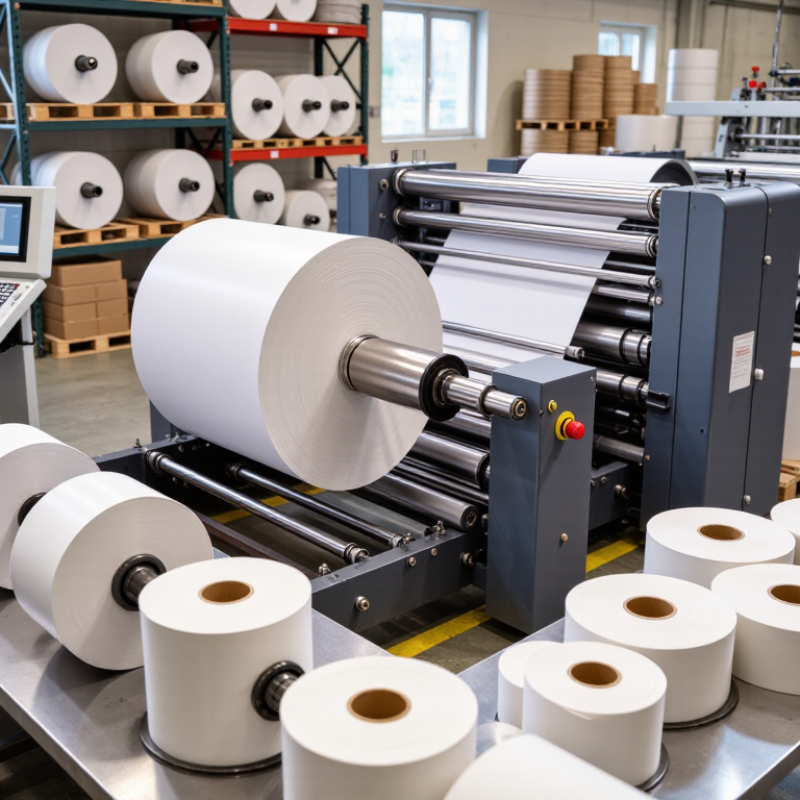
A paper roll slitting machine converts a wide parent roll into narrower rolls for printing, packaging, or converting. The parent roll sits on an unwind stand and feeds through the machine as the web moves forward. Tension controls help keep the paper stable, while an edge guide corrects sideways drift. Small changes matter. Too much tension can stretch or tear lightweight stock; too little may cause wrinkles.
At the slitting section, circular knives cut the moving web into narrower lanes. Some machines use crush-cut knives, while others use shear-cut blades that pass each other like scissors. The right setup depends on paper thickness, coating, and required edge quality. Operators typically adjust blade position and overlap, then check the first cuts before running at full speed. It is a practical step, though rushed setup can leave rough edges.
The separated strips travel to rewind shafts, where they become finished rolls. Rewind tension and roll hardness affect how evenly each roll builds. Guards and interlocks help keep access away from moving blades and shafts during operation. When comparing machines for 2026, consider the paper grades, roll widths, and changeover frequency you actually handle. A fast machine is not always the best fit. It may be easy to overlook how much setup time affects daily output.
Typical Paper Basis-Weight Ranges for Slitting
Paper slitting machines cut wide parent rolls into narrower reels. Basis weight is one characteristic of the stock being processed; the ranges below are approximate examples, not machine-capacity specifications. Actual grades vary by product and manufacturer.
Types of Paper Roll Slitting Machines and Their Applications
Paper roll slitting machines are best understood by their cutting method and rewinding setup. A razor slitter uses thin blades and suits lightweight papers, such as tissue or coated stock. Shear slitting uses paired rotary blades for cleaner edges on many heavier grades. Crush-cut systems press circular knives against an anvil. They can be practical for simpler jobs, though edge quality depends heavily on setup.
Machine configuration matters too. A single-shaft rewinder is often suited to shorter runs and straightforward roll changes. Dual-shaft designs can reduce changeover pauses when production schedules are tight. Turret rewinders automate roll changes and are useful for high-volume converting, but they need more floor space and careful setup. Small detail, big difference.
Match the machine to paper weight, web width, target roll diameter, and required output. A narrow roll of label stock places different demands on tension control than a wide kraft-paper roll. Ask for a trial using the actual paper grade; slitting samples can reveal dust, uneven edges, or telescoping that a brochure will not show. Also check blade access, guarding, and operator training. One imperfect point: published speed figures rarely reflect every paper grade or changeover, so treat them as a starting point, not a promise.
Key Factors for Choosing a Slitting Machine in 2026
7 Best Paper Roll Slitting Machines to Buy in 2026?
Key Factors for Choosing a Slitting Machine in 2026
Choosing a paper roll slitting machine starts with the job, not the advertised top speed. Match usable web width, parent-roll diameter, core range, and finished roll sizes to daily orders. A machine sized for peak demand may waste floor space and capital during ordinary shifts. Check whether its quoted speed holds with your paper grade, slit width, and changeovers.
Tension control, knife positioning, rewind hardness, and edge quality affect whether narrow rolls telescope, wrinkle, or unwind unevenly. Request a trial using your own paper, then inspect the edges and measure roll hardness. The U.S. EPA’s Advancing Sustainable Materials Management: 2018 Fact Sheet reported a 68.2% recycling rate for paper and paperboard. That older national figure is not a machine benchmark, but it makes trim loss worth tracking. Include service access, spare knives, dust control, guarding, and training in your cost comparison.
Seven Paper Roll Slitting Machines to Consider in 2026
Seven Paper Roll Slitting Machines to Consider in 2026
Choosing a slitter starts with the paper, not the brochure. Consider a manual shaft machine for short runs, or a semi-automatic model when operators need help with tension and rewinding. Fully automatic slitters suit repeat production, while duplex machines can rewind two narrower rolls at once. A turret rewinder reduces changeover pauses on busy lines. Razor slitting can work for suitable lightweight grades; shear knives are often preferred for thicker or tougher stock. Crush-cut systems offer another option, though edge quality should be tested with the actual paper.
These are seven configurations to compare, not seven completely separate machine classes. Features often overlap. A turret model, for example, may also be fully automatic. Ask suppliers to run your own paper through a trial, using the target width, roll diameter, and operating speed. Inspect the cut edge for dust, tearing, and uneven layers. Check whether cores load easily and whether the finished rolls remain firm without telescoping.
Small details count. Confirm available floor space, guarding, operator access, and routine blade replacement requirements. Request realistic output figures for your material, not just maximum speed. That matters. A machine that runs quickly but struggles with recycled paper may waste more time than it saves. I would also leave room in the budget for setup and training; overlooking them is an easy mistake, even with a capable machine.
7 Best Paper Roll Slitting Machines to Buy in 2026? — Seven Paper Roll Slitting Machines to Consider in 2026
Machine Configuration
Typical Paper Applications
Typical Parent-Web Width
Indicative Line Speed
Typical Finished-Roll Diameter
Key Consideration
Compact shafted slitter rewinder
Lightweight paper, wrapping paper, and smaller converting runs
600–1,300 mm
100–300 m/min
600–1,200 mm
A practical fit where floor space, straightforward operation, and smaller production volumes matter.
Standard duplex slitter rewinder
Printing paper, kraft paper, and general-purpose packaging grades
1,300–1,800 mm
200–500 m/min
800–1,500 mm
Duplex winding can help reduce changeover time when producing multiple slit rolls.
Shaftless jumbo-roll slitter rewinder
Large parent rolls of kraft, liner, and other packaging papers
1,600–2,500 mm
300–800 m/min
1,000–1,800 mm
Check roll-handling equipment, loading method, and maximum parent-roll weight alongside the stated web width.
High-speed tissue slitter rewinder
Tissue and lightweight sanitary-paper parent reels
2,500–5,600 mm
600–1,200 m/min
1,000–1,500 mm
Designed for wide, light webs; web tension control and dust management are important selection factors.
Coreless roll slitter rewinder
Paper products made into coreless rolls, including selected tissue and specialty grades
1,000–1,800 mm
100–400 m/min
200–600 mm
Confirm that the winding system supports the required roll firmness and finished-roll dimensions without a core.
Narrow-web paper slitter rewinder
Labels, narrow paper rolls, and specialty-paper converting
500–1,300 mm
100–400 m/min
300–800 mm
Useful for narrower finished rolls; verify the minimum slit width and the available knife arrangement.
Heavy-duty kraft and board slitter rewinder
Heavy kraft paper, paperboard, and other thicker packaging grades
1,600–3,000 mm
100–400 m/min
1,200–2,000 mm
Prioritize machine rigidity, appropriate cutting tools, and capacity for the intended paper weight and roll load.
Note: Figures are indicative ranges for common machine configurations, not guaranteed specifications for any particular model. Actual limits vary with paper grade, basis weight, roll dimensions, machine design, and operating conditions. Confirm requirements and performance with the equipment supplier before purchasing.
Comparing Machine Performance, Costs, and Maintenance Needs
A paper roll slitter can look impressive at its top speed, but that number rarely tells the whole story. Compare usable web width, maximum roll diameter, and cutting accuracy against the stock you actually process. A machine running steadily at moderate speed may outperform a faster unit that creates uneven edges or frequent setup delays. Check how easily operators adjust tension and blade spacing. Small controls matter. On a busy shift, awkward threading can cost more time than a modest speed difference.
Purchase price is only one part of the cost. Include blade replacement, energy use, routine servicing, and the labor needed for changeovers. Ask suppliers how often knives typically need attention for your paper grades; coated stock and abrasive materials can wear them differently. Inspect guarding, access to wear parts, and the clarity of maintenance instructions. These details affect downtime. Keep a simple trial log with roll width, output, trim waste, and stoppages, then compare results across machines. It will not answer everything, and one test may favor a particular operator. Still, actual production data is more useful than a glossy speed claim. A slightly imperfect trial is better than a confident guess.
This website uses cookies to improve your experience. We'll assume you're ok with this, but you can opt-out if you wish. Cookie settingsACCEPTREJECT
Privacy & Cookies Policy
Privacy Overview
This website uses cookies to improve your experience while you navigate through the website. Out of these cookies, the cookies that are categorized as necessary are stored on your browser as they are essential for the working of basic functionalities of the website. We also use third-party cookies that help us analyze and understand how you use this website. These cookies will be stored in your browser only with your consent. You also have the option to opt-out of these cookies. But opting out of some of these cookies may have an effect on your browsing experience.
Necessary cookies are absolutely essential for the website to function properly. This category only includes cookies that ensures basic functionalities and security features of the website. These cookies do not store any personal information.
Any cookies that may not be particularly necessary for the website to function and is used specifically to collect user personal data via analytics, ads, other embedded contents are termed as non-necessary cookies. It is mandatory to procure user consent prior to running these cookies on your website.
Subscribe To Our Newsletter
Join our mailing list to receive the latest news and updates from our team.