
Global buyers are paying closer attention to pressure control, measurement accuracy, and maintenance costs. A Single Gauge Manifold connects these priorities in a compact assembly. It typically combines isolation, venting, and instrument protection around one pressure gauge. That small body may sit beside a pump, compressor, filter, or process vessel. Its design can influence reading stability, technician access, and replacement time.
Industry reports support this growing focus on reliable fluid-control equipment. MarketsandMarkets identifies industrial valves and process-control components as essential to expanding oil and gas, chemical, water, and power infrastructure. Grand View Research also reports continued demand for industrial instrumentation as plants pursue automation and safer monitoring. These reports do not rank every manifold model. They show the commercial setting behind the purchase.
This guide examines seven manifold options for international buyers. The comparison considers pressure rating, material selection, port configuration, temperature range, sealing performance, and documentation. Stainless steel may suit corrosive environments, while compact carbon-steel designs can serve less demanding installations. Buyers should also check thread standards, calibration requirements, spare-part availability, and regional certification expectations.
Small details matter.
A polished catalog is not enough. Field experience suggests that an easy-to-reach vent valve often saves more time than a lower purchase price. Still, no universal winner exists. A manifold that performs well on a clean-water skid may disappoint in a hot, chemically aggressive line. Product data can also be incomplete, especially across international suppliers. Therefore, this selection combines published specifications, recognized engineering practices, and practical buyer concerns, while leaving room for verification before installation.
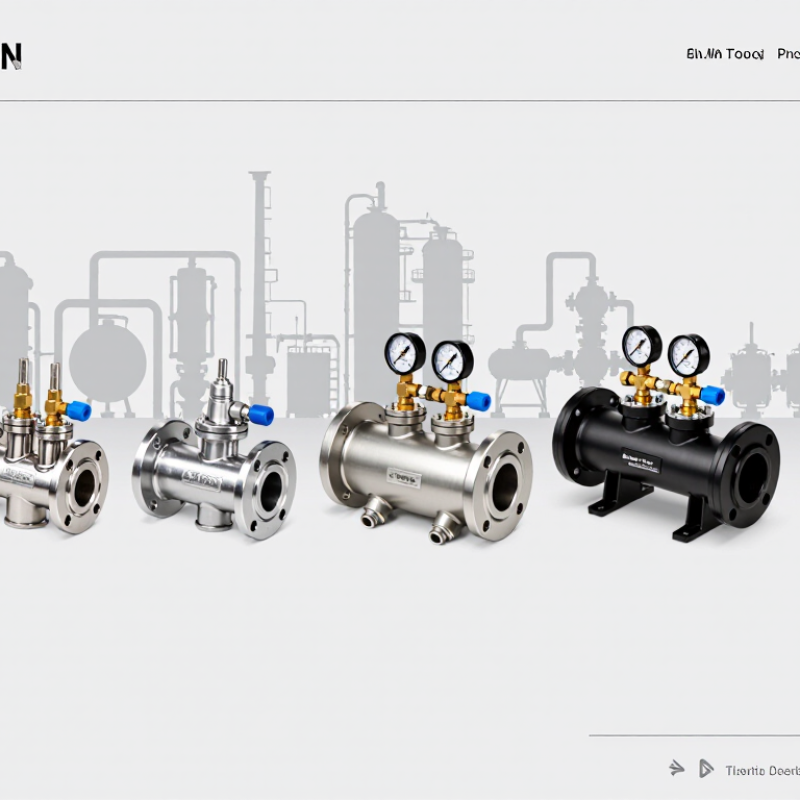
A single gauge manifold combines one pressure gauge with valves, ports, and a compact body. It measures system pressure at one controlled point. Unlike a dual-gauge manifold, it does not compare inlet and outlet pressure. This simpler design suits compressors, hydraulic circuits, gas lines, and maintenance panels.
A useful manifold usually includes an isolation valve, bleed function, compatible seals, and a readable dial. Connection size, pressure range, temperature rating, and media compatibility matter more than appearance. ASME B40.100 defines requirements for pressure gauge performance, accuracy, and testing. Buyers should also review ISO 5171 when selecting gauges for gas service. The U.S. Department of Energy reports that compressed-air leaks can waste 20–30% of compressor output. A poorly sealed manifold can worsen that loss.
Tips:
7 Best Single Gauge Manifolds for Global Buyers?
How to Evaluate Manifolds for Global Applications
A reliable single gauge manifold starts with service conditions, not price. Check maximum working pressure, temperature range, process fluid, and expected vibration. Then verify the body and trim materials against corrosion risks. The NACE IMPACT study estimated global corrosion costs at about US$2.5 trillion annually, equal to roughly 3.4% of global GDP. Material selection deserves serious attention. For sour-service applications, ISO 15156 provides useful material guidance. For flange connections, ASME B16.5 helps confirm dimensional compatibility. These standards reduce uncertainty, but they do not replace project-specific engineering.
Tips: Request pressure-test records, material certificates, and leakage data. Confirm whether the gauge connection matches local installation practice. Metric and imperial threads can look nearly identical. They are not interchangeable. Check seals at the lowest operating temperature, not only at room temperature.
Global buyers should also evaluate documentation, traceability, spare-part access, and installer training. A manifold may meet a pressure rating yet fail during repeated cycling or poor alignment. I have seen procurement teams compare seven models only by port count. That approach is too narrow. A better scorecard assigns weight to pressure integrity, corrosion resistance, connection standards, inspection evidence, and total ownership cost. The 2023 Global Status of Multilateral Development Banks report highlights the importance of transparent procurement and lifecycle value in infrastructure projects. Still, no checklist is perfect. Field conditions often expose assumptions that laboratory tests miss. Capture those lessons after commissioning, and revise the specification.
How to evaluate manifolds for global applications: valve count indicates the typical configuration, while the application notes identify the main selection purpose. Always verify pressure, temperature, material, connection, and certification requirements against the supplier’s datasheet.
Key takeaway: Two-valve manifolds are commonly used for basic isolation and instrument removal. Three-valve designs add equalization, while five-valve configurations support isolation, equalization, venting, and calibration-related functions.
Global buyers often compare single gauge manifolds by material, pressure range, connection type, and service access. A compact brass manifold suits clean, moderate-duty installations. It is affordable and easy to inspect. A stainless steel version offers better corrosion resistance in humid rooms. It usually costs more. Panel-mounted manifolds save space and keep the gauge visible during routine checks. Their fixed position can make maintenance less convenient.
A semi-automatic manifold supports smoother changeovers between supply sources. It is useful where interruptions create production delays.
A high-flow design reduces pressure loss in demanding systems. However, its larger body may require stronger mounting.
A miniature manifold fits portable equipment and small cabinets. Its gauge can be harder to read from a distance.
A heated manifold helps prevent freezing in cold operating areas, but it needs dependable electrical control and careful installation.
The seventh option is a custom-configured manifold, built around unusual ports, seals, or gauge scales. This can solve a genuine engineering problem, although lead times may increase.
In my experience, buyers should request material certificates, pressure-test records, calibration details, and clear thread specifications. These documents reveal more than polished product photos. Check whether the gauge remains readable after installation. Check spare-part availability too.
No comparison is perfect. Local standards, climate, operator training, and future expansion can change the best choice. A low purchase price may become expensive when maintenance access is poor.
7 Best Single Gauge Manifolds for Global Buyers
Single gauge manifolds simplify pressure measurement by combining isolation and venting in one compact assembly. The right choice depends on operating pressure, fluid behavior, and installation conditions. A low-pressure model may suit water systems, while high-pressure service needs stronger bodies, tighter seals, and verified pressure ratings. Always check the working pressure, not only the maximum test pressure. That difference matters.
Materials affect safety and service life. Stainless steel offers strong corrosion resistance for many industrial environments. Carbon steel can be practical in controlled conditions, but it may require protective treatment. Seal materials also deserve attention. Temperature, chemical compatibility, and repeated cycling can change performance. Connections create another key difference. Common options include threaded, tube, and flange connections. Thread standards vary across regions, so compatibility must be confirmed before ordering. A fitting that looks correct may still leak.
Tips: Match the manifold to the gauge port, tubing size, and local connection standard. Ask for material certificates, pressure-test records, and temperature limits. Review the installation drawing with a technician. In real projects, specifications are sometimes incomplete, and assumptions can cause delays. I have found that a short dimensional check prevents expensive rework. Do not ignore maintenance access. A compact manifold saves space, but cramped valves are difficult to operate with gloves. Nut orientation and vent position also deserve a practical review.
| Configuration | Typical Valve Function | Typical Pressure Capability | Common Wetted Materials | Typical Connections | Best Use Case | Main Advantage | Important Limitation |
|---|---|---|---|---|---|---|---|
| 1. Compact 2-Valve Block-and-Bleed | Isolates the process and vents the gauge side for safe removal or calibration. | Commonly rated from approximately 4,000 to 6,000 psi (276 to 414 bar), depending on design. | 316 stainless steel; carbon steel and alloy options are also available. | Process inlet, gauge outlet, and vent typically use NPT, BSP, or tube fittings. | General pressure measurement on transmitters, gauges, and instrument panels. | Small footprint, simple operation, and lower installation cost. | It does not provide a separate equalizing function for differential-pressure service. |
| 2. 3-Valve Equalizing Manifold | Provides isolation, equalization, and venting through three independent valves. | Commonly available around 3,000 to 6,000 psi (207 to 414 bar). | 316 or 316L stainless steel is widely used; PTFE or graphite packing may be selected. | Often supplied with female NPT, BSP, or compression-tube connections. | Single-gauge pressure monitoring where controlled equalization is required. | Allows safer zero checks and controlled pressure balancing. | More complex and larger than a basic 2-valve design. |
| 3. High-Pressure Needle-Valve Manifold | Uses a fine-thread needle valve for gradual isolation and precise throttling. | Many standard designs are rated to approximately 6,000 psi (414 bar); higher ratings require product-specific verification. | 316 stainless steel body and stem; metal-to-metal or soft-seat sealing options. | High-pressure NPT, BSP, tube, or cone-and-thread connections. | Hydraulic, gas, test, and laboratory systems operating at elevated pressure. | Excellent control of pressure release and reduced risk of hydraulic shock. | Slower to operate than a quarter-turn ball valve. |
| 4. Compact Ball-Valve Manifold | Provides rapid on/off isolation with a quarter-turn handle. | Typically selected for systems from vacuum service to approximately 6,000 psi (414 bar), subject to seat and temperature limits. | 316 stainless steel with PTFE, PEEK, or other application-specific seat materials. | NPT, BSP, tube, flange, and gauge-thread configurations are common. | Skid packages, utility lines, and applications requiring frequent isolation. | Fast operation and low pressure drop when fully open. | Rapid opening may cause pressure surges; it is less suitable for fine throttling. |
| 5. Sour-Service Single-Gauge Manifold | Provides isolation and venting while using materials selected for hydrogen sulfide exposure. | Commonly offered in pressure classes up to approximately 6,000 psi (414 bar), depending on the specification. | NACE-compliant or suitably hardness-controlled stainless steel; seal compatibility must be confirmed. | NPT, BSP, tubing, and flanged connections may be specified for process compatibility. | Oil, gas, petrochemical, and other sour-gas environments. | Improved resistance to sulfide stress cracking when correctly specified. | Material compliance, hardness, and documentation can increase cost and lead time. |
| 6. Low-Temperature Instrument Manifold | Isolates and vents a pressure gauge in cold ambient or cryogenic-adjacent service. | Pressure rating varies widely; common instrument versions fall within approximately 3,000 to 6,000 psi (207 to 414 bar). | 316L stainless steel is common; low-temperature seal and packing grades are essential. | NPT, BSP, tube, or welded connections, selected according to temperature and fluid service. | Refrigeration, LNG-related equipment, cold-weather installations, and gas service. | Maintains sealing performance over a broader temperature range. | Standard elastomers may harden or leak at low temperatures. |
| 7. High-Temperature Instrument Manifold | Provides gauge isolation and venting with packing and seals rated for elevated temperature. | Often rated from approximately 3,000 to 6,000 psi (207 to 414 bar), with pressure derating at high temperature. | 316 stainless steel with graphite, PTFE, PEEK, or other temperature-rated sealing materials. | Threaded or tube connections are common; welded ends may be used for severe service. | Steam, refining, process heating, and high-temperature industrial systems. | Better sealing reliability when temperature limits are properly engineered. | Maximum pressure and temperature must be checked together, not separately. |
Note: Pressure ratings are typical selection ranges for industrial instrument manifolds, not universal limits. Actual allowable pressure depends on body material, valve design, connection type, temperature, seal material, and applicable regional or project standards.
7 Best Single Gauge Manifolds for Global Buyers
Selecting the right single gauge manifold starts with the operating conditions, not the catalog photograph. Check the working pressure, temperature range, fluid type, and connection standard. A compact brass model may suit clean, low-pressure service, while stainless steel is usually safer for corrosive or humid environments. The wrong seal can cause slow leakage. It happens.
Experienced buyers also compare gauge accuracy, valve access, port direction, and installation space. A manifold with a clear vent path simplifies testing and maintenance. Thread compatibility matters across regions, so confirm NPT, BSP, or metric requirements before ordering. Do not rely on familiar abbreviations. One small mismatch can delay an entire installation.
For global purchasing, request material certificates, pressure-test records, dimensional drawings, and applicable conformity documents. Suppliers should explain inspection methods and provide traceable batch information. Ask how replacement seals are identified. This detail is often overlooked. I have seen projects choose a cheaper manifold, then spend more on adapters, downtime, and rework. A practical shortlist may include stainless steel, brass, compact, high-pressure, high-temperature, panel-mount, and corrosion-resistant designs. However, “best” depends on the process, local standards, service access, and total ownership cost. Leave room for review. Real operating conditions can differ from the original specification.
Join our mailing list to receive the latest news and updates from our team.