
Choosing a 321 Stainless Steel Sheet supplier takes more than comparing prices. Buyers must check chemistry, thickness tolerance, surface finish, traceability, and delivery reliability. Grade 321 is titanium-stabilized austenitic stainless steel, valued for elevated-temperature service and resistance to intergranular corrosion after certain heat exposures. The details matter.
The World Stainless Association reported global stainless-steel crude production of 58.4 million tonnes in 2023, up 4.6% from 2022. That scale creates options, but not every mill or distributor offers the same documentation or consistency. For aerospace, chemical-processing, and heat-treatment applications, request the material test certificate and confirm the applicable specification, such as ASTM A240, against the purchase requirements. A polished sample can look convincing. Paperwork and batch controls deserve equal scrutiny.
Welding metallurgy specialist John C. Lippold’s published work highlights how processing and service conditions affect stainless-steel performance. A practical sourcing principle, reflecting that expertise rather than quoting him verbatim, is: “Choose the sheet for its service conditions, then verify the evidence behind the grade.” That is a useful test for this guide to seven worldwide suppliers. Still, supplier claims need checking. Compare available thicknesses, finish options, certificates, stock locations, and lead times before shortlisting. One overlooked point: a low quoted price may exclude cutting, inspection, or freight. The strongest supplier is not automatically the largest; it is the one whose capabilities match the job and whose records withstand review.
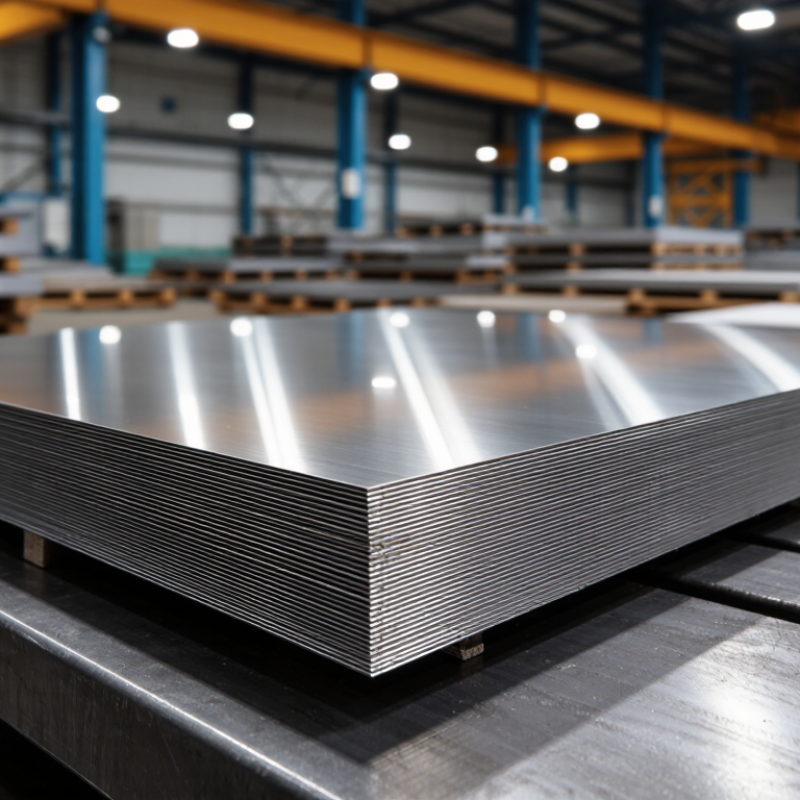
321 stainless steel sheet is an austenitic chromium-nickel alloy stabilized with titanium. That small addition has a practical purpose. It helps limit chromium carbide formation during prolonged exposure to elevated temperatures, including around welded areas. Less carbide formation can reduce the risk of intergranular corrosion.
The material is supplied as flat sheet in different thicknesses and finishes. You may see it in exhaust components, heat-treatment equipment, and other parts exposed to heat. It is not a magic upgrade. In chloride-rich environments, pitting can still occur, so the operating conditions matter. The confusing part is that two sheets with similar appearances may differ in thickness tolerance, finish, or certified chemistry. Check the applicable material specification and test documents before ordering. A smooth surface looks reassuring, but it does not confirm the alloy grade. I would verify the paperwork, too.
A reliable 321 stainless steel sheet supplier should provide traceable material test certificates, not just a polished quotation. Check that the certificate matches the coil or sheet marking and reports chemistry, including titanium stabilization. Confirm the product meets the applicable ASTM A240/A240M or EN 10088 specification, with thickness tolerances and surface finish stated in writing. Ask how samples are tested and how nonconforming material is handled. Paperwork matters. So does the actual sheet.
The World Stainless Association’s Stainless Steel in Figures 2024 reports global stainless steel melt shop production of 58.4 million tonnes in 2023. That scale makes supplier screening more important, not less: a large market does not guarantee consistent delivery or documentation. Request a recent sample certificate and compare its heat number with the physical label. For sheets intended for elevated-temperature service, discuss operating conditions and fabrication requirements with a qualified engineer; grade selection alone cannot settle every application. Also check stock availability, packaging, lead times, and whether the supplier can maintain the same specification across repeat orders. A minor gap in traceability can become a costly one. I would not judge a supplier by price alone.
Seven notable 321 stainless steel sheet suppliers worldwide are best understood by their capabilities, not just their location. These include integrated mills in Europe and Asia, North American service centers, specialist alloy stockholders, precision coil processors, regional distributors, and custom plate processors. Each may serve different needs, from small cut sheets to larger production orders. A polished sample matters, but so does the paperwork.
World Stainless Association’s Stainless Steel in Figures 2024 reports global stainless crude steel production of 58.4 million tonnes in 2023. That figure covers all stainless grades, not 321 specifically, so it should not be treated as proof of 321 availability. For this grade, ask suppliers for a material test certificate, heat-number traceability, thickness tolerances, and confirmation that the product meets the required specification. Small details count: a sheet’s edge condition can affect forming, while inconsistent thickness can complicate fabrication.
A practical comparison should cover the seven supplier types above, checking stock location, minimum order size, cutting options, and delivery estimates. Ask how titanium stabilization is verified in the supplied material. Then compare quotations on the same dimensions and finish. One limitation remains: a distributor’s listed inventory may change before an order is placed. It is worth checking twice.
Suppliers of 321 stainless steel sheet can look similar online, but their offers differ in practical ways. Compare thickness ranges, sheet dimensions, surface finishes, and cut-to-size options. Some keep common gauges in stock; others quote only after checking mill availability. That affects lead time. Ask for the applicable product standard and a mill test report linked to the heat number. The paperwork should match the delivered material, not just the quotation.
Service quality shows up in small operational details. Can staff explain forming limits, edge condition, and storage precautions for 321 sheet? Can they provide a sample, confirm flatness, or discuss protective film before shipment? These answers reveal more than a polished catalogue. Still, a fast reply is not proof of technical depth. Check the supplier’s response against your drawings and purchase specifications. Details matter.
Compare packaging and delivery terms as closely as price. Sheets may arrive with scratched faces if separators, corner protection, or moisture control are overlooked. Ask how bundles are labeled and how transit-damage claims are handled. Some buyers need small, mixed-size orders; others prioritize repeat batches with consistent tolerances. Neither service model is automatically better. Your inspection plan matters, too, since even a capable supplier cannot replace incoming checks.
| Supplier Profile | Typical 321 Product Offering | Stock and Supply Model | Processing Services to Check | Documentation to Request | Best Suited For | Key Consideration |
|---|---|---|---|---|---|---|
| 1. Integrated stainless-steel mill | Mill-produced 321 sheet and plate, subject to the mill’s current product range and order minimums. | Usually made to order; production schedules and minimum quantities can be less suitable for small urgent purchases. | Ask about cut-to-length, surface finishing, and whether processing is done at the mill or by a service center. | Request a material test report (MTR), heat number traceability, and the specified ASTM or EN standard. | Large-volume, repeat orders requiring direct mill traceability. | Confirm that the quotation is for 321 / UNS S32100—not a different grade or a generic “stainless” description. |
| 2. Regional stainless-steel service center | Commonly offers stocked sheet and plate in selected thicknesses, finishes, and formats. | Regional inventory may allow faster dispatch, but 321 availability varies by location and stock cycle. | Check for shearing, laser or waterjet cutting, slitting, and protective-film options. | Request the MTR for the actual supplied lot and confirm that certificate details match the delivered material. | Buyers needing smaller quantities, local support, or shorter lead times. | Verify the exact thickness, dimensions, surface finish, and tolerances available from stock. |
| 3. Specialist sheet-metal distributor | Sheet-focused supply, often with multiple thicknesses and finish options when available. | May combine local stock with mill or service-center sourcing for less common sizes. | Ask about blanking, shearing, edge preparation, and dimensional tolerances after cutting. | Confirm grade and heat traceability on the MTR; request written confirmation of any substitutions. | Fabricators purchasing sheet formats for components, enclosures, or formed parts. | Availability of 321 can be narrower than for more commonly stocked stainless grades. |
| 4. Precision-cutting and processing supplier | 321 sheet sourced to order and supplied as cut blanks, profiles, or components. | Often dependent on the supplier’s incoming material stock or partner network. | Compare laser, waterjet, plasma, or mechanical cutting suitability for the required thickness and edge condition. | Specify the material grade on the purchase order and request traceability from raw sheet to finished blanks. | Projects where ready-to-fabricate pieces are more important than buying full sheets. | Clarify whether cutting is performed in-house and how scrap, kerf, and edge quality are handled. |
| 5. Export-oriented metal supplier | May source 321 sheet in export packing formats and arrange international shipment. | Can serve cross-border orders; delivery time depends on sourcing, customs, and transport route. | Check packing, moisture protection, marking, and coordination of cutting or finishing before shipment. | Agree in advance on the MTR, packing list, country-of-origin documents where applicable, and inspection requirements. | Importers consolidating material or purchasing from outside their domestic market. | Compare landed cost—not just material price—including freight, duties, insurance, and inspection costs. |
| 6. Project-focused metal stockholder | Can source sheet or plate against a project specification, including less frequently stocked grades. | Often quotation- and project-based rather than dependent on a broad permanent 321 inventory. | Ask whether the supplier can coordinate cutting, batch segregation, and staged deliveries. | Set documentation and inspection requirements before order placement, including lot identification and certificate format. | Engineering projects with defined specifications, schedules, and traceability requirements. | Confirm lead times and source of material before committing to a project schedule. |
| 7. Online metals marketplace or sourcing platform | Listings may include 321 sheet from multiple sellers, with product details varying by listing. | Availability and fulfillment depend on the individual seller and the accuracy of the listing. | Confirm whether cutting, finishing, and packing are offered by the seller or a separate processor. | Obtain the seller’s MTR and written grade confirmation before purchase; check that documents correspond to the shipped lot. | Buyers comparing quotations or sourcing less common dimensions across multiple vendors. | Do not rely on a listing title alone: verify grade, standard, thickness, condition, and traceability directly. |
Comparison note: These are supplier categories, not named companies or a verified ranking. Product availability and services vary by supplier and location. Type 321 is a titanium-stabilized austenitic stainless steel; sheet and plate specifications are commonly ordered to ASTM A240/A240M, with UNS S32100 used to identify the grade. Confirm the applicable standard, dimensions, condition, and documentation with the seller before purchase.
Before ordering 321 stainless steel sheet, verify more than the quoted price. Ask for a mill test certificate linked to the specific heat and batch, then compare its chemistry with your agreed specification. Confirm thickness, width, length, surface finish, and tolerances in writing. A polished sample can look convincing, but it cannot confirm the full shipment. Request recent photos of the bundled sheets, edge protection, and identification tags.
Small details matter.
Check that the material is actually grade 321, not a similar substitute, and ask how traceability is maintained after cutting. Also confirm the applicable product standard, testing requirements, and whether the sheet’s condition suits your forming or welding process. Grade 321 is titanium-stabilized, but that does not remove the need to verify the specified chemistry and intended service conditions. Ask for realistic production and shipping dates, plus packaging details for protecting surfaces during transit.
I would not treat one certificate as complete proof; paperwork can be correct while dimensions or packing still miss the order.
That is easy to overlook. Agree on an inspection method and acceptance limits before payment, and keep the written specifications with the purchase record.
Join our mailing list to receive the latest news and updates from our team.