7 Best Back Stretcher Boards for Everyday Use
A Back Stretcher Board can look simple: a curved frame, a few raised points, and sometimes adjustable height settings. Yet small design differences can affect how stable and comfortable it feels during a short stretching session. Fit comes first. Your body size, flexibility, and preferred level of support all matter.
This guide compares seven boards for everyday use, focusing on practical details such as adjustability, materials, grip, portability, and stated weight limits. A board that stores easily beside a sofa may suit one routine, while a wider base or gentler curve may feel more reassuring to another person. Small details matter. Product descriptions can help you compare features, but they cannot predict how a particular shape will feel against your back. Comfort varies, and more pressure is not automatically better.
A back stretcher is a stretching aid, not a substitute for individualized medical care or a guaranteed solution for pain. Start gently, follow the manufacturer’s instructions, and stop if you feel sharp or worsening discomfort. Some boards may not suit everyone, and that is worth acknowledging. The selections below are intended to help you assess common options with clearer expectations, not to promise a perfect fit. Before choosing, consider where you will use it, how often you will adjust it, and whether its construction feels secure on a flat surface.
Global Context: WHO Reports 619 Million People Had Low Back Pain in 2020
The scale of low back pain is hard to picture until it affects daily routines. The World Health Organization reported that 619 million people experienced low back pain in 2020. That is roughly one person in thirteen worldwide. For many, discomfort can make sitting through work, lifting groceries, or getting out of bed more difficult.
A back stretcher board may offer a gentle position for short periods, but it is not a proven cure for back pain. Comfort matters. Start with a low arch, follow the instructions, and stop if pain increases, spreads, or causes numbness. A board that feels manageable for one person may feel wrong for another. That is worth remembering.
People with persistent pain, a recent injury, or symptoms such as leg weakness should seek advice from a qualified health professional before trying a device. WHO’s global figure describes the burden, not the cause of any one person’s pain. Small details count: note how your back feels before and after use, and avoid forcing a stretch just to reach a deeper position. Some days, less movement may be the sensible choice.
7 Best Back Stretcher Boards for Everyday Use - Global Context: WHO Reports 619 Million People Had Low Back Pain in 2020
Global context: The World Health Organization reports that low back pain affected 619 million people worldwide in 2020. The options below are general board styles, not a clinical ranking; comfort, adjustability, and safe use vary by individual and product.
| Board style | Typical stretch emphasis | Adjustment to look for | Everyday-use consideration | Safety note |
| Low-profile, gently curved board | Gradual extension through the mid and lower back | More than one height or curvature setting | A simple option for short, gentle sessions on a stable floor | Begin at the lowest setting; stop if pain increases or spreads. |
| Multi-level adjustable board | Progressive back extension at different arch heights | Secure, clearly marked positions that lock in place | Useful when a person wants to adjust the stretch gradually | Change settings only as directed by the product instructions. |
| Wide-support board | Supported extension with a broader contact area | Width and surface shape suited to the user's body and comfort | May feel more stable for users who prefer a wider base | Check that the board sits flat and does not rock during use. |
| Contoured-contact board | Back extension with shaped contact zones | Contour that can be positioned comfortably without sharp pressure | Prioritize comfortable pressure distribution over a deeper arch | Avoid placing concentrated pressure on painful or sensitive areas. |
| Board with optional support cushion | Gentle extension with added cushioning at contact points | Removable or repositionable cushion, if included | May suit users who find a firm surface uncomfortable | Padding should not make the board unstable or prevent secure contact. |
| Compact, portable board | Basic supported back extension | Simple setup and a secure, non-slip base | Convenient for storage or occasional use in different locations | Use only on a level surface and follow the stated weight limit. |
| Board with foot-position guides | Back extension while helping the user keep a consistent position | Foot guides that fit the user's stance without forcing it | Can make positioning easier for repeat sessions | Keep the movement comfortable; do not force a stretch or bounce. |
Use responsibly: A back stretcher board is not a substitute for medical assessment or treatment. Follow the product instructions, start gently, and seek advice from a qualified health professional if back pain is severe, persistent, worsening, or accompanied by concerning symptoms. WHO statistic: WHO, “Low back pain”.
How Back Stretcher Boards Support Lumbar Extension and Mobility
A back stretcher board places the lower back in a gentle arch, encouraging lumbar extension while you lie on a firm surface. The aim is a controlled change in position, not a forceful “correction.” You may feel a mild stretch across the waist or front of the hips. Sharp pain, tingling, or symptoms traveling down a leg are reasons to stop and seek professional advice.
Start with a short session and keep your breathing relaxed. Less can be enough.
The need for careful, practical back care is substantial. The World Health Organization’s 2023 low back pain fact sheet reports that
619 million people experienced low back pain in 2020, with cases projected to reach 843 million by 2050.
That figure describes the scale of the problem, not proof that a stretching board treats it. The American College of Physicians’ clinical guideline supports exercise and other non-drug approaches for many cases of low back pain; it does not establish a board as a stand-alone treatment.
Think of the device as one possible mobility aid, alongside comfortable movement and guidance from a qualified clinician. Results vary. That deserves honesty.
If extension feels relieving, use it gently; if stiffness or pain worsens afterward, rethink the routine.
Seven Back Stretcher Board Types Compared by Design and Adjustability
7 Best Back Stretcher Boards for Everyday Use
Seven Back Stretcher Board Types Compared by Design and Adjustability
The World Health Organization estimated that low back pain affected 619 million people in 2020, with cases projected to reach 843 million by 2050. These figures describe a widespread health problem, not proof that stretcher boards treat it. Design and adjustability matter when comparing options. Comfort is personal.
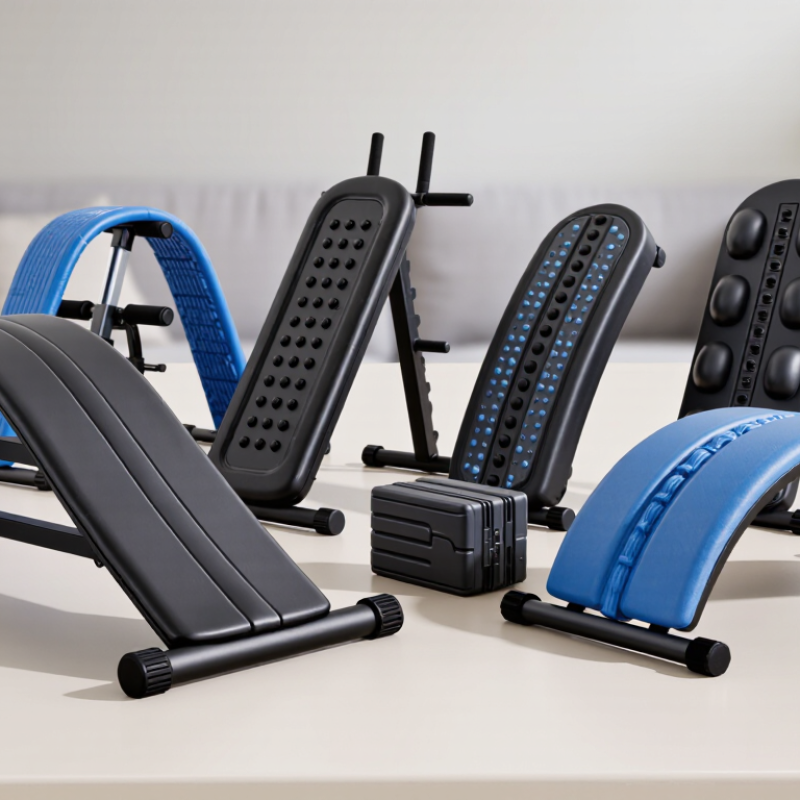
A fixed-arch board offers one steady curve; a multi-level board lets users choose among height settings. Inflatable models adjust firmness with air, while segmented boards use separate raised sections. Rocking designs add gentle movement, folding boards prioritize storage and portability, and traction-style boards aim to create a longer stretch.
More adjustment is not always better. A high setting may feel too intense, especially during a first session.
Tips: Start on the lowest setting and place the board on a firm, level floor. Try a short session, breathe normally, and stop if pain worsens, spreads, or causes numbness. Check the manufacturer’s instructions, too. Small details matter: a slippery surface or misplaced arch can change how the board feels. These tools are not a substitute for professional advice when symptoms persist.
How to Assess Fit, Stability, Materials, and Manufacturer Weight Ratings
Back pain affects many people, but a stretch board is not a universal solution. The World Health Organization’s 2023 Low Back Pain fact sheet reports an estimated 619 million cases worldwide in 2020, based on Global Burden of Disease data. That figure describes the scale of the problem, not proof that a board will relieve symptoms. Fit matters.
Check the board’s usable length and width against your body, then inspect the curve before buying. A comfortable fit should let your back rest evenly, without your shoulders or hips hanging over the edges. Small details matter. Look for a broad, level base and non-slip feet; on a hard floor, even slight rocking can feel unsettling. No wobble.
Material affects feel and upkeep. Molded plastic is often light and easy to wipe, while wood can feel firm but may need closer inspection for cracks or rough edges. Check the manufacturer’s weight rating and whether it covers the user alone or additional force during stretching. A bigger number is not automatically a safer board. I’d also check how the rating was tested; product pages do not always explain this clearly. If the board shifts, creaks, or causes sharp discomfort, stop and reassess the fit rather than forcing a deeper stretch.
Everyday Use: Begin Gradually and Follow Clinical Safety Guidance
A back stretcher board can feel intense even at its lowest setting. Begin with the gentlest curve and a brief session, following the device instructions. A minute or two may be enough to see how your body responds. Small steps matter. Breathe normally, keep your movements controlled, and avoid forcing your back into a deeper arch. It is easy to assume that stronger stretching means better results. It does not.
Use the board on a stable, nonslip surface, and get on and off slowly. Mild pressure may feel unfamiliar, but sharp pain, tingling, numbness, or weakness are reasons to stop. Don’t use the board to push through symptoms. If discomfort lingers or worsens, seek advice from a qualified healthcare professional. I’d rather be cautious than mistake warning signs for progress.
Check with a clinician before use if you have a diagnosed spinal condition, osteoporosis, a recent injury or surgery, or are pregnant. A clinician can help determine whether this type of stretching is appropriate and suggest safe positioning. Even routine use should stay comfortable and brief at first; increase time only if it remains symptom-free and fits your clinician’s guidance. Keep a simple note of session length and how your back feels later that day. That detail can make a conversation with your care provider more useful.
7 Best Back Stretcher Boards for Everyday Use
Everyday use: Begin gradually and follow clinical safety guidance.
WHO Adult Weekly Aerobic Activity Recommendations
These WHO recommendations refer to general aerobic activity—not back-stretcher session times. They do not establish a standard schedule for using a stretcher board. Start gently, stop if symptoms worsen, and follow advice from a qualified healthcare professional.