What Is the Best Fine Mesh Strainer With Handle?
Choosing the best Fine Mesh Strainer With Handle is not as simple as comparing star ratings. A reliable strainer must separate flour, tea leaves, sauces, seeds, and powdered sugar without bending under ordinary kitchen use. Its mesh should be fine enough for smooth results, yet open enough to drain quickly. A comfortable handle matters too, especially when one hand holds a hot saucepan. Small details can decide the experience. A stable rim, balanced weight, strong welds, and an easy-to-clean surface often matter more than a polished product photo.
This guide examines popular designs through practical, everyday criteria. We will consider mesh density, handle length, bowl capacity, material quality, storage, and heat resistance. Stainless steel is usually valued for durability and food-contact reliability, but not every model feels equally solid. Some handles become uncomfortable after repeated use. Others look sturdy but flex when pressing thick mixtures. That difference becomes obvious over time. Real kitchens are messy.
The best choice depends on your routine. A baker may need a fine, lightweight sieve for cocoa and flour. A home cook may prefer a wider strainer for stock, pasta water, or rinsed rice. Cleaning also deserves attention, because trapped particles can hide around the rim and handle joint. No product wins every task. Even careful comparisons have limits, since hand size, sink space, and cooking habits vary. This review aims to make those trade-offs clear, using practical observations rather than vague claims. Expect useful detail, but not a perfect answer.
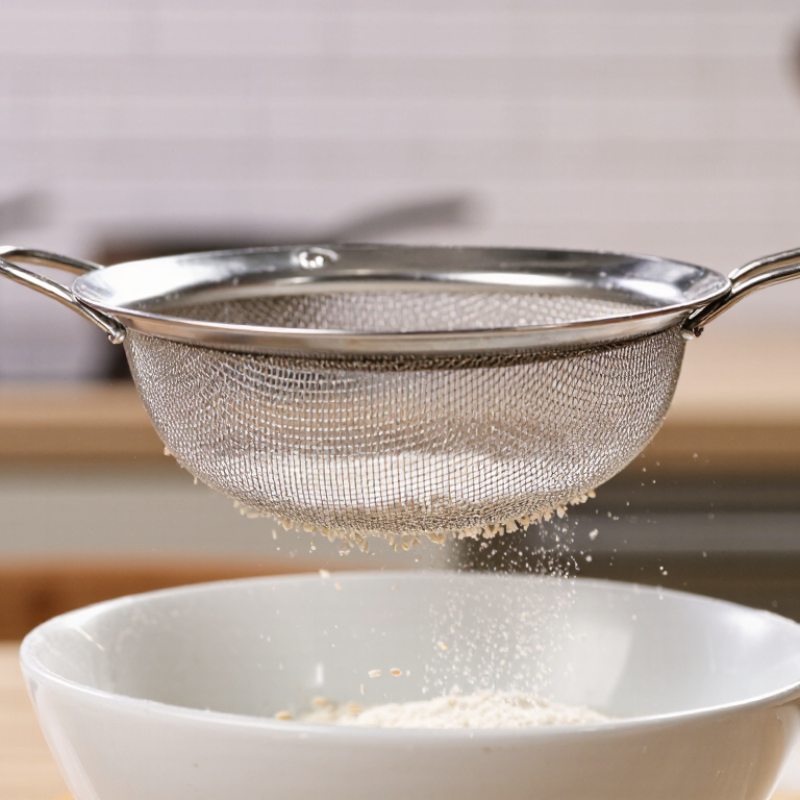
What Defines a High-Quality Fine Mesh Strainer With Handle
A high-quality fine mesh strainer with a handle begins with stable, evenly woven mesh. The openings should look consistent, without bent wires or visible gaps. Fine mesh catches flour, tea leaves, seeds, and small food particles effectively. However, extremely tight mesh can drain slowly and become difficult to clean. Practical performance matters more than appearance alone.
The frame should remain rigid when pressed against a bowl or saucepan. A secure rim prevents liquid from escaping around the edges. Welded joints or strong, smooth connections usually last longer than loose fittings. I once chose a strainer with a beautiful finish but a flexible frame. That judgment was wrong. It bent under the weight of cooked rice and felt awkward during use.
The handle needs enough length to keep hands away from hot steam. Its grip should feel balanced, even when the strainer holds wet ingredients. A hanging loop or resting hook adds useful storage and stability. I also check whether the handle traps water near its connection. That small space can become unpleasant after repeated washing. Smooth surfaces, accessible corners, and corrosion-resistant material make daily cleaning easier. A high-quality model should feel dependable, not delicate, while still allowing precise control over fine straining tasks.
What Defines a High-Quality Fine Mesh Strainer With Handle?
Mesh aperture is a practical indicator of straining fineness: a smaller opening captures finer particles. Stainless-steel strainers in the 40–100 mesh range typically provide approximately 150–420 micrometre openings. A high-quality model should combine a suitable aperture with a rigid frame, secure handle, corrosion-resistant material, and stable support.
How Mesh Size Affects Filtering Performance and Food Texture
What Is the Best Fine Mesh Strainer With Handle?
How Mesh Size Affects Filtering Performance and Food Texture
Mesh size controls more than filtering speed. It also changes the final texture, moisture level, and appearance of food. Coarse mesh removes large pieces while allowing pulp and small particles through. It works well for rinsing rice, draining pasta, and separating chunky stock ingredients.
Medium mesh creates a smoother result without stopping every drop. It suits gravy, fruit purée, and loose sauces. Fine mesh captures tiny seeds, spice particles, and flour lumps. The result feels silkier on the tongue. Small holes matter. However, very fine mesh can slow liquid flow and trap valuable juice.
Mesh numbers can be confusing because manufacturers may measure them differently. Check the actual opening size when possible. A sturdy handle should stay cool, balance over a bowl, and resist bending under wet ingredients. I prefer a deep basket because shallow strainers spill easily. That is a practical detail, but it affects daily use.
I once used an extremely fine strainer for a thick berry sauce. The sauce became smooth, yet much of it stayed trapped in the mesh. A medium-fine option would have worked better. This reminded me that “finest” does not always mean “best.” Choose the mesh according to the texture you want, not only the smallest visible holes.
What Is the Best Fine Mesh Strainer With Handle? — How Mesh Size Affects Filtering Performance and Food Texture
| Approximate Mesh Count | Approximate Opening Size | Filtering Performance | Typical Foods and Liquids | Resulting Food Texture | Flow Rate | Clogging Risk | Handle Strainer Suitability | Best Overall Use |
| 20 mesh | Approximately 0.80–1.00 mm | Removes coarse solids while allowing liquid to pass quickly. | Stock, broth, cooked vegetables, pasta water, and large seeds. | Clean-looking liquid with some fine particles remaining. | Fast | Low | Very practical for draining and everyday cooking. | General-purpose straining |
| 40 mesh | Approximately 0.38–0.45 mm | Removes most pulp, larger spice particles, and visible food debris. | Gravy, sauces, tea leaves, fruit purées, and homemade broth. | Smoother sauces with moderate body and fewer particles. | Medium-fast | Low to moderate | Good balance of capacity, speed, and control. | Everyday sauces and soups |
| 60 mesh | Approximately 0.22–0.28 mm | Captures fine pulp, small herb fragments, and many suspended particles. | Custards, smooth soups, fruit sauces, infused oils, and powdered sugar. | Noticeably smooth and refined without filtering too aggressively. | Medium | Moderate | Often the most versatile size for a handled fine-mesh strainer. | Best all-around fine filtering |
| 80 mesh | Approximately 0.16–0.19 mm | Removes very small particles and produces a highly clarified result. | Fine sauces, clear consommé-style liquids, syrups, and delicate purées. | Very smooth texture with reduced pulp and sediment. | Slow | Moderate to high | Useful when precision matters more than speed. | Extra-smooth sauces and liquids |
| 100 mesh | Approximately 0.12–0.15 mm | Retains exceptionally fine particles but may require stirring or gentle pressing. | Very fine powders, clarified liquids, and finely strained extracts. | Extremely smooth, but some thickness and flavor-bearing solids may be removed. | Very slow | High | Best for specialized tasks rather than routine kitchen use. | Maximum particle removal |
Selection note: A 60-mesh stainless-steel strainer with a stable handle is generally the best compromise for home cooking because it provides a smooth result while maintaining usable flow. Mesh openings are approximate because the actual aperture depends on wire diameter, weave construction, and manufacturing tolerances. Finer mesh sizes filter more particles but usually drain more slowly and are more likely to clog.
Which Handle and Frame Features Improve Comfort and Control
What Is the Best Fine Mesh Strainer With Handle?
A comfortable handle makes fine straining much easier than it appears. I prefer a grip around three to four centimeters wide, because narrow metal handles press into wet fingers. A slightly textured surface also helps when the strainer is full of rinsed rice or hot broth. The handle should feel balanced, not pull the bowl toward the counter. Short handles offer control, but longer ones keep hands away from steam. That trade-off matters in daily cooking.
The frame needs enough depth to hold liquid without splashing. A rounded rim rests more securely on a saucepan or mixing bowl. I look for a firm connection between the handle and frame, preferably with smooth welds or strong food-grade fasteners. Loose joints collect residue and can make the tool wobble. A small hanging loop is useful, although it may catch on crowded storage hooks. I once chose a very long handle for safety, but it made delicate rinsing awkward.
Mesh tension also affects control. Tight, evenly woven mesh should remain stable when pressed lightly against a bowl. A reinforced outer ring reduces bending during repeated washing. Some handles include a resting hook, allowing the strainer to sit across a pot without touching the contents. That feature sounds minor. It saves a surprising amount of mess. Still, I would check the hook’s width against your cookware, since universal fit is often overstated. A dishwasher-safe construction can improve reliability, but harsh cleaning may dull the finish over time.
Comparing Materials, Durability, and Cleaning Requirements
What Is the Best Fine Mesh Strainer With Handle?
A fine mesh strainer should balance filtering performance, durability, and easy cleaning. Stainless steel mesh usually offers the strongest long-term performance. It resists rust, heat, and staining when properly dried. A tightly woven mesh catches flour, tea particles, seeds, and small food lumps. However, extremely fine mesh can slow drainage and trap more residue. I learned this after washing a strainer with flour paste stuck around the rim. The handle also matters. A firmly welded handle feels safer than a loose, folded attachment. A wide resting hook is useful over a bowl, but it should not bend under moderate weight.
Durability depends on more than the mesh material. Check whether the rim is reinforced and whether the mesh sits evenly without dents. Thin mesh may filter beautifully, yet it can deform when pressed against a sink or pan. A comfortable handle helps during repeated use, especially with hot liquids. Still, heat-resistant materials do not make every strainer suitable for direct stovetop contact. Follow the maker’s care instructions. I once chose a lightweight model for convenience, but its handle became unstable after several months. That choice needed more thought.
Tips: Rinse the strainer immediately after use. Use a soft brush from the outer side first. Avoid forcing spoons through the mesh. For oily residue, soak it briefly in warm, soapy water. Inspect the rim and handle regularly. If the mesh loosens, replace the strainer rather than trusting a temporary repair.
How to Choose the Best Strainer for Different Kitchen Tasks
Choosing the best fine mesh strainer starts with the kitchen task, not the handle. Mesh size matters. Use fine mesh for powdered sugar, tea, clear broths, and smooth sauces. Choose wider openings for rice, pasta, and leafy vegetables. A 2024 UNEP Food Waste Index report estimated 1.05 billion tonnes of food were wasted globally in 2022, with households responsible for 60%. Better draining and filtering may help preserve usable liquids, although a strainer alone cannot solve waste.
For daily cooking, select corrosion-resistant metal with a firmly attached handle. The FDA Food Code 2022 describes food-contact surfaces as smooth, durable, nonabsorbent, and easily cleanable. Avoid deep seams where flour, pulp, or egg residue can hide. A resting hook or broad rim keeps the mesh away from a wet countertop. Keep it stable. Test the balance over a bowl before buying.
Food safety also affects the choice. The CDC estimates that foodborne illnesses cause about 48 million illnesses, 128,000 hospitalizations, and 3,000 deaths annually in the United States. A washable strainer supports safer preparation, but it still needs prompt cleaning after raw-food contact. I prefer a handle long enough to protect my fingers from hot steam. I sometimes choose a mesh that is too fine, though; it clogs quickly with fibrous vegetables. That mistake reminds me to match the tool with the ingredient, not just the recipe.