7 Best Plaza Musical Fountains for Global Buyers
Choosing the right Plaza Musical Fountains requires more than comparing photographs and prices. Buyers must examine water effects, lighting quality, control systems, construction materials, maintenance access, and local climate conditions. A fountain that performs beautifully in a dry plaza may struggle with wind, freezing temperatures, or heavy public use.
This guide presents seven strong options for global buyers, based on practical design priorities and proven installation considerations. Each selection reflects how musical fountains appear at night, how clearly their jets synchronize with sound, and how easily technicians can service pumps and nozzles. Stainless steel structures, efficient LED fixtures, reliable filtration, and responsive control software can improve long-term performance. Small details matter. A blocked nozzle can weaken an entire show.
The list also considers installation scale, customization potential, operating costs, and supplier communication. Experienced buyers should request technical drawings, water-consumption data, warranty terms, spare-part availability, and references from completed projects. Certifications and regional engineering requirements also deserve careful review. No single fountain suits every plaza. That is worth remembering.
Some suppliers may present impressive demonstrations, yet real performance can depend on maintenance discipline and site preparation. Therefore, this overview avoids treating appearance as the only measure of quality. It offers a practical starting point for municipalities, developers, landscape designers, and entertainment venues seeking dependable Plaza Musical Fountains with lasting visual impact. Expect useful comparisons, but verify every specification before making a final decision.
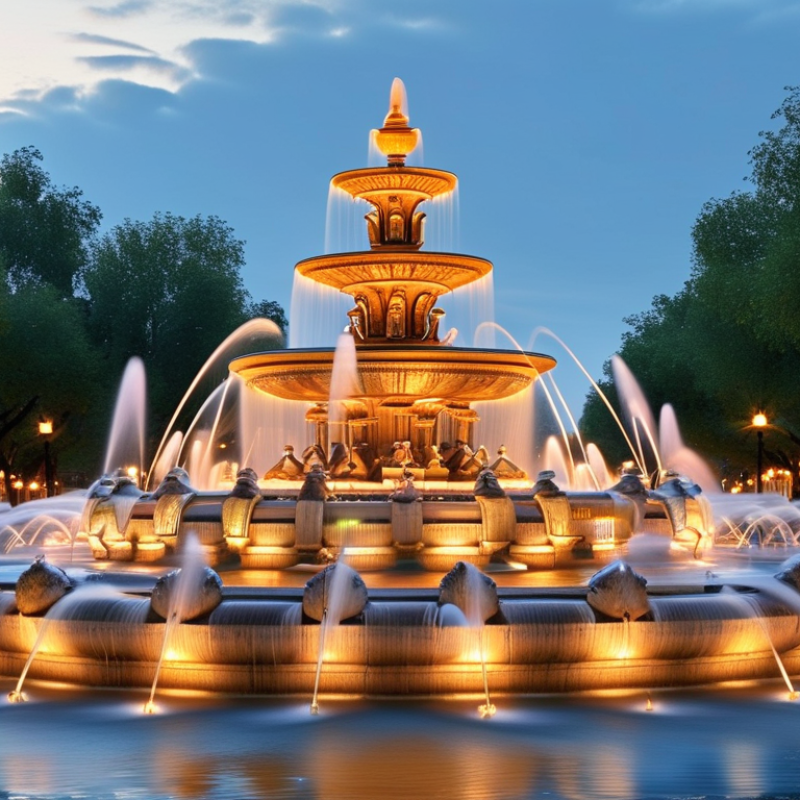
What Defines a Plaza Musical Fountain?
What Defines a Plaza Musical Fountain?
A plaza musical fountain is more than water, lights, and music. It is a coordinated public-space system. Water jets must follow programmed rhythms with stable pressure. Lighting should reveal each movement without creating glare for visitors. Clear audio matters, but it should not overwhelm nearby shops or residents. In professional site reviews, I look closely at pump access, drainage, control cabinets, and emergency shutoff systems. These details often decide whether a fountain performs reliably after opening.
Good design also responds to its location. A coastal plaza may need stronger corrosion protection. A cold region requires suitable winter procedures. High-traffic areas need slip-resistant surfaces and safe viewing distances. Accessible paths should remain clear during shows. Buyers should request verified technical drawings, maintenance schedules, water-treatment plans, and documented safety testing. Performance claims alone are not enough. A beautiful demonstration can hide difficult cleaning work.
Tips
Ask for a full operating example, not only daytime images. Watch the fountain during startup, shutdown, and an unexpected stop. Check whether technicians can replace pumps without closing the entire plaza. No system is perfect. A slightly simpler show may provide better reliability, lower maintenance costs, and fewer unpleasant surprises. Water quality, local weather, and public behavior should shape the final specification.
How to Evaluate Musical Fountain Designs for Global Projects
7 Best Plaza Musical Fountains for Global Buyers
How to Evaluate Musical Fountain Designs for Global Projects
A strong plaza fountain begins with site evidence, not visual effects. Measure wind, sunlight, drainage, water quality, and pedestrian movement before approving the concept. The United Nations projects that 68% of people will live in urban areas by 2050. Public spaces therefore need durable, inclusive, and resource-aware designs. Review nozzle patterns at different viewing distances. A clear rhythm should remain visible from the entrance, nearby seating, and upper buildings.
Water management deserves serious attention. The 2024 UN World Water Development Report states that agriculture uses about 70% of global freshwater withdrawals. This makes unnecessary fountain loss difficult to justify. Specify closed-loop circulation, filtration, automatic water-level control, and accessible maintenance points. Check pump efficiency, lighting loads, and control-system compatibility. The International Energy Agency reports that buildings consume around 30% of global final energy. Efficient pumps and timed shows can reduce operating pressure, although savings depend on programming and local tariffs.
Musical accuracy matters too. Test sound coverage beside cafés, roads, and residential blocks. Avoid excessive volume. Review local noise rules early. A practical design should support multiple languages through symbols and simple controls. I have seen impressive concepts fail because technicians could not reach buried valves quickly. That detail is easy to miss. Ask suppliers for hydraulic calculations, electrical diagrams, water-treatment records, corrosion specifications, and lifecycle cost estimates. Request a night demonstration, not only polished renderings. Safety barriers, slip-resistant paving, emergency shutoff access, and weather protection should be evaluated before aesthetics.
Seven Leading Plaza Musical Fountain Concepts
Seven Leading Plaza Musical Fountain Concepts
Global buyers now assess fountains as public infrastructure, not decoration. UN-Habitat’s World Cities Report 2022 states that 56% of people lived in cities in 2021. By 2050, the share may reach 68%. This growth increases demand for memorable, flexible gathering spaces.
Seven leading plaza musical fountain concepts suit different sites.
Choreographed vertical jets create a dramatic skyline.
Linear rills guide movement beside walkways.
Interactive sensor jets invite children and families to play.
A dry-deck fountain preserves open space between performances.
Musical arches frame entrances and evening events.
Projection basins combine water, light, and cultural storytelling.
Fine mist gardens reduce perceived heat around seating areas.
Details determine whether these concepts work. Specify stainless-steel nozzles, accessible maintenance chambers, anti-slip paving, and concealed drainage. Program several quiet cycles, not only loud performances. UNESCO’s World Water Development Report 2024 notes that agriculture represents about 70% of global freshwater withdrawals. Plaza systems should therefore use filtration, timed recirculation, leak monitoring, and low-loss spray patterns. Water quality still requires trained operators and documented testing.
Experience shows that a beautiful animation can fail when wind carries spray onto nearby paving. That assumption can fail. Music also needs careful volume control near residences and hotels. I would test the fountain at midday, dusk, and during crowded events. A concept is only successful when visitors enjoy the water, technicians can service it, and the plaza remains comfortable after the show.
Key Features, Technologies, and Customization Options
A strong plaza musical fountain balances visual drama, control, durability, and maintenance. The seven best formats include linear jets, dancing nozzles, arching streams, mist curtains, laminar columns, interactive decks, and multi-level basins. Each format suits a different public setting. A compact interactive deck may fit a civic square, while a 12-meter basin can anchor a large commercial plaza.
Modern systems use variable-frequency pumps, programmable controllers, RGBW lighting, and time-synchronized audio. DMX or PLC control allows precise changes in height, color, rhythm, and water pressure. Wind sensors can lower jet height during strong gusts. Water-level sensors protect pumps when evaporation or leakage occurs. IP-rated fixtures and stainless-steel pipework support long outdoor service. However, technical claims should be checked against actual test reports, not brochures alone.
Customization begins with the site survey. Designers should review sunlight, drainage, pedestrian flow, acoustic limits, and local climate. Stone edges, stainless-steel grilles, and hidden maintenance covers can match the plaza architecture. Operators may request seasonal programs, multilingual control interfaces, or energy-saving schedules. In projects I have reviewed, easy access to filters mattered more than decorative details. A beautiful fountain can still disappoint when cleaning requires shutting down the entire plaza. I would also question overly complex controls. Simpler systems are often easier to train, repair, and trust.