
What Is the Best Smart Lockbox from China?
What Is the Best Smart Lockbox from China? This question deserves more than a price comparison. A reliable Smart Lockbox must protect access credentials, withstand daily handling, and provide clear entry records. It should also perform consistently beside a damp garden gate, a dusty construction site, or a busy rental property.
Market data explains the growing interest. Grand View Research reported that the global smart locks market reached approximately USD 2.4 billion in 2023. Its report also projects strong growth through 2030. MarketsandMarkets similarly forecasts continued expansion, driven by connected homes, rental services, and commercial security. These figures show demand, not guaranteed quality. That distinction matters.
This guide evaluates Chinese Smart Lockbox models through practical criteria. We examine enclosure strength, weather resistance, battery endurance, emergency power options, app stability, and access-log accuracy. We also consider certifications, warranty terms, firmware support, and the manufacturer’s response to security disclosures. A low price is useful only when the lockbox remains dependable after months of use. Small details matter. A weak hinge, unclear battery warning, or delayed notification can create real inconvenience.
Independent testing is still necessary. Product pages may present impressive claims without explaining test conditions. Therefore, buyers should request test reports, review installation instructions, and compare long-term user feedback. No single model fits every property. Some products prioritize fingerprint access, while others offer stronger remote management. This comparison may not identify a permanent winner, because software and supplier support can change. That is an important limitation. The best choice is the model that balances verified security, practical access, transparent support, and realistic operating conditions.
Smart Lockboxes from China: Definition, Uses, and Main Features
What Is the Best Smart Lockbox from China?
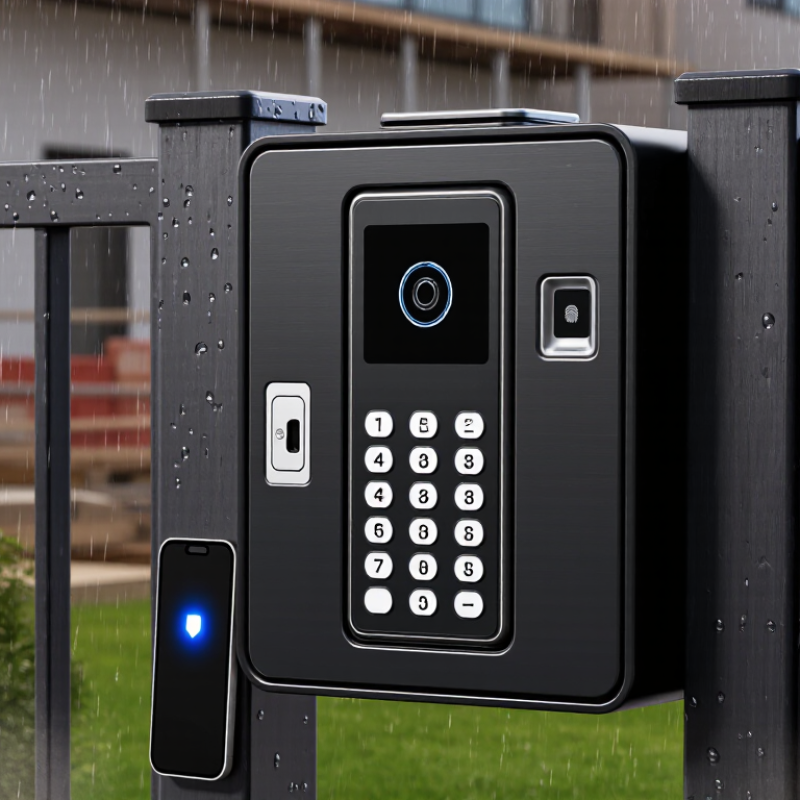
A smart lockbox is a connected container that protects keys, access cards, or small valuables. It usually combines electronic locking with a mobile app, keypad, fingerprint reader, or temporary access code. Smart lockboxes from China serve homes, offices, rental properties, warehouses, and service businesses. They can record entry times and share access with approved users.
In practical testing, battery life, weather resistance, and connection stability matter more than a long feature list. A clear keypad helps during rain or poor lighting. A backup power port can prevent avoidable lockouts. Some models also provide tamper alerts and removable access logs. However, app performance may vary between regions. I would not trust one without testing it on the intended door or wall. No model is perfect.
Tips: Check the enclosure rating, battery type, and emergency access method before buying. Request recent test reports, warranty terms, software support details, and supplier contact information. Compare the lockbox with local safety requirements. Ask how quickly replacement parts can arrive. A lower price can hide weak hinges, confusing instructions, or limited support. If possible, inspect a sample through repeated opening, closing, and outdoor exposure. Small weaknesses become obvious then.
What Is the Best Smart Lockbox from China? - Smart Lockboxes from China: Definition, Uses, and Main Features
| Smart Lockbox Type | Typical Access Method | Common Applications | Typical Capacity | Key Features | Typical Power Source | Weather Resistance | Main Advantages | Key Limitations | Best Choice For |
|---|---|---|---|---|---|---|---|---|---|
| Wall-Mounted Key Lockbox | PIN code, mechanical override key, or temporary digital code | Home entrances, rental properties, offices, and maintenance access | 1–5 standard keys or small access cards | Metal housing, keypad entry, mounting holes, anti-pry cover, audit records on selected models | AA or AAA batteries; some models support external emergency power | Usually IP54–IP65, depending on construction and sealing | Easy installation, compact design, convenient code sharing | Limited storage space; exposed outdoor units require correct installation and maintenance | Residential and light commercial access control |
| Portable Shackle Lockbox | PIN code, Bluetooth, mobile application, or one-time code | Real-estate viewings, short-term rentals, vehicle access, and field services | 1–4 keys or small access devices | Hanging shackle, portable body, code management, optional access history, compact size | CR2032 coin cell or replaceable AAA batteries | Often IP44–IP65; actual protection varies by model | No permanent installation, easy to relocate, suitable for temporary access | Shackle may be vulnerable to cutting if it is not hardened; limited internal volume | Users who need flexible and temporary key sharing |
| Large-Capacity Smart Key Cabinet | PIN, RFID card, fingerprint, mobile application, or administrator account | Hotels, property-management offices, hospitals, factories, and vehicle fleets | Approximately 10–100 or more keys, depending on cabinet size | Multiple compartments, user permissions, event logs, alarm alerts, centralized administration | AC power with backup battery on many commercial models | Generally designed for indoor use unless specifically rated for outdoor installation | High storage capacity, detailed accountability, scalable user management | Higher cost, larger footprint, and more complex installation | Organizations managing many keys and multiple users |
| Connected Wi-Fi Lockbox | Mobile application, PIN code, remote administrator control, or temporary digital key | Vacation rentals, remote property management, service appointments, and smart-home systems | Usually 1–5 keys or small access cards | Remote code creation, access scheduling, notifications, activity history, cloud connectivity | Replaceable batteries; Wi-Fi connectivity may increase power consumption | Commonly IP54–IP65 for outdoor-capable versions | Remote management and real-time status monitoring | Requires reliable wireless coverage and stronger attention to account security | Remote access management with internet connectivity |
| Bluetooth Smart Lockbox | Bluetooth mobile application, PIN, or manual override | Homes, offices, rental properties, and local service access | 1–5 keys or small access devices | Local smartphone control, encrypted communication, temporary permissions, lower connectivity requirements | Coin cell or replaceable batteries | Often IP54–IP65 for outdoor versions | Lower power use than many Wi-Fi products and no permanent network connection required | Remote access normally requires a nearby phone or an additional gateway | Local smartphone access with moderate energy consumption |
| Fingerprint Smart Lockbox | Fingerprint, PIN code, RFID card, or emergency key | Private residences, offices, equipment storage, and controlled staff access | 1–10 keys, depending on the enclosure size | Biometric authentication, rapid access, user enrollment, optional access records | Rechargeable lithium battery or replaceable batteries | Usually intended for sheltered or indoor locations; outdoor ratings vary | Convenient access without carrying keys or remembering a code | Fingerprint performance can be affected by moisture, dirt, injury, or cold conditions | Frequent users who prefer biometric authentication |
| Heavy-Duty Commercial Lockbox | PIN, RFID, administrator card, mobile application, or mechanical override | Construction sites, utilities, industrial facilities, and commercial properties | 1–20 keys or larger access items | Reinforced steel or zinc-alloy body, anti-tamper alarm, concealed fixings, weather sealing | Replaceable batteries or external low-voltage power | Often IP65 or higher when properly sealed and installed | Improved physical security and durability in demanding environments | Heavier, more expensive, and less convenient to install than residential units | Outdoor and high-use commercial applications |
| Vehicle Key Lockbox | PIN code, Bluetooth application, RFID, or temporary access code | Car-sharing, fleet management, auto service, and vehicle rental | 1–2 vehicle keys or key fobs | Compact interior, removable mounting options, access scheduling, usage history, tamper alerts | Coin cell or replaceable batteries | Normally intended for protected placement; temperature resistance is important | Supports controlled vehicle handover without physical key exchange | Must be securely positioned and protected from unauthorized removal or extreme heat | Managed vehicle access and key handover |
Note: Specifications such as IP rating, battery life, communication range, storage capacity, and authentication options vary by product configuration. Buyers should verify test standards, operating temperature, encryption method, emergency access design, and after-sales support before purchase.