
Choosing the best Smart Street Light manufacturer in China is not simply a price comparison. A city needs reliable illumination, efficient controls, and equipment that keeps working through rain, dust, and years of nightly operation. The International Energy Agency (IEA) estimates that lighting accounts for roughly 15% of global electricity consumption. Streetlights are only one part of that total, but they offer municipalities a practical place to improve efficiency.
The IEA has described energy efficiency as the “first fuel,” a phrase used by its Executive Director, Fatih Birol. That principle helps explain the appeal of connected street lighting: LEDs can pair with dimming controls, sensors, and remote monitoring to reduce wasted output. Still, projected savings vary with the existing lamps, operating schedules, and control settings. Numbers need context.
For buyers, a strong manufacturer should support its claims with test reports, clear product specifications, and evidence of real-world installations. Check lumen output, ingress protection, driver quality, communications compatibility, warranty terms, and after-sales support. Ask how the system behaves when connectivity fails. A polished catalogue is not enough. And specifications can look perfect on paper. This guide examines manufacturers by product capability, engineering evidence, customization, and service—not just headline prices. The best fit is the supplier whose performance can be verified for the project’s roads, climate, and maintenance capacity.
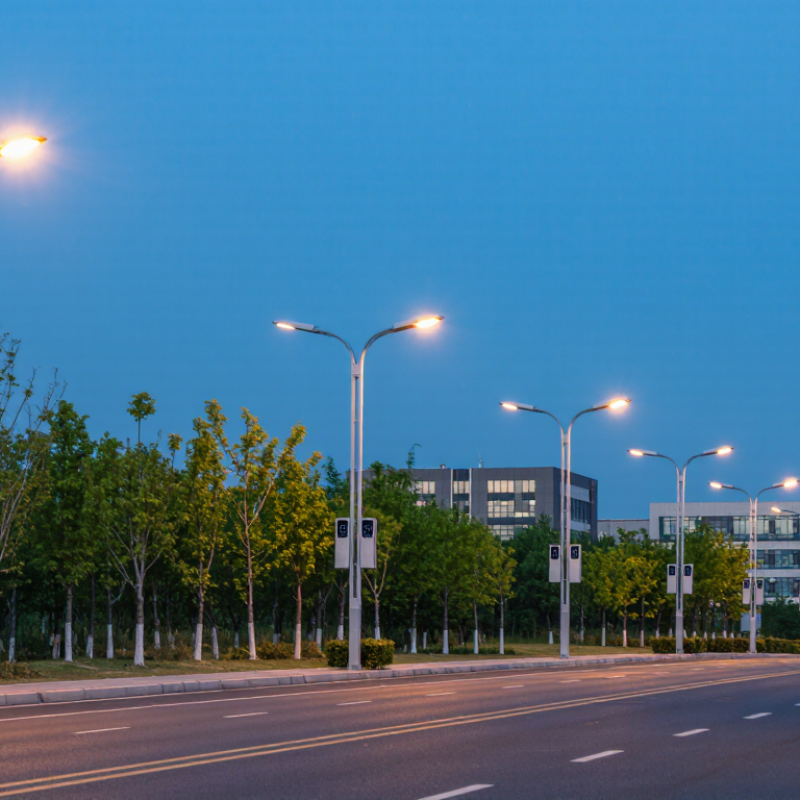
A capable smart street light manufacturer in China does more than assemble a pole, housing, and LED module. It understands optical design, heat management, electrical safety, and outdoor durability. Ask for photometric files, ingress and impact ratings, and test records for the actual product configuration. A neat specification sheet is useful, but it cannot tell the whole story. Look for clear explanations of how the fixture performs in rain, dust, heat, and long operating hours.
Smart controls matter just as much as the lamp. A manufacturer should explain dimming schedules, sensor options, network communication, and how operators can monitor faults. Request a live software demonstration, not only screenshots. Check what happens when communication drops: does the light keep a safe preset, and can technicians diagnose failures locally? Service access, replacement parts, warranty terms, and documented field testing also reveal how seriously a supplier treats long-term operation. Some details may remain uncertain until installation.
Tips: Test a small group of lights on the intended road. Compare measured brightness and energy use with the design plan. Keep notes; real sites can surprise you.
Smart street lighting combines efficient LED fixtures, precise drivers, sensors, and remote controls. At each pole, a controller can adjust brightness by schedule or nearby activity. Dimming helps save energy while keeping sidewalks and crossings visible. Good thermal management matters too; heat trapped inside a sealed fixture can shorten component life. Small design choices count.
The communication network connects poles to an operating platform. Depending on local conditions, systems may use mesh radio, cellular links, or wired connections. Reliable devices report energy use, outages, and unusual power changes, helping maintenance teams locate faults without checking every pole. Security features and clear data access are important, but compatibility can be uneven across suppliers. A system that works well in a test area may struggle when buildings block signals or weather exposes weak seals. That gap deserves attention.
Tips: Ask for nighttime field-test results, sensor response times, and documented compatibility with existing controls. Check how the system behaves during a network outage. Real streets are less predictable than demonstration sites.
What Is the Best Smart Street Light Manufacturer in China?
How Chinese Manufacturers Differ in Products and Capabilities
There is no single best manufacturer for every street-lighting project. Chinese suppliers differ in lamp design, control systems, customization, and production depth. Some focus on efficient LED modules and durable aluminum housings. Others offer networked controls, dimming schedules, and remote fault alerts. Ask how the product handles heat, moisture, and voltage changes, not just how bright it looks in a showroom.
Manufacturing capability matters too. Check whether the supplier can provide test records, stable production samples, and clear component specifications. Ask about firmware updates and how replacement parts are sourced. A polished sample is useful, but it cannot prove consistent quality across a large order. Requesting a pilot batch can reveal problems early. Even then, one detail may be missed: installation conditions can affect performance as much as the fixture itself.
Tips: Compare the same wattage, optical distribution, warranty terms, and control features across suppliers. Ask for a sample report and verify that its figures match the offered model. Keep project needs specific. “Smart” can mean very different things.
Illustrative energy use for one 100 W street light operating 12 hours per night. The baseline runs at 100 W throughout; the scheduled example runs at 100 W for 4 hours and at a measured 50 W input for 8 hours.
Under these assumptions, scheduled operation uses 0.4 kWh less per night per light, a calculated reduction of about 33%. This is an example, not a manufacturer ranking or market-wide result. Actual savings depend on measured power draw, dimming performance, operating hours, and control settings.
Choosing a smart street-light manufacturer begins with the street, not the catalogue. Ask for project-specific photometric files and independent test reports, including lumen output, efficacy, glare control, and color consistency. The International Energy Agency estimates lighting accounts for about 15% of global electricity use and around 5% of global greenhouse gas emissions. That makes efficiency worth checking, but product figures alone cannot predict a city’s savings. A specification sheet is not proof.
Controls need equal scrutiny. Confirm the system supports open, documented interfaces and can integrate with the project’s existing network. Ask how it behaves during communication failures, power interruptions, and software updates. Check cybersecurity procedures, data ownership, and whether operators can export records without extra fees. Test it outdoors. A short pilot can reveal dimming delays, uneven light, or poor radio coverage between poles.
Review the warranty in practical terms: who replaces a failed driver, how quickly, and whether spare parts remain available? Request environmental and temperature test results that match local conditions. A polished dashboard can still hide weak field support. I would not select a supplier on price alone; compare the total cost of installation, maintenance, energy, and replacement over the project’s expected life.
What Is the Best Smart Street Light Manufacturer in China?
How Smart Street Lights Are Used in Cities and Infrastructure
Smart street lights do more than illuminate roads after sunset. In city streets, sensors can adjust brightness as traffic and pedestrian activity change. A control platform can also flag outages, helping maintenance teams locate a dark lamp without checking every pole. The International Energy Agency estimates that lighting accounts for about 15% of global electricity use and 5% of greenhouse gas emissions. That makes efficient public lighting a practical infrastructure priority.
Cities can connect lighting networks with traffic systems, weather stations, and emergency services. A pole near a crossing might brighten when pedestrians approach, while another can provide data on traffic flow or local air conditions. The UN’s World Urbanization Prospects: The 2018 Revision projects that 68% of the world’s population will live in urban areas by 2050. More people will rely on safe, well-maintained public spaces. Small details matter.
Smart controls need careful planning. Poor sensor placement, weak network coverage, or unsuitable dimming schedules can reduce benefits and frustrate residents. Not everywhere. A busy intersection needs different lighting from a quiet residential lane, and savings should never come at the cost of visibility. Pilot projects, energy monitoring, and resident feedback help cities tune systems before wider deployment.
| Application | Typical Lighting Approach | Smart Functions | Infrastructure Integration | Key Evaluation Criteria |
|---|---|---|---|---|
| Urban roads and arterial streets | LED luminaires selected to suit road layout, traffic conditions, mounting height, and applicable roadway-lighting requirements. | Remote on/off control, scheduled dimming, fault alerts, and energy-use monitoring. | Central management software; wireless or wired communications; utility power and existing poles where suitable. | Road-lighting compliance, glare control, uniformity, surge protection, maintainability, and compatibility with the control system. |
| Residential streets and local roads | LED lighting designed for lower-speed streets, pedestrian visibility, and nearby homes. | Time-based dimming and, where appropriate, occupancy-responsive brightness adjustments. | Lighting-control network connected to a municipal operations platform. | Light spill, visual comfort, dependable low-light operation, control flexibility, and resident-facing operating policies. |
| Intersections and pedestrian crossings | Lighting positioned to make road users, crossing areas, and potential conflicts more visible. | Monitoring of luminaire status; adaptive control may be coordinated with traffic or crossing systems where permitted. | Traffic signals, crossing controls, roadway sensors, and city monitoring systems, subject to integration requirements. | Visibility at conflict points, reliable operation, safe integration with traffic equipment, and clear fault reporting. |
| Parks, plazas, and public spaces | Area lighting planned for paths, entrances, gathering areas, and landscape context. | Schedules, zone-based dimming, remote monitoring, and optional environmental or people-counting sensors. | Park-management systems, public Wi-Fi, security systems, or other services when supported by the pole and network design. | Appropriate light distribution, glare and spill control, weather resistance, accessibility, and privacy-aware sensor use. |
| Highways, tunnels, and transport corridors | Lighting specified for the operating conditions and safety requirements of each corridor or enclosed section. | Central status monitoring, scheduled control, alarms, and maintenance diagnostics. | Transport control centers, roadway communications, emergency systems, and backup-power arrangements where required. | Applicable transport standards, environmental durability, communication resilience, emergency procedures, and service access. |
| Industrial sites, ports, and logistics areas | High-mast or area lighting selected for large work zones, access roads, and operational yards. | Zone controls, operating schedules, remote fault detection, and optional integration with site sensors. | Industrial networks, site-management platforms, access-control systems, and operational communications. | Ingress and corrosion protection, vibration and temperature limits, maintainability, coverage, and network security. |
| Smart-city service poles | Street lighting combined with purpose-designed pole hardware and separately specified digital equipment. | May support cameras, environmental sensors, public Wi-Fi, traffic sensors, or EV-charging equipment, depending on design. | Power distribution, communications backhaul, mounting provisions, data platforms, and relevant city services. | Structural capacity, electrical loading, equipment interoperability, cybersecurity, data governance, and lifecycle support. |
| Municipal retrofit projects | Existing luminaires or poles are assessed for LED and control upgrades; replacement scope depends on condition and compatibility. | Remote dimming and monitoring can be introduced in stages, subject to the selected control architecture. | Existing power circuits, pole assets, municipal control platforms, and available communications coverage. | Survey accuracy, installation disruption, compatibility testing, warranty terms, spare parts, and measurable energy reporting. |
| Selection note: There is no single best solution for every city. Compare suppliers using documented photometric designs, applicable certifications, tested environmental and electrical performance, interoperability details, cybersecurity practices, warranty coverage, and local maintenance capability. Energy savings depend on the baseline system, operating hours, dimming strategy, and site conditions. | ||||
Join our mailing list to receive the latest news and updates from our team.