How to Choose the Best Solar Motion Flood Light in 2026?
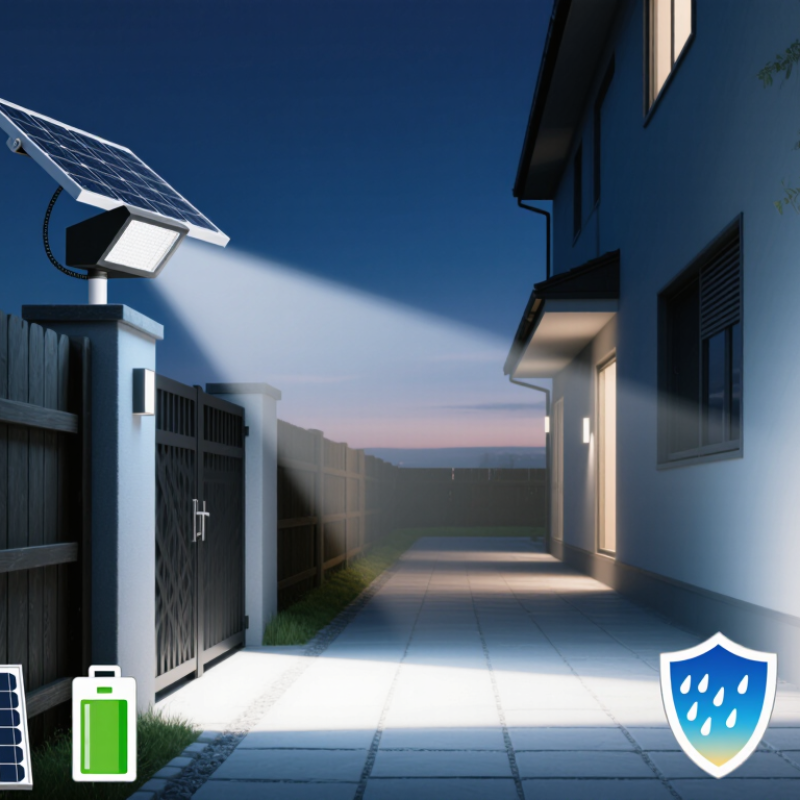
Choosing a Solar Motion Flood Light in 2026 is not just about buying the brightest lamp. It is about matching the light to the place, the weather, and the hours of darkness. Picture a side gate with a narrow path, a shaded wall, and a sensor that must notice someone approaching. A high lumen rating may look impressive, but poor panel placement or a short detection range can leave that path dim.
A reliable choice starts with practical checks: panel size, battery capacity, adjustable motion sensing, weather resistance, and the beam’s actual coverage. Compare stated specifications with the area you need to illuminate. Look for clear details about charging conditions and runtime; vague claims deserve a second look. “A dependable solar light must balance useful brightness with enough stored energy for the night.” — [Insert a verified industry expert’s name and sourced quotation.]
That balance matters most on cloudy days and during long winter nights. Before installation, observe where sunlight falls across the panel, not just where the lamp looks neat. Then test the sensor from the direction people actually approach. Small details count. A light that triggers too late can feel bright and still be unhelpful. I would not treat any single specification as a guarantee; real performance depends on placement, shade, and use. This guide explains how to compare options, spot weak claims, and choose a Solar Motion Flood Light that fits your site instead of relying on a box label.
How Solar Motion Flood Lights Work and Where They Fit
A solar motion flood light converts daylight into stored electricity. Its panel charges an internal battery, while a sensor detects movement and switches on the LEDs. Many models use passive infrared sensors, which respond to changes in heat. The light stays dim or off until someone crosses its detection zone. Simple in theory. In practice, sensor angle, mounting height, and nearby walls can create blind spots.
These lights suit gate entrances, sheds, side paths, and other places where running a power cable is difficult. They work best when the panel receives several hours of direct sun. Dense shade, short winter days, and repeated cloudy weather can leave the battery undercharged. The IEA PVPS Snapshot of Global PV Markets 2024 estimated that worldwide solar capacity grew by about 87% in 2023. That growth reflects wider use of solar technology, but it does not guarantee strong output at a shaded doorway.
The lamp’s efficiency matters because battery capacity is limited. The U.S. Department of Energy’s Energy Saver guidance says LEDs use at least 75% less energy than incandescent lighting. Look for adjustable detection range, replaceable batteries, and clear runtime specifications. A bright beam can still disappoint. I would check the panel’s sun exposure at the actual mounting spot, not just assume the roof edge is sunny.
Assess Your Coverage, Brightness, and Runtime Needs
How to Choose the Best Solar Motion Flood Light in 2026?
Before comparing lights, map the area you need to cover. A driveway, side gate, and back patio have different demands. Measure the target zone and note nearby walls, trees, and likely mounting points. A wide beam may cover more ground, but it can leave dim patches near the edges. Small spaces need less.
Brightness is not just a lumen number. Check the beam angle and mounting height, then consider whether you need to identify a person or simply see the path. A light mounted high can spread illumination across a yard, while a lower fixture may suit steps or a gate. Product specifications rarely capture every real-world shadow.
Tips: Test the motion sensor after installation. Adjust its direction and sensitivity so passing traffic or swaying branches do not trigger it repeatedly.
Runtime matters just as much as brightness. Look for the stated operating time and battery capacity, but treat ideal-condition figures cautiously. Frequent triggers, long illumination settings, cloudy weather, and shorter winter days can all reduce available power. If the light guards a busy entrance, choose adjustable duration and brightness settings; a softer setting may preserve charge. Solar performance can still disappoint in a shaded spot, so check sunlight across the day before fixing the panel in place.
How to Choose the Best Solar Motion Flood Light in 2026
Compare example brightness and runtime targets by installation area.
These are practical comparison targets, not guarantees. Actual runtime depends on sunlight, battery capacity, weather, and how often the motion sensor activates. Brightness alone does not determine coverage; also check beam angle and mounting height.
Compare Solar Panels, Batteries, Sensors, and Light Output
A solar motion flood light is only as dependable as its panel, battery, and installation site. Check panel wattage and charging time, not just the panel’s size. A compact panel may work well in a sunny, open yard, but shaded eaves can leave the battery undercharged. Look for battery capacity in watt-hours when available, and check whether replacement is possible. Cold weather, cloudy days, and frequent nighttime triggers can all reduce runtime. Small detail. A bright lamp is not useful if it dims before dawn.
Sensor sensitivity, detection angle, and range determine whether the light responds to people or passing branches. Mount it about 2–3 meters high, then test coverage from the path and driveway. Adjustable settings help limit false triggers and conserve energy. Compare lumens alongside beam angle: a narrow, intense beam can miss a wide entrance, while a broad beam may feel less bright. For a doorway, even illumination may matter more than a dramatic peak rating. I would not trust advertised runtime alone; testing conditions may assume strong sunlight and few activations. That matters. Track triggers over several evenings, then assess whether the light’s output suits your space.
Check Weather Resistance, Controls, and Installation Options
A solar motion flood light must handle the weather where it will actually sit. Look for an IP rating tested under IEC 60529: IP65 indicates dust-tight protection and resistance to water jets, but not immersion. For exposed walls, inspect the seals, cable entries, and corrosion-resistant hardware, not just the rating. In snowy or coastal areas, check the maker’s temperature range and mounting guidance. Small details matter. A badly aimed panel can collect grime or remain shaded, cutting its daily charge.
Check that the controls let you adjust motion sensitivity, detection range, and how long the light stays on. A long timer and frequent false triggers can drain a small battery overnight. The U.S. Department of Energy says LEDs use at least 75% less energy than incandescent lighting and can last up to 25 times longer; efficient LEDs can ease battery demand, though panel and battery capacity still determine runtime. For installation, compare wall, eave, and separate-panel options, then confirm the cable reaches a sunny spot. A specification sheet cannot show whether a branch shades that spot at dusk. Test it at dusk. I would still recheck the sensor after mounting; a walkway and a passing car can trigger it differently.