Best Square Light for Commercial Use in 2026
Commercial lighting is judged in daily use: by the counter, across a warehouse aisle, or beneath a ceiling that stays bright through long shifts. A Square Light can provide clean, even illumination, but shape alone does not make it suitable for a workplace. Buyers also need to consider light output, glare, color quality, controls, maintenance access, and compatibility with the existing ceiling.
The scale of the opportunity is significant. The International Energy Agency’s Buildings – Tracking Clean Energy Progress (2023) reports that building operations account for about 30% of global final energy consumption and 26% of energy-related emissions. These figures cover buildings overall, not lighting alone, but they underline why efficient equipment and thoughtful controls matter. In the United States, the Energy Information Administration’s 2018 Commercial Buildings Energy Consumption Survey tracks lighting as a distinct building energy end use, offering a useful reference for evaluating commercial demand.
Details matter. A showroom may need color consistency; a back office may need comfortable, low-glare light; a loading area may prioritize durability and straightforward servicing. Compare measured efficacy, distribution, dimming performance, warranty terms, and verified product data rather than relying on appearance or broad marketing claims. Check the actual ceiling height, too. A fixture that looks bright in a catalog can leave shadows on a real work surface.
There is no universal winner. Even a careful specification can miss a detail—maintenance access is easy to overlook. This guide compares Square Light options for commercial use in 2026, focusing on practical performance, documented specifications, and the conditions each fixture is built to serve.
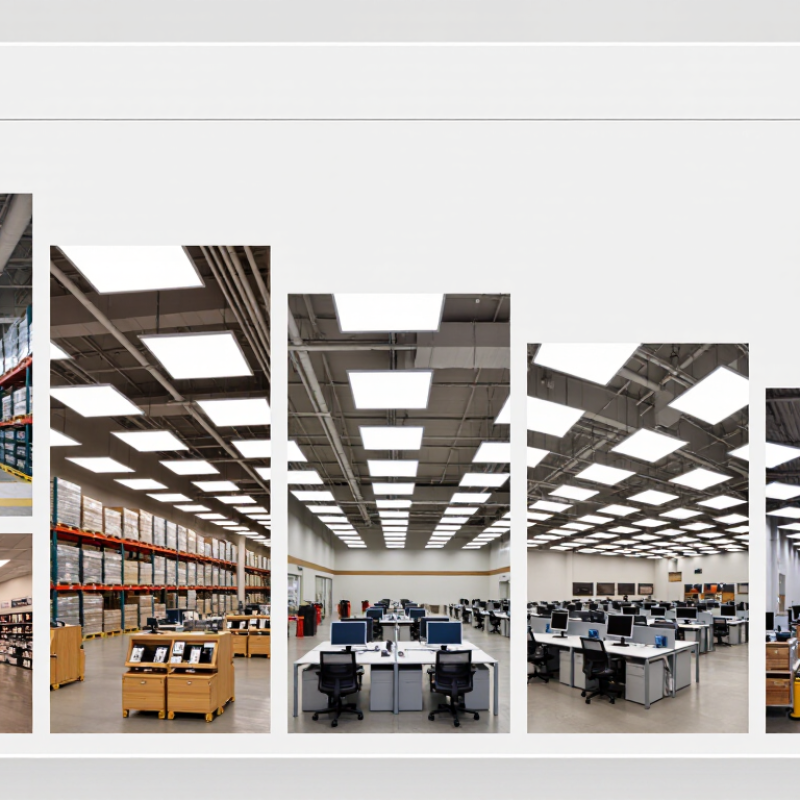
What Defines a Square Light for Commercial Use?
A square light for commercial use is not defined by its outline alone. It is a fixture designed to provide consistent, task-appropriate illumination in offices, retail floors, clinics, and corridors. Its square face may fit neatly into a modular ceiling grid, but appearance is only the starting point. Light output, distribution, glare control, and service life matter more.
Look beyond wattage. Check measured light output, color temperature, color rendering, dimming compatibility, and rated operating conditions. A reception desk may need even, comfortable light, while a stockroom needs clear visibility across shelves. A diffuser can soften bright points, but poor optics may still cause harsh reflections on glossy counters. Small detail. Also confirm the housing size, mounting method, and driver access before specifying replacements. Mismatched cutouts can create delays and patchwork ceilings. It happens.
A dependable commercial square light should deliver stable performance during long operating hours, supported by test data and clear maintenance guidance. Compare warranty terms and lumen-maintenance ratings, not just packaging claims. Energy use matters, but the lowest-watt option is not automatically the best fit. Inspect a sample in the actual room; plans rarely show every reflection or shadow. That step can feel fussy, yet it prevents costly guesses. No fixture suits every zone equally well.
Key Features and Performance Specifications
Best Square Light for Commercial Use in 2026
Key Features and Performance Specifications
For commercial interiors, a square light should match the room’s task, ceiling height, and operating schedule. Check delivered output, not just wattage: roughly 3,000–5,000 lumens may suit many offices, while taller or brighter spaces can need more. Compare efficacy, measured in lumens per watt, to estimate energy use. A 3500K or 4000K color temperature often feels balanced in work areas. A CRI of 80 or higher supports clear everyday color recognition. Look for even diffusion and low visible flicker. Details matter.
Tips: Check the fixture dimensions against the ceiling grid before ordering. Confirm dimmer compatibility and driver access. Ask for photometric data when planning multiple rows; spacing can create dark patches. Also inspect the stated operating temperature and warranty terms.
For long commercial schedules, thermal design and rated life deserve close attention. A sealed fixture may resist dust, but its heat management still matters. Choose an ingress rating suited to the actual room, such as a clean office or a damp service area. Compare specifications consistently, and request test documentation where available. One rating can look excellent on paper and still disappoint in a poorly ventilated ceiling. That’s easy to overlook. A sample installation helps reveal glare, color differences, and maintenance access before a full rollout.
Types of Commercial Square Lights in 2026
Commercial square lights come in several formats, and each suits a different ceiling and work pattern. Recessed LED panels sit flush in suspended ceilings, spreading light across desks, counters, and meeting rooms. Their broad, even output can reduce harsh shadows, though a poorly chosen color temperature may make a room feel cold. Check the ceiling grid before ordering.
Surface-mounted square fixtures work where there is no ceiling cavity, such as concrete corridors or renovated retail spaces. They are easier to fit than recessed units, but the visible housing may not suit every interior. Suspended square lights hang below the ceiling and can define zones over reception desks or shared tables. Leave enough clearance for people and equipment.
For warehouses and workshops, square high-bay fixtures can deliver focused light from greater mounting heights. Confirm the mounting height, beam spread, and task requirements rather than choosing by wattage alone. Not every room needs one. Compare glare control, dimming compatibility, maintenance access, and light distribution using the actual layout. I would still check the finished space at night; drawings do not always reveal dark corners or reflections on glossy counters.
How to Choose the Right Square Light for a Space
Choosing the right square light starts with the room, not the fixture. Measure the ceiling grid, mounting height, and work surfaces. A 2-by-2-foot panel may suit a standard suspended ceiling, while a larger fixture can overwhelm a compact room. In offices, even spacing helps limit dark patches; in retail spaces, adjustable brightness can better highlight displays. Check lumen output, color temperature, color rendering, and glare control against the task. A bright panel is not always a comfortable one.
Energy use matters across many fixtures. The U.S. Energy Information Administration’s 2018 Commercial Buildings Energy Consumption Survey tracks lighting as a major building end use. The U.S. Department of Energy says LEDs use at least 75% less energy than incandescent lighting and can last up to 25 times longer. Those comparisons are useful, but actual savings depend on controls, operating hours, and the existing system. Review the fixture’s tested performance and dimming compatibility before specifying it.
Tips: Mock up one fixture before ordering a full room. Check how its light falls on desks and screens at night, not just in a bright showroom. Note glare. Also confirm access for maintenance; a fixture that looks neat but is difficult to service can become an avoidable headache.
Best Square Light for Commercial Use in 2026: Choosing the Right Light for Your Space
These representative illuminance targets, measured in lux, can help guide square-light selection for common commercial spaces. Actual requirements vary with the task, layout, surface reflectance, and local standards; verify the design with a qualified lighting professional.
Installation, Efficiency, and Long-Term Maintenance
For commercial spaces, a square light should be selected around the ceiling grid, task needs, and maintenance access—not appearance alone. Before installation, check ceiling depth, driver access, circuit capacity, and whether the fixture suits the room’s operating hours. A sample unit helps reveal glare on polished floors and uneven light across desks. Small details matter. The U.S. Department of Energy’s Energy Saver guidance says LEDs use at least 75% less energy and last up to 25 times longer than incandescent lighting. That comparison is useful, but it is not a direct promise of savings over every existing commercial fixture. Actual results depend on wattage, controls, and use.
For efficiency, compare delivered lumens per watt and confirm that dimming controls are compatible with the fixture. In corridors, occupancy sensors may reduce hours of operation; in work areas, poorly tuned sensors can frustrate staff. Keep a simple maintenance log with installation dates, driver replacements, and recurring flicker reports. Dust the lens during scheduled cleaning, and leave safe access to drivers and wiring. LEDs often reduce relamping, but drivers and controls can still fail. That part is easy to overlook. Record the fixture’s model and service details before ceiling tiles go back in; future maintenance is harder when nobody knows what was installed.