How to Buy Trucker Caps Wholesale in 2026?
Buying Trucker Caps wholesale in 2026 takes more than finding a low unit price. Buyers need to compare materials, fit, decoration, minimum order quantities, and delivery timelines. A mesh-back cap may look identical in a product photo, yet feel stiff or sit too high when worn. Small details matter.
A useful reminder from fictional sourcing specialist Dana Cole is: “A sample tells you what a spreadsheet cannot.” This is an illustrative line, not a verified quotation. In practice, request a physical sample before approving a large run. Check the crown shape, stitching, snap closure, fabric weight, and logo placement under everyday lighting. Then compare the sample with the supplier’s written specifications.
This guide outlines how to assess suppliers, request quotes, calculate landed costs, and plan quality checks. It also covers questions buyers can ask before placing an order, from customization options to reorder consistency. Keep records. Confirm details in writing. A rushed decision can be costly. Wholesale buying still involves judgment: a polished sample does not guarantee every cap in the shipment will match. Use clear specifications, inspect production samples when possible, and leave room in the schedule for revisions. The aim is not simply to buy Trucker Caps at the lowest price. It is to choose a product and supplier that fit your customers, budget, and timeline.
Define Your Trucker Cap Requirements and Wholesale Budget
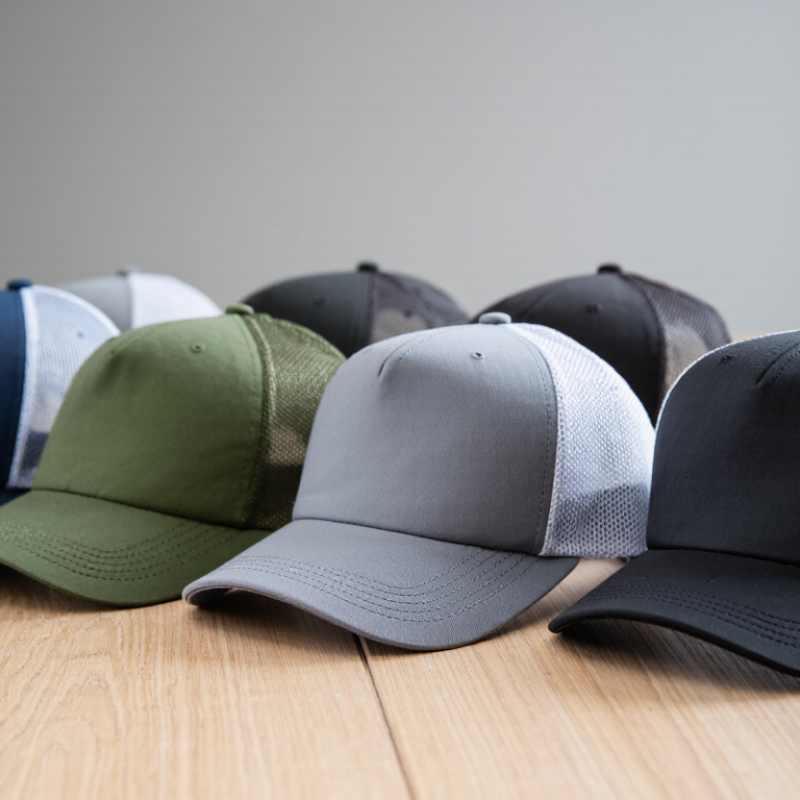
Before requesting quotes, define the cap you actually need: mesh color, foam or fabric front, crown height, brim shape, closure, and decoration. A sample with a curved brim can feel very different from one with a flat brim. Specify measurements and artwork placement in writing. Small details matter.
Set quantities by color and size of the order, not by the supplier’s lowest unit price. Grand View Research valued the global headwear market at USD 26.5 billion in 2023 and forecast 6.4% annual growth from 2024 to 2030. That broad category is not a trucker-cap forecast, but it signals a competitive market where clear product positioning matters. Price the full landed cost: samples, setup, embroidery, packaging, freight, duties, and a reserve for defects. Ask for tiered quotes at several quantities. Keep it realistic.
For example, compare 300 caps in one color with 300 split across three colors; extra variants may complicate production and leave slow sellers. Build your budget around a cautious sales estimate, then test the sample before approving bulk production. I still leave room for uncertainty. A single sample cannot reveal every production variation.
Grand View Research, “Headwear Market Size, Share & Trends Analysis Report,” 2024.
Compare Wholesale Suppliers and Sourcing Options
How to Buy Trucker Caps Wholesale in 2026?
Compare Wholesale Suppliers and Sourcing Options
Buying direct from a factory can lower unit costs on larger orders, but minimum quantities and production lead times may be higher. A domestic wholesaler may offer smaller runs and quicker replenishment, usually at a higher unit price. Sourcing agents and wholesale platforms can widen your options. Check how they inspect samples and disclose fees. No option wins universally.
The U.S. Census Bureau’s Quarterly Retail E-Commerce Sales report for the fourth quarter of 2024 estimated annual U.S. e-commerce sales at $1.1926 trillion, or 16.1% of total retail sales. For sellers serving online buyers, that scale makes dependable restocking worth considering alongside the opening price. It does not prove that every cap style will sell. Forecasts can miss.
Compare landed cost, not just the quoted cap price. Ask each supplier to specify mesh material, crown construction, closure type, embroidery limits, carton quantity, and delivery window. Request a sample in the intended colors, then inspect stitching and fit under ordinary wear. A clean sample can still differ from bulk production.
Put approved specifications and defect remedies in writing before ordering. A small trial order may cost more per cap, but it can reveal problems before a larger commitment.
Evaluate Samples, Materials, Customization, and Compliance
Before ordering trucker caps wholesale, request samples from the actual materials and construction planned for production. Check the mesh for scratchy edges, the foam front for creasing, and the snap closure across several settings. Wear one for an hour; a cap can look right on a desk yet feel too shallow. Feel the difference. Compare stitching, panel alignment, and color under daylight, not only in a supplier’s photos. Keep an approved sample as your reference, though it may not reveal every production variation.
Choose materials for the cap’s intended use. Lightweight mesh suits warm-weather events, while a firmer front panel can hold a larger embroidered design. Ask for fabric composition, weight, and available color options in writing. For customization, confirm artwork size, thread colors, print method, and placement with a digital proof. Then inspect a decorated sample. Small flaws matter. A logo that sits slightly too low may look obvious when dozens of caps are displayed together. Check setup charges, minimum quantities, and whether changes affect lead time.
Before paying a deposit, clarify which product labels and documentation are needed for your destination market. Verify fiber-content and country-of-origin details, and ask whether any safety or performance claims have supporting evidence. Requirements can vary, so confirm them with a qualified compliance adviser rather than relying on a supplier’s general assurance. Put approved specifications, packaging, inspection criteria, and delivery dates in the purchase order. Leave time for corrections; that buffer can feel excessive until a sample needs another round.
Trucker Cap Material Check: Typical Fiber Moisture Regain
Conventional moisture-regain values are approximately 8.5% for cotton, 4.5% for nylon, and 0.4% for polyester. For wholesale samples, confirm the actual fiber blend and inspect mesh, stitching, closures, and printed or embroidered details. Values are typical reference figures; blends and test conditions can vary. Check fiber-labeling rules for your destination market.
Calculate Total Costs, Minimum Orders, and Delivery Times
How to Buy Trucker Caps Wholesale in 2026?
A low unit price can hide extra costs. Ask for a written quote that separates cap pricing, decoration, setup, packing, and freight. For example, 120 caps at $4.20 each cost $504. Add a $45 setup fee, $96 freight, and $18 for cartons, and the order totals $663, or about $5.53 per cap before applicable taxes or import charges. Small details matter. Confirm whether the quote includes a sample and whether artwork changes trigger another fee.
Minimum order quantities often apply per color, style, or decoration method, not just across the full order. A supplier may accept 120 caps overall but require 60 of each color. Check this before choosing fabric swatches or printing promotional materials. For timing, request separate estimates for sample approval, production, and transit. A sample might take several business days, while bulk production and shipping can add weeks. These are planning ranges, not guarantees; seasonal demand and approval delays can shift them.
Tips: Keep a buffer. Request a dated production schedule and confirm when the delivery clock starts. Approve a physical sample when fit, mesh stiffness, or embroidery placement matters. If the deadline is tight, ask about partial shipments and their added cost. I’ve learned that a cheaper quote is not always the easier order; unclear timing can be the part you regret.
How to Buy Trucker Caps Wholesale in 2026? — Calculate Total Costs, Minimum Orders, and Delivery Times
Illustrative planning estimates in USD for standard trucker caps with one basic customization. Assumes a 50-piece minimum order and delivery to one U.S. destination.
| Order Quantity | Minimum Order Quantity | Estimated Unit Price | Product Subtotal | Setup Fee | Estimated Freight | Estimated Total | Estimated Cost per Cap | Production Time | Transit Time | Estimated Total Lead Time |
| 100 caps | 50 caps | $5.50 | $550.00 | $35.00 | $85.00 | $670.00 | $6.70 | 15–20 business days | 5–8 business days | 20–28 business days |
| 250 caps | 50 caps | $4.25 | $1,062.50 | $35.00 | $130.00 | $1,227.50 | $4.91 | 18–23 business days | 5–8 business days | 23–31 business days |
| 500 caps | 50 caps | $3.60 | $1,800.00 | $35.00 | $190.00 | $2,025.00 | $4.05 | 20–25 business days | 5–8 business days | 25–33 business days |
| 1,000 caps | 50 caps | $3.10 | $3,100.00 | $35.00 | $310.00 | $3,445.00 | $3.45 | 25–30 business days | 5–8 business days | 30–38 business days |