
China’s textile sector serves a vast global market, making reliable yarn-processing equipment an important sourcing consideration. Textile Exchange’s Materials Market Report 2024 estimates that global fiber production reached 124 million tonnes in 2023. That scale matters. Yet fiber output alone does not measure demand for dyeing machinery, and buyers should treat it as industry context, not a sales forecast.
A Package Dyeing Machine dyes yarn wound onto perforated tubes by circulating liquor through the packages. In practice, winding density, circulation, temperature control, and loading consistency can all affect shade uniformity. Small process differences matter. A supplier’s published capacity is useful, but it cannot replace checks on sample results, operating conditions, and after-sales support. Buyers should also clarify compatible yarn types, automation level, energy and water use, installation scope, and spare-parts availability before comparing quotations.
This guide examines China-based manufacturers and suppliers through practical criteria, including machine configuration, customization, quality documentation, and export service. Ask for technical specifications and references for comparable applications. Where possible, review a trial dyeing record rather than relying only on brochure claims. There is no single best machine for every mill; production scale and yarn characteristics change the decision. The market data provides useful perspective, but supplier claims still require independent verification.
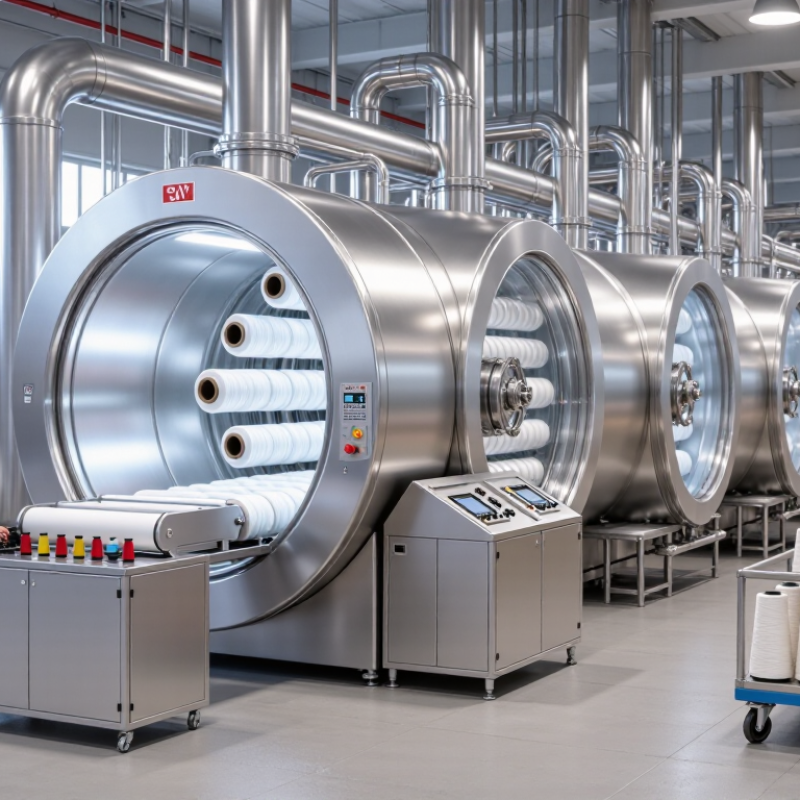
A package dyeing machine colors yarn wound onto perforated tubes, often called packages. These tubes sit on a spindle or carrier inside a closed dye vessel. Heated dye liquor moves through the yarn layers, rather than simply soaking the outside. The flow can travel inward or outward, helping color reach the package core. It is not magic.
The machine controls key conditions such as temperature, circulation, and dyeing time. Operators load packages at a consistent density, then follow a recipe suited to the fiber and shade. Picture rows of yarn tubes held in place while warm liquor passes through them. If winding is too tight, flow may be restricted; if it is too loose, packages can deform. Small details matter.
This method is commonly used for yarns that need uniform color before knitting or weaving. It can handle multiple packages in one batch, but results still depend on preparation and process control. A pale outer layer with a darker center can signal uneven liquor flow or inconsistent winding. The equipment helps manage these variables, though it cannot correct every upstream problem. Even experienced teams may need trials when yarn construction or shade requirements change.
Package dyeing machines circulate dye liquor through wound yarn packages. The chart shows representative peak temperatures for common fiber-and-dye systems.
Temperatures are indicative, not fixed machine settings. Actual dyeing conditions depend on the fiber, dye, and recipe; polyester disperse dyeing typically uses pressurized high-temperature equipment.
China Top Package Dyeing Machine Manufacturers and Suppliers
How Package Dyeing Machines Work
Package dyeing machines color yarn wound onto perforated tubes or carriers. Operators load the packages onto a central spindle, then close the vessel. The yarn must be wound evenly. Loose or overly dense packages can restrict flow and create uneven shades.
A pump moves heated dye liquor through the packages, usually from the inside outward or in the reverse direction. This alternating circulation helps expose the yarn to dye across each layer. Small details matter. Temperature, pressure, liquor ratio, and circulation speed are monitored during the cycle. The dye recipe and fiber type also shape the process, so settings should be adjusted rather than copied blindly.
Not perfectly uniform. Even with careful loading, package density can vary slightly. Technicians may check sample packages, inspect shade consistency, and adjust the next batch when results differ. After dyeing, the machine circulates rinse water to remove residual chemicals, then the packages are unloaded for drying or further processing. A blocked passage or poorly wound package may not be obvious until the fabric is checked.
| System or Stage | How It Works | Typical Data or Operating Considerations |
|---|---|---|
| Package Preparation | Yarn is wound onto perforated dye tubes or carriers and assembled on a spindle, beam, or carrier column. | Consistent package density and winding tension help maintain even liquor flow. Packages that are too tight or uneven can produce shade variation. |
| Loading and Vessel Closure | The loaded carrier is placed in a sealed dyeing vessel. The vessel is filled with water and dyeing auxiliaries according to the recipe. | Vessel design, carrier arrangement, and loading weight depend on the machine model and the yarn being processed. |
| Liquor Circulation | A pump circulates dye liquor through the packages. Liquor commonly flows from the package inside to outside, with flow direction reversed during the cycle on reversible-flow machines. | Even circulation helps distribute dye and heat throughout the load. Pump flow and pressure should suit the yarn type and package density. |
| Wetting and Air Removal | Initial circulation wets the yarn packages and helps displace trapped air, which could otherwise obstruct liquor penetration. | Wetting time and any deaeration steps depend on the material, equipment, and process recipe. |
| Heating and Temperature Control | A heat exchanger or heating system raises the liquor temperature according to the dyeing program. Sensors and controls monitor the process. | Temperature varies with fiber and dye chemistry. For example, polyester dyeing with disperse dyes commonly uses high-temperature conditions around 130°C in suitable pressurized equipment; this is not a setting for every process. |
| Dye Addition and Fixation | Dyes and auxiliaries are added according to the recipe. The liquor circulates through the yarn while dye uptake or fixation takes place. | Recipe, pH, temperature profile, and holding time depend on the fiber, dye class, shade, and required fastness. |
| Flow Reversal | Where fitted, valves periodically change the liquor flow direction through the packages to help balance dye penetration. | Reversal timing and frequency are set for the machine and process; reversal does not replace correct package winding or loading. |
| Rinsing and After-Treatment | After dyeing, the bath is drained and the yarn may be rinsed or treated to remove unfixed dye and residual chemicals. | The sequence depends on the dye class. Some processes require additional neutralizing, soaping, or other after-treatment steps. |
| Unloading and Drying | The dyed packages are removed from the carrier and dried using suitable equipment or a specified downstream process. | Drying conditions should match the fiber and product requirements to avoid damage, distortion, or unwanted changes in yarn properties. |
| Machine Configuration | Package dyeing machines are available in different vessel orientations and carrier arrangements, including vertical and horizontal configurations. | Compare usable load capacity, number of carriers, vessel pressure and temperature rating, liquor circulation design, and automation options. |
| Selection and Process Review | Machine selection should be based on the yarn range, production volume, dyeing recipes, and required batch flexibility. | Confirm compatibility with the intended fibers and process conditions, as well as utility requirements, cleaning procedures, maintenance access, and applicable safety standards. |
Note: Operating values are process-dependent examples, not universal machine specifications. Confirm process limits and settings with the equipment documentation and the dyeing recipe.
Package dyeing machines are commonly distinguished by how yarn packages sit inside the vessel. Vertical-spindle designs stack packages on upright tubes, helping compact loads circulate dye liquor through each package. Horizontal-spindle machines place packages on horizontal carriers, which can make loading and handling easier for some production lines. Details matter. Both designs rely on controlled flow direction, pressure, temperature, and package density to achieve even shades.
High-temperature, high-pressure package machines are used for synthetic fibers that need elevated dyeing temperatures. For cotton and other cellulosic yarns, operators select processes and settings suited to the fiber and dye class. Reversible circulation helps move liquor from the package surface toward its core, then back again.
The World Bank’s 2019 overview, How Much Do Our Wardrobes Cost to the Environment?, estimates that textile dyeing and treatment account for about 20% of global wastewater. That figure gives mills a practical reason to examine water use, rinsing, and wastewater handling alongside machine output.
When comparing specifications, check usable capacity, liquor ratio, pump performance, temperature control, and the time needed to load a full vessel. A low liquor ratio can reduce water demand, but it does not guarantee level dyeing. Dense winding, poor circulation, or inconsistent package sizes may still create pale centers and rework. I would treat efficiency claims cautiously until they are tested with the mill’s actual yarn and recipe.
Leading package dyeing machine manufacturers and suppliers in China support textile mills with equipment for dyeing yarn packages evenly under controlled conditions. A typical system circulates dye liquor through yarn wound onto perforated tubes, while temperature, pressure, and flow affect shade consistency. Small differences matter. Uneven winding or restricted flow can leave pale areas inside a package.
Experienced suppliers discuss more than machine capacity. They ask about fiber type, package density, batch size, and the mill’s existing utilities. Useful comparisons include vessel construction, circulation-pump performance, heating control, loading access, and cleaning requirements. Buyers should also check what commissioning, operator training, spare parts, and process documentation are available. These details shape daily output as much as the headline specifications.
There is no single ideal configuration. A compact system may suit shorter runs, while larger vessels can help mills manage higher volumes, but actual results depend on recipes and operating practice. A polished specification sheet cannot replace a production trial. Ask suppliers how they verify liquor circulation and temperature uniformity, and request clear acceptance criteria. One limitation is easy to overlook: even a well-built machine cannot correct poor package preparation. Choosing a supplier takes careful questions, and sometimes a second look.
When evaluating Chinese package dyeing machine suppliers, look beyond brochure capacity. Ask for a trial using your yarn, package density, and dye recipe. Check shade consistency across inner and outer layers, liquor circulation, temperature control, and repeatability between batches. Request recorded results, not verbal assurances. Small details matter.
Water and energy data deserve equal attention. The World Bank’s 2019 report estimated that textile production accounts for about 20% of global industrial wastewater pollution, with dyeing and finishing among key contributors. Ask suppliers to document water and energy use per kilogram, alongside effluent-treatment requirements. Compare like-for-like test conditions. A low quoted price can hide high operating costs. It happens.
Inspect a working machine, preferably during a production run. Review maintenance access, spare-parts lead times, control-system documentation, and operator training. Ask for references from factories processing similar fibers and package sizes. Verify quality procedures through audit records and calibration logs; ISO 9001 certification can support this review, but cannot replace machine trials. No single checklist is perfect. Keep written acceptance criteria, and include them in the purchase agreement.
Join our mailing list to receive the latest news and updates from our team.