
China Best FPC Stiffener Bonding Machine Supplier?
Choosing a China-based Fpc Stiffener Bonding Machine supplier is not just a price comparison. The right partner should understand your board design, production volume, and bonding process. A machine may look impressive in a brochure, yet struggle with a narrow stiffener or a delicate flex circuit. Details matter.
This guide examines the qualities buyers should check before requesting a quotation. These include placement accuracy, temperature control, pressure consistency, tooling options, and compatibility with the materials used in your products. Ask suppliers for clear specifications and relevant application examples. Better still, review sample results using your own FPC design, if practical. Small tests can expose issues that a polished presentation cannot.
After-sales support also deserves close attention. Confirm what training is included, how spare parts are supplied, and whether technicians can help troubleshoot setup problems. Response time matters when a production line is waiting. It is easy to overlook this until something fails.
No single supplier is best for every factory. A newer operation may value hands-on guidance, while a high-volume plant may prioritize cycle time and repeatability. Claims should be verified, not simply accepted. Even a detailed evaluation has limits: actual performance depends on materials, operator skills, and process settings. Use the comparison ahead to identify suitable Chinese suppliers and prepare sharper questions before making a decision.
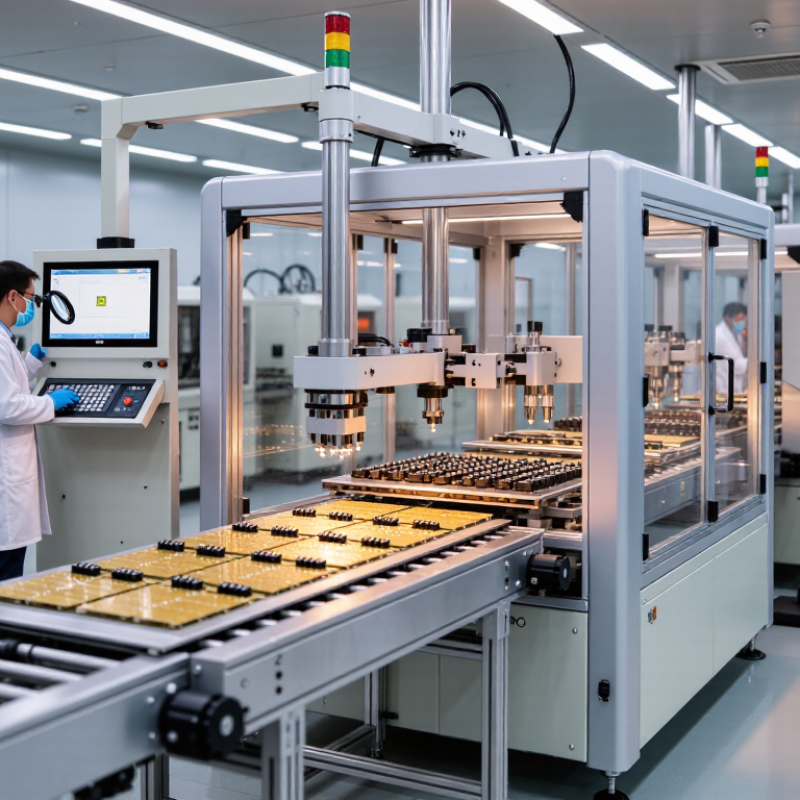
What Is an FPC Stiffener Bonding Machine?
An FPC stiffener bonding machine applies controlled heat and pressure to attach reinforcement to a flexible printed circuit. The stiffener, often made from polyimide or metal, supports components, connectors, or board edges. It helps keep a flexible circuit flat where assembly or insertion demands greater rigidity. Small parts. Tight tolerances.
A typical machine positions the circuit and stiffener, aligns them, then bonds them using a selected adhesive and programmed temperature, pressure, and dwell time. Depending on the line, operators may use fixtures, vision alignment, or sensors to reduce placement variation. The Fortune Business Insights Flexible Printed Circuit Board Market report estimated the global market at USD 17.42 billion in 2023, indicating the scale of products that depend on flexible circuitry. That figure describes the market, not machine demand or bonding quality. Those depend on the product and process.
In production, engineers check alignment, bond coverage, and whether heat has distorted nearby features. A setting that works for one material stack may fail on another. That part is easy to underestimate. A reliable machine makes process adjustments repeatable, but it cannot compensate for contaminated surfaces, poor adhesive selection, or careless loading. Real-world trials still matter.
China Best FPC Stiffener Bonding Machine Supplier? - What Is an FPC Stiffener Bonding Machine?
An FPC stiffener bonding machine positions and bonds reinforcing materials—such as polyimide, FR-4, or metal stiffeners—to flexible printed circuits. The process and settings depend on the FPC design, adhesive system, stiffener material, and production requirements.
| Data Dimension | Description | What to Check |
|---|---|---|
| Primary function | Applies controlled pressure and, where required, heat to attach a stiffener to an FPC. | Confirm that the machine supports the intended bonding method and product design. |
| Common stiffener materials | Polyimide, FR-4, stainless steel, and aluminum are used in FPC designs where local reinforcement or support is needed. | Check material thickness, outline, surface condition, and compatibility with the adhesive and bonding tooling. |
| Bonding materials | Depending on the product, bonding may use adhesive film, pressure-sensitive adhesive, or another specified bonding system. | Follow the adhesive supplier’s requirements for temperature, pressure, dwell time, storage, and handling. |
| Positioning and alignment | Fixtures, vision systems, or manual alignment features may be used to locate the stiffener relative to the FPC. | Request an alignment trial using representative panels and verify the result against the drawing tolerance. |
| Heat and pressure control | Some machines provide controlled heating and adjustable pressure; requirements vary with the material stack-up and adhesive. | Check control stability, temperature uniformity, pressure adjustment, and recipe repeatability for the actual process. |
| Tooling and fixtures | Product-specific nests, plates, or bonding heads help support the flexible circuit and apply force to the target area. | Confirm changeover time, fixture repeatability, access for loading, and protection of delicate circuit features. |
| Machine configuration | Available configurations can include manual, semi-automatic, or automated loading and bonding arrangements. | Select based on product mix, batch size, operator workflow, floor space, and required production volume. |
| Quality checks | Typical checks include position, adhesion, wrinkles, trapped contamination, damage, and appearance. | Agree on inspection criteria and sample testing methods before approving production settings. |
| Supplier evaluation | A suitable supplier should be able to assess the product stack-up, demonstrate the process, and provide relevant documentation and support. | Compare trial-bond results, training, spare parts, maintenance support, safety features, and delivery terms. |
| Note: Machine capabilities and process settings are model- and application-dependent. Validate the selected equipment using the actual FPC, stiffener, and bonding materials before production. | ||