
Top 10 Silicone Decorative Molds Manufacturers in China
A decorative mold can look flawless in a product photo yet leave bubbles, torn edges, or blurred patterns after casting. Small details matter. For buyers sourcing Silicone Decorative Molds, the challenge extends beyond finding attractive designs at competitive prices. Material consistency, mold flexibility, and repeatable dimensions all influence production results. China offers a broad supplier base, including custom tooling specialists and manufacturers serving craft, home décor, and architectural decoration businesses. However, a polished catalog alone provides limited evidence of manufacturing capability.
This guide examines ten manufacturers through practical sourcing criteria: product specialization, customization options, quality documentation, sampling support, and communication. Relevant applications include candle vessels, plaster ornaments, resin decorations, and detailed furniture embellishments. Each application places different demands on silicone hardness, tear resistance, and compatibility with casting materials. Ask for specifics. Useful evidence includes dimensional drawings, batch traceability records, and test reports that identify the tested material and applicable standard. Food-contact suitability, when relevant, requires documentation for the intended market and use conditions; generic “food-grade” claims deserve closer scrutiny.
Choosing a supplier still involves trade-offs, and an initial shortlist will rarely capture every production concern. A softer mold may simplify demolding but need additional support to maintain its shape. Lower tooling costs can also come with fewer design revisions or less detailed sample inspection. These compromises are not automatically deal-breakers, although overlooking them can become expensive. Use this guide to narrow your options, then validate your choice through samples, written specifications, and clearly agreed acceptance criteria.
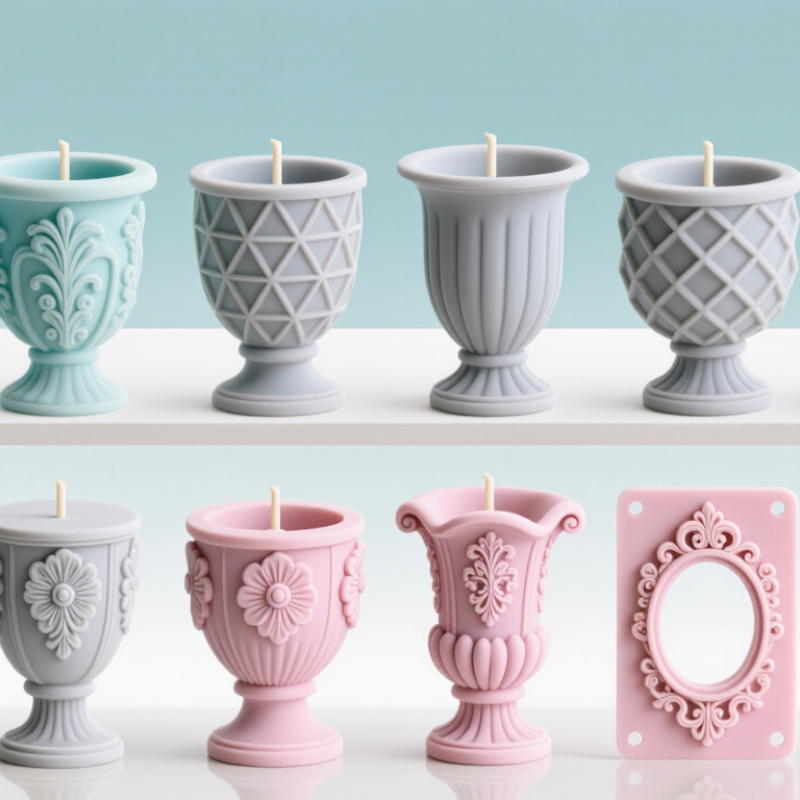
Silicone Decorative Molds: Definitions, Types, and Applications
Silicone decorative molds are flexible forms that reproduce raised patterns, fine textures, or repeated cavities. Hardness, tear strength, and heat tolerance vary by silicone formulation and curing process. Common designs include relief sheets, single-cavity shapes, multi-cavity trays, and custom textured inserts. Some suit baking; others are made for soap, wax, plaster, or craft casting. Check material compatibility before use. Flexibility helps release fine details, while thin walls may distort under heavy material. A mold can look perfect and still release poorly.
Decorative molds create repeatable details on cake borders, handmade soaps, candles, gypsum ornaments, and selected casting projects. Small lettering, leaf veins, and shallow ridges show where flexibility matters. Output also depends on wall thickness, surface finish, and careful demolding. For food-contact use, request documentation for the exact compound and intended temperature range. Do not assume every silicone mold is oven-safe. Grand View Research estimated the global silicone market at USD 18.4 billion in 2022, forecasting 6.7% annual growth through 2030 (Silicone Market Size, Share & Trends Analysis, 2023). That estimate covers many silicone uses, not decorative molds, so it indicates material scale rather than mold demand. Test small batches.
Top 10 Silicone Decorative Molds Manufacturers in China - Silicone Decorative Molds: Definitions, Types, and Applications
The table below is a product-category and sourcing guide, not a ranked list of named manufacturers. Mold designs and material specifications vary by supplier; confirm food-contact suitability, temperature limits, dimensions, and certifications for each product.
| No. | Decorative Mold Type | Definition and Common Form | Typical Material or Feature | Common Applications | Useful Supplier Checks |
|---|---|---|---|---|---|
| 1 | Cake and fondant molds | Flexible cavities shaped for cake details, borders, flowers, or other edible decorations. | Food-contact suitability should be specified for the intended use; cavity detail and release performance matter. | Fondant, chocolate, sugar paste, and some baking applications, subject to the mold’s stated use and temperature limits. | Request food-contact documentation, care instructions, cavity dimensions, and stated temperature range. |
| 2 | Chocolate and candy molds | Small, shaped cavities used to form individual sweets and decorative pieces. | Flexible construction can help release molded pieces; surface finish affects the appearance of the finished item. | Chocolate, candy, and confectionery decorations. | Check cavity volume, detail sharpness, cleaning requirements, and suitability for the intended food process. |
| 3 | Soap molds | Cavity molds shaped to form bars, embeds, or ornamental soap pieces. | Flexible cavities are useful for releasing shaped soap; mold dimensions and wall support affect handling. | Handmade soap bars, decorative embeds, and small craft batches. | Confirm cavity size, mold stability when filled, and compatibility with the soap-making process. |
| 4 | Candle molds | Flexible forms used to shape wax into decorative candles or components. | The mold must be appropriate for the wax temperature and pouring method specified for the product. | Decorative candles, wax figures, and craft projects. | Ask for the recommended pouring-temperature range, dimensions, and guidance on supporting the mold during filling. |
| 5 | Resin casting molds | Reusable flexible cavities for casting shapes and small decorative objects. | Mold compatibility depends on the resin chemistry, curing conditions, and release requirements. | Jewelry components, ornaments, keychains, and small craft pieces. | Test with the exact resin system; check cavity finish, dimensions, and demolding instructions. |
| 6 | Plaster and gypsum molds | Flexible molds for casting decorative forms from plaster-based materials. | Cavity design and mold support help maintain shape while the casting material sets. | Wall ornaments, small sculptures, craft embellishments, and model-making. | Check mold rigidity, casting dimensions, surface detail, and cleaning guidance. |
| 7 | Clay and polymer-clay texture molds | Textured sheets or shaped cavities that press patterns into pliable clay. | Fine surface detail and easy cleaning are useful for repeated impressions. | Polymer-clay jewelry, miniature decorations, and craft embellishments. | Confirm suitability for the clay and curing method; review texture depth and finished dimensions. |
| 8 | Floral and botanical molds | Petal, leaf, and flower-shaped cavities or impression tools for decorative detailing. | Fine contours and relief detail help reproduce botanical shapes. | Cake decoration, soap, clay crafts, and other compatible molding materials. | Review sample impressions, cavity depth, scale, and material compatibility for each intended application. |
| 9 | Seasonal and themed molds | Cavities featuring holiday, event, character, or themed decorative shapes. | Multi-cavity layouts are common; custom artwork and licensing may affect production rights. | Seasonal confectionery, party decorations, crafts, and gift items. | Confirm artwork ownership, cavity count, dimensions, and whether custom tooling is required. |
| 10 | Custom-shaped decorative molds | Molds made to a supplied drawing, sample, or agreed design specification. | Design, tooling, material, and production details are project-specific. | Branded or bespoke decorations, prototypes, and specialized craft or food-production needs. | Agree on drawings, tolerances, sample approval, tooling ownership, minimum order quantity, and inspection criteria. |