How to Choose the Right Grinding Ball for Your Mill
Choosing the right Grinding Ball is a practical decision with visible consequences. It affects throughput, product size, energy use, and mill availability. Small choice. Large effect. A ball that is too large may leave fine particles under-ground; one that is too small may struggle to break coarse, tough ore. The clues are often tangible: worn liners, uneven discharge, rising power draw, or a drum that sounds different during operation.
Professor Alban Lynch is a recognized authority in mineral processing. A careful paraphrase of a principle reflected in his work is: evaluate grinding media in the context of the entire circuit, not by a single specification. That matters because ore hardness, abrasiveness, mill type, feed size, and target product size all shape media performance. Steel grade and ball diameter also influence wear, breakage, and the risk of unwanted contamination. No catalog chart can replace operating data.
This guide explains how to compare ball size and material, estimate wear costs, and assess supplier claims. It also shows which mill records help make a sound choice: ore changes, power consumption, grind results, and media replacement rates. A short controlled trial can reveal more than a confident sales promise. Yet even good data has limits; ore bodies vary, and one mill’s successful setup may not transfer neatly to another. The aim is not to find a universally perfect Grinding Ball. It is to identify a reliable option for your ore, mill, and operating conditions—and keep checking whether it still performs.
Understanding the Role of Grinding Balls in a Mill
How to Choose the Right Grinding Ball for Your Mill
Understanding the Role of Grinding Balls in a Mill
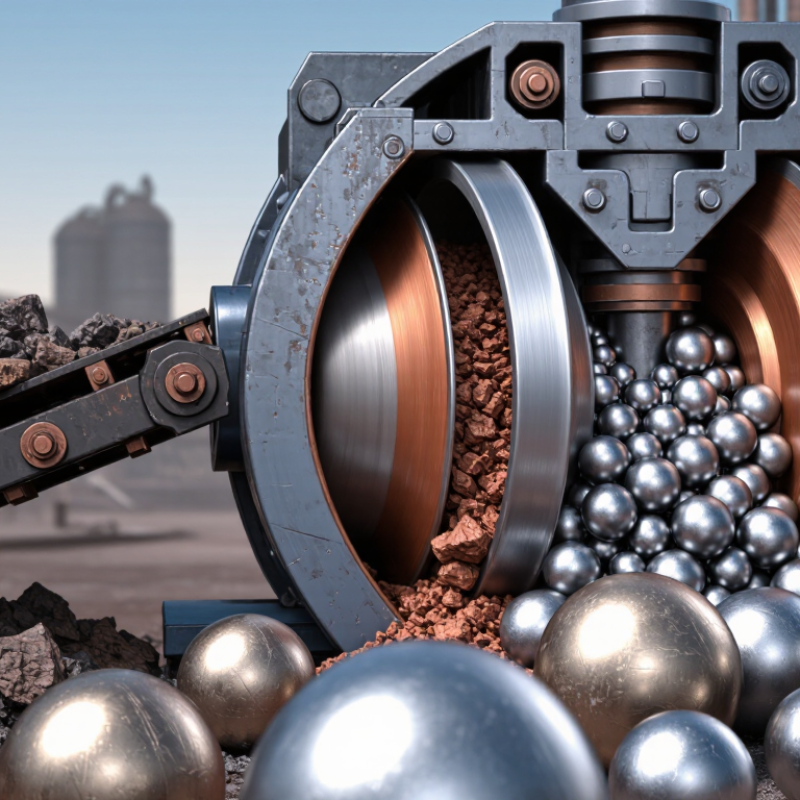
Grinding balls are the moving contact surfaces that break down ore and other feed material inside a mill. As the mill turns, balls lift and then drop, striking material against other balls and the mill lining. Their impacts help reduce larger pieces. Sliding and rolling also create grinding action. That is the core job.
Ball diameter affects how this work happens. Larger balls can deliver stronger impacts, which may help with coarse feed. Smaller balls offer more contact points and can help grind finer material. Neither choice works equally well in every mill. Feed size, hardness, mill speed, and the target product all matter. Listen for unusual impact noise, but do not treat sound alone as proof of performance.
Ball material and hardness influence wear, breakage, and contamination risk. A ball that wears quickly can change the charge profile and require more frequent additions. Operators can inspect worn balls, track power use, and compare product-size samples over time. Keep notes when feed conditions change; otherwise, a trial can give misleading results. Mill behavior is messy. Even careful measurements may not reveal every cause of a performance shift.
How to Choose the Right Grinding Ball for Your Mill
Larger balls have substantially greater individual mass, which can increase impact potential. Values shown are calculated for solid steel spheres using a density of 7.85 g/cm³; actual ball mass may vary. Select ball size based on feed size, mill design, and the required grind.
Identifying the Material and Hardness Requirements
The right grinding ball starts with the material being processed, not a hardness number alone. Hard, angular ore can wear balls quickly, especially when the mill runs for long shifts. Forged or cast steel is often used for demanding impact conditions, while ceramic balls may suit processes where metal contamination must be limited. Each choice brings trade-offs.
Check the feed’s abrasiveness, particle size, and mineral composition. Then compare these details with the mill’s speed, liner design, and operating conditions. A very hard ball may resist wear, but it can also become brittle or damage liners if impact forces are high.
It is not perfect.
Supplier hardness figures help, yet test methods and sampling locations can differ. Ask how hardness was measured, and review certificates alongside actual wear data. A practical trial can reveal more than a brochure: inspect worn balls for flat spots, cracks, or uneven diameter loss.
Keep records by batch and operating period. Small differences matter. If contamination is a concern, check the ball’s chemistry against product requirements, not just its surface hardness.
A useful selection balances wear life, breakage risk, and process quality.
Matching Ball Size and Density to the Grinding Task
Choosing ball size starts with the feed, not a rule of thumb. Large balls deliver stronger impacts against coarse, tough particles; smaller balls create more contact points for fine grinding. Wills and Finch’s Mineral Processing Technology explains how feed size, hardness, and the target grind shape media selection. Track the feed and product size distributions, especially F80 and P80, rather than relying on a single average. Bond’s grinding-energy method uses these sizes alongside the ore’s work index to estimate energy demand. That matters. A mill treating pebble-sized feed may need a different size mix from one finishing fine material, even when both use the same ore.
Density changes the impact too. The ASM Handbook, Volume 2, gives typical densities of about 7.85 g/cm³ for steel and 3.95 g/cm³ for alumina. At equal diameter, a steel ball carries substantially more mass; ceramic media may suit a process seeking less iron contamination, but its lower mass can reduce impact energy. Not automatically. Check mill speed, liner and lifter condition, and total media load before changing density or diameter. A practical trial records power draw, product size, and media wear over comparable operating periods. One awkward point: ore hardness and feed size can shift, so yesterday’s best setting may not stay best. Recheck the mill data.
Accounting for Mill Design and Operating Conditions
A grinding ball should match the mill, not just the ore. In a small-diameter mill, larger balls may strike with useful force, but they can reduce the number of grinding contacts. A long mill with a different liner profile may need another size mix. Check the mill’s diameter, length, speed, liner shape, and discharge design before changing ball dimensions. Small details matter.
Operating conditions shift the choice. Coarse feed often needs larger balls to break the biggest particles, while finer feed may benefit from more contact points. Ore hardness, water level, and circulating load also affect how balls move and wear. Watch the charge through routine measurements: record ball consumption, motor power, product size, and any unusual liner wear. A stable-looking mill can still produce a coarser product.
Use plant data alongside supplier calculations. A neat calculation can miss changes in ore hardness or feed size, and real mills are rarely as tidy as a model. Run a controlled trial, changing one factor at a time where practical. Compare results over enough operating time to account for normal variation. Keep notes. The right ball is a working fit for current conditions, not a permanent answer.
Comparing Wear Life, Cost, and Safety Factors
A grinding ball’s purchase price is only one part of its cost. Track wear as kilograms of media consumed per tonne of ore, then compare that figure with mill throughput and downtime. The Coalition for Energy Efficient Comminution’s 2012 energy-efficiency material cites comminution at about 3% of global electricity use. This broad estimate is not a mill-specific target, but it shows why poor grinding performance can carry costs beyond replacement balls. A harder ball may last longer, yet excessive hardness or poor quality control can increase breakage risk. Check wear patterns, ball size, ore abrasiveness, and power draw together.
Safety matters during charging and maintenance. Grinding balls are heavy; dropped or rolling media can injure workers and damage equipment. Use suitable lifting tools, keep guards in place, and inspect for cracked or irregular balls before loading. Track incidents and near misses alongside wear data. One overlooked factor can change the result.
Tips: Run a controlled trial before changing the full charge. Compare cost per tonne processed, not price per ball, and record results across several operating shifts. Keep the test conditions consistent where possible; ore hardness and feed size can shift, making comparisons imperfect. That limitation is worth noting, not hiding.