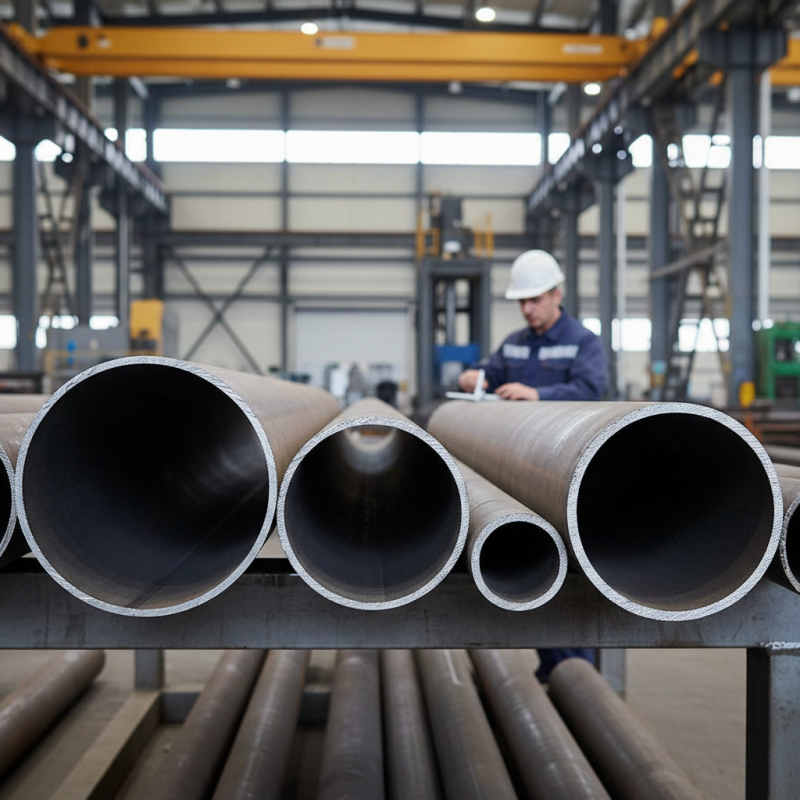
How to Choose Hot Rolled Welded Round Pipe for Your Needs?
Choosing the right Hot Rolled Welded Round Pipe is crucial for various applications. These pipes serve many industries, including construction and manufacturing. Understanding their features helps ensure you select the best option for your project.
Hot Rolled Welded Round Pipe offers unique benefits. These pipes are affordable and sturdy, making them popular for structural applications. However, it’s essential to consider factors like thickness, diameter, and material quality. An inappropriate choice can lead to structural failures or increased costs.
As you evaluate your needs, think about the specific conditions the pipes will face. Factors like corrosion resistance and load-bearing capacity should influence your decision. Finding reliable suppliers is equally important. Researching and verifying credentials can save time and resources in the long run.
Understanding Hot Rolled Welded Round Pipe and Its Applications
Hot rolled welded round pipes are widely used in various industries. These pipes exhibit robust mechanical properties and durability. They are ideal for structural applications, automotive components, and pipelines. According to the World Steel Association, the global demand for these pipes is projected to grow by 3% annually over the next five years. This increase indicates a strong market need for high-quality, reliable materials.
Understanding the characteristics of hot rolled welded round pipes is essential. They often come with various wall thicknesses, which influence their weight and strength. For example, pipes with a 1/4 inch wall thickness can handle significant loads, making them suitable for bridges and heavy machinery. However, the welding process may lead to inconsistencies, affecting reliability. It's important to evaluate these aspects based on specific project needs.
These pipes are also susceptible to corrosion and require protective coatings for longevity. In industrial settings, proper maintenance and material selection can prevent costly failures. Awareness of these nuances can significantly enhance operational efficiency. As the industry evolves, continued research into advanced welding techniques and materials will be crucial for improving the reliability of hot rolled welded round pipes.
Key Factors to Consider When Choosing Hot Rolled Welded Round Pipe
Choosing the right hot rolled welded round pipe requires careful attention to several key factors. The material composition is crucial. For instance, carbon steel is common for structural applications due to its strength and weldability. According to the American Institute of Steel Construction (AISC), nearly 70% of structural steel is carbon steel, making it a reliable choice.
Another important aspect is the pipe's wall thickness. Thicker walls can enhance durability and performance. Data from the Steel Tube Institute shows that pipes with greater wall thickness can withstand higher pressure, making them preferable for certain applications. Yet, a thicker pipe may weigh more, potentially affecting handling and installation.
Tips: Consider how the pipe will be used before selecting size and thickness. Collaborate with engineers to determine the best specifications. Finally, note that the cost can vary widely. Balancing quality and price is key. Conducting a thorough market analysis can help you make an informed decision. Remember, not all applications require the same grade of pipe. Do not overlook your specific needs. Evaluating these factors will ensure a suitable selection for your projects.
Comparing Different Grades and Specifications of Round Pipe
When selecting hot rolled welded round pipes, understanding grades and specifications is crucial. Different grades of pipes serve various applications. Common grades include ASTM A53, A500, and A252. Each grade has unique properties, including yield strength, tensile strength, and weldability that can affect performance in different environments.
For structural applications, A500 pipes are often preferred. They are known for their strength and durability. In contrast, A53 pipes might be better for lower-stress applications. It's essential to identify your specific requirements before making a choice. Consider factors like expected load, environmental conditions, and safety standards.
Tips: Always check the material certification. It provides insights into the pipes' quality and compliance. Consult industry experts if unsure about the specifications. Don't hesitate to ask for samples when possible. This hands-on approach can lead to informed decisions and ultimately avoid costly mistakes.
Comparing Different Grades of Hot Rolled Welded Round Pipe
Evaluating Cost vs. Quality in Hot Rolled Welded Round Pipe Selection
Choosing hot rolled welded round pipe requires careful consideration. Balancing cost and quality is key to satisfying your project needs. While cheaper options might look appealing, they may fall short in durability and performance. Investing in higher-quality materials could save costs in repairs and replacements later on.
Tips: Always ask for material certifications. This ensures compliance with industry standards. Understanding the specifications helps you make informed decisions. Explore different suppliers to compare prices. A thorough comparison can uncover hidden advantages or drawbacks in their offerings.
Remember, the cheapest price often reflects lower quality. Evaluate the long-term implications of your choices. Consider how environmental factors might affect the pipe's lifespan. Seeking expert opinions can shed light on past performance, guiding your decisions to avoid common pitfalls. Aim for a balance, where cost-effectiveness meets quality, ensuring the best fit for your project’s demands.
How to Choose Hot Rolled Welded Round Pipe for Your Needs? - Evaluating Cost vs. Quality in Hot Rolled Welded Round Pipe Selection
| Pipe Size (inches) | Wall Thickness (mm) | Weight (lbs/ft) | Cost per Foot ($) | Quality Rating (1-5) |
| 1.5 | 2.0 | 3.65 | 2.50 | 4 |
| 2.0 | 2.5 | 5.79 | 3.00 | 5 |
| 3.0 | 3.0 | 8.70 | 4.20 | 5 |
| 4.0 | 3.5 | 12.09 | 5.10 | 4 |
| 5.0 | 4.0 | 16.33 | 6.00 | 4 |
Common Mistakes to Avoid When Purchasing Round Pipe for Projects
When purchasing hot rolled welded round pipes, avoiding common mistakes can save time and resources. One common error is underestimating the importance of material specifications. Various grades of steel, such as ASTM A500, have different properties and application suitability. Ensure you understand the specific requirements of your project and select the right material grade accordingly.
Another frequent mistake is neglecting the pipe's wall thickness. The wall thickness directly affects the pipe's strength and performance. According to industry reports, a pipe that is too thin may not meet load-bearing requirements. In contrast, overly thick pipes can add unnecessary costs. It's crucial to identify the load requirements accurately.
Tips: Always ask suppliers for detailed specifications. Doing so helps avoid misunderstandings. Get a second opinion on critical components, especially when the application is demanding. Lastly, consider future needs. Will the project evolve? Anticipating changes can help you choose the right size and thickness now, avoiding costly adjustments later.