How to Choose the Right Drone Motors for Your Needs?
Choosing the right Drone Motors is crucial for optimal performance. According to a recent industry report by the Drone Industry Insights, the global drone market is expected to reach $42 billion by 2025. This growth reflects a rising demand for high-quality components, especially motors.
Drone motors impact flight efficiency, speed, and durability. A mismatched motor can lead to poor performance or even failure in critical situations. The right motor ensures stability and responsiveness, making it essential for both hobbyists and professionals. As drone technology evolves, selecting the right motor becomes a complex task.
Factors like thrust-to-weight ratio and efficiency ratings should be considered. For instance, brushless motors typically offer better performance than brushed counterparts. Some users overlook the importance of compatibility with their drone's frame. This oversight can hinder a drone's potential and lead to regrets. Ultimately, informed decisions about drone motors can significantly enhance the flying experience.
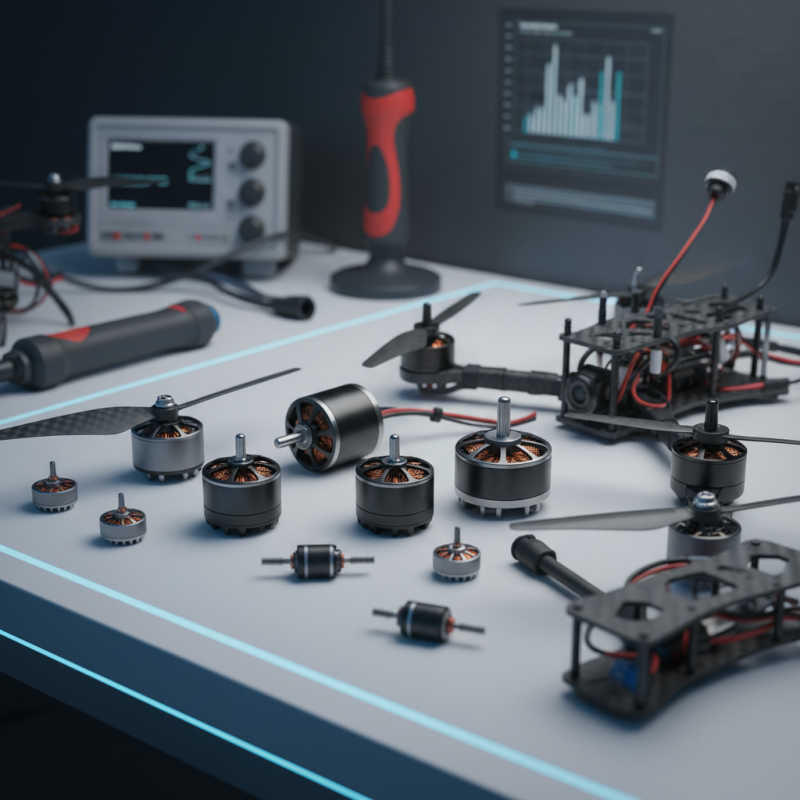
Understanding Drone Motor Types and Specifications
When selecting drone motors, understanding the types and specifications is vital. Brushless motors are the most common choice for their efficiency and longevity. They operate without friction, leading to reduced heat and extended flight times. However, they may require a more complex electronic speed controller (ESC).
Another important factor is the motor size, often indicated by the numerical code. For example, a motor labeled 2205 has a diameter of 22 mm and a height of 5 mm. Choosing the right size affects thrust output and efficiency. Higher numbers usually mean more power, but they can also lead to heavier setups that drain batteries faster.
It’s essential to reflect on your usage. If you plan to fly for fun, lightweight motors might suffice. For professional applications, investing in high-quality motors is crucial. Evaluate your needs carefully. The wrong choice can result in disappointing flight experiences. Balancing power, weight, and flight time requires careful thought and knowledge.
Assessing Your Flight Goals and Requirements
When choosing drone motors, it is crucial to assess your flight goals and requirements. Understanding whether you need high speed, endurance, or maneuverability can significantly influence your choice. According to industry data, nearly 70% of drone users report that motor efficiency directly impacts flight time. This makes it essential to match the motor’s specifications with your needs.
For hobbyists focused on racing, opt for lightweight, high-KV motors. These motors provide quick throttle responses, enabling swift maneuvers. Commercial users may require stability over speed. A motor with optimal torque can carry heavier payloads, valuable for aerial photography or surveying.
Tips: Evaluate the expected flight time versus the weight of components. A heavier drone demands more powerful motors. Assessing battery efficiency also plays a vital role. High-quality batteries can enhance performance and extend flight duration.
Remember, trial and error is part of the process. Sometimes, the first choice might not yield the desired performance. Don't shy away from adjusting your selections based on initial flight tests, as experiences can reveal a different need than initially anticipated.
Factors to Consider for Motor Size and Weight
Choosing the right motor for your drone can be daunting. One key aspect is understanding motor size and weight. Larger motors usually provide more thrust, which helps carry heavier payloads. However, larger motors can add unnecessary weight, affecting flight efficiency. You need to find a balance.
Weight is crucial. If your motors are too heavy, your drone might struggle to lift off. Conversely, light motors might not generate enough thrust. Assess your drone's frame and payload. Consider all components, including the battery and camera. You want a well-rounded system that performs effectively.
Experimentation is valuable. Test different motor sizes and weights to see how they affect flight dynamics. Sometimes, even small changes can lead to significant improvements. Don’t rely solely on specifications; real-world testing can reveal surprising insights. Embrace this trial and error process, as it helps refine your choices.
Selecting the Right Kv Rating for Your Drone Motors
Selecting the right Kv rating for your drone motors is crucial for optimal performance. The Kv rating indicates how many revolutions per minute (RPM) a motor will turn when supplied with one volt of electricity. A lower Kv rating pairs well with larger propellers, providing better torque. This is ideal for heavy-lift drones or those that require stable flight in windy conditions.
Conversely, a higher Kv rating suits smaller propellers, promoting faster spins. This setup is often preferred for racing drones, where quick response times and agility matter most. Yet, using too high a Kv can lead to overheating. It's essential to find a balance that fits your drone's design and purpose.
Reflect on your needs. If you fly indoors or need precision, opt for a lower Kv. For outdoor racing, a higher Kv might be best. Understand the impact of your motor choice. It shapes your drone's flight style, efficiency, and overall experience. Consider all factors carefully before making a decision.
Balancing Performance and Efficiency in Motor Choices
Choosing the right drone motors is crucial for balancing performance and efficiency. When considering motor types, assess how weight affects flight time. Heavier motors might provide more power but can drain battery life quickly. Find a balance between thrust and power consumption. It’s vital to understand that not all high-performance motors are efficient.
A common mistake is selecting powerful motors without considering their efficiency ratings. For example, motors with higher Kv ratings often deliver more speed. However, they can lead to increased power draw. This dynamic can complicate usage in long-duration flights. Consider flight purpose. If it’s for racing, go for speed. For photography, prioritize stability and battery life.
Also, factor in the propeller size. Larger props can improve efficiency by providing better lift. Yet, they may require robust motors. Testing various combinations may yield unexpected results. Gathering feedback will help refine choices. Your ultimate goal should be to create a drone that meets specific needs while maintaining a good ratio of performance to efficiency. Remember that each decision impacts overall functionality.
How to Choose the Right Drone Motors for Your Needs?
| Motor Type | Max Thrust (g) | Power (W) | Efficiency (%) | Weight (g) | Recommended Battery (V) |
| Brushless | 1000 | 250 | 85 | 150 | 14.8 |
| Coreless | 800 | 200 | 80 | 100 | 11.1 |
| Brushed | 600 | 150 | 75 | 80 | 7.4 |
| Racing | 1200 | 300 | 88 | 160 | 14.8 |