How to Choose SUS316L Stainless Steel Coil in 2026?
Choosing the right Sus316l Stainless Steel Coil in 2026 requires more than comparing prices. The coil must match its service environment, forming process, welding method, and inspection requirements. Moisture, chlorides, heat, and repeated cleaning can expose weaknesses that a catalog description hides.
Metallurgist and welding expert Dr. John C. Lippold offers a useful principle: “A grade is suitable only when its service conditions and fabrication demands are understood.” That idea matters when reviewing 316L coil. Check the mill certificate, chemical composition, tensile strength, yield strength, elongation, and surface finish. Confirm applicable standards, such as ASTM A240 or EN 10088, before placing an order. Small details matter.
Look closely at the coil itself. Is the thickness consistent across the strip? Are the edges clean and stable during slitting? Does the surface show scratches, oxidation, or uneven polishing? Ask for heat numbers and traceability records. Request sample testing when the application involves pharmaceutical equipment, marine exposure, food processing, or pressure-related fabrication.
The cheapest coil may cost more later.
This guide examines purchasing decisions from a practical perspective. It considers corrosion resistance, cold forming, welding performance, finish selection, supplier reliability, delivery capacity, and total lifecycle cost. Still, no checklist is perfect. A specification that works in a dry factory may fail near saltwater. Real operating conditions deserve more attention than confident assumptions.
What Is SUS316L Stainless Steel Coil?
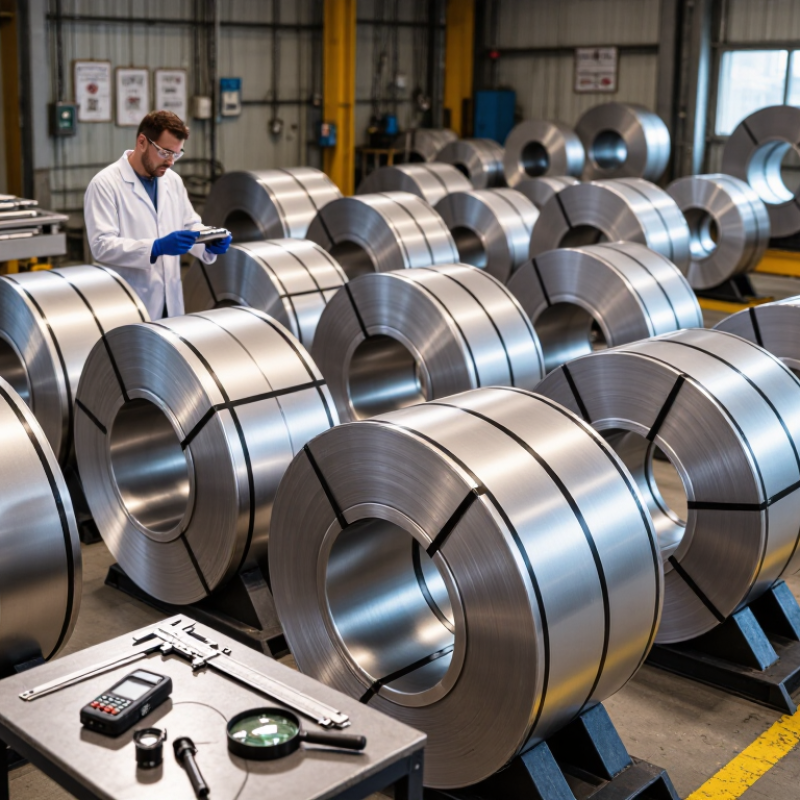
SUS316L stainless steel coil is a continuously rolled strip made from a low-carbon austenitic stainless steel. “SUS” commonly refers to Japanese Industrial Standards, while “316L” identifies the grade. The “L” means low carbon, usually limited to 0.03% maximum. This helps reduce sensitization after welding. The alloy also contains chromium, nickel, and molybdenum. Molybdenum improves resistance to chlorides and many industrial chemicals.
It has a smooth metallic surface.
The coil form supports efficient storage, slitting, stamping, and roll forming. Common uses include food-processing equipment, medical components, marine hardware, and chemical-processing parts. However, SUS316L is not corrosion-proof. Concentrated acids, stagnant saltwater, poor cleaning, and surface contamination can still cause damage. The environment matters more than the name alone.
When choosing a coil in 2026, verify the standard, thickness tolerance, width, surface finish, and edge condition. Ask for heat analysis, mechanical test results, and corrosion-related inspection records. A practical mistake is selecting only by thickness and price. Forming behavior, springback, and delivery consistency can affect production costs later. Inspect the surface under clear lighting; small pits or embedded iron particles may be difficult to notice at first. Confirm whether the coil is annealed and pickled, bright annealed, or mechanically polished. These conditions influence appearance and fabrication performance. Requirements should be written clearly, because “316L coil” alone leaves too much room for misunderstanding.
Which SUS316L Properties Matter for Your Application?
Choosing SUS316L stainless steel coil in 2026 requires more than checking its grade. Its low carbon content supports cleaner weld zones and reduces the risk of sensitization during fabrication. Molybdenum improves resistance to chloride-related pitting, making it useful near seawater, humid processing areas, and chemical vapors. However, SUS316L is not corrosion-proof. Surface contamination, stagnant moisture, and poor cleaning can still cause damage.
Which properties matter depends on your application. Check thickness tolerance, yield strength, tensile strength, elongation, and forming requirements. A deep-drawn component needs different coil behavior than a flat equipment panel. Surface finish also matters. A smooth finish is easier to clean, but it may increase processing cost. Cold working can raise strength and slightly increase magnetic response. This detail is often overlooked.
Tips: Request heat-lot traceability and a material certificate. Confirm chemical composition, mechanical results, surface condition, and edge quality. Test a sample under your actual chloride, temperature, and forming conditions. Do not choose by grade alone. In real projects, the wrong finish or thickness causes more trouble than the wrong headline specification. Review the decision with both the fabricator and the end-use engineer. Some assumptions may need revision.
How to Verify Standards, Certifications, and Supplier Reliability?
How to Choose SUS316L Stainless Steel Coil in 2026?
For a SUS316L stainless steel coil, supplier reliability begins with documents matching the actual heat. Ask for the mill test certificate, heat number, chemical composition, mechanical results, coil weight, and thickness tolerance. Compare the certificate with the selected standard, such as JIS G4304, JIS G4305, ASTM A240, or EN 10088-2. Confirm the latest applicable edition in 2026. Old certificates can look convincing.
Check whether the certificate covers the supplied product, not merely the factory’s management system. ISO 9001 supports process control, but it does not prove every coil meets SUS316L requirements. Review chromium, nickel, and molybdenum values against the standard. Pay attention to carbon content. The “L” grade depends on low carbon control. Request surface inspection records, hardness data, and dimensional reports when the application is demanding. A portable PMI test at receiving can verify alloy identity, but it cannot replace full certification.
Traceability should continue from coil to heat number. Inspect markings, labels, packaging, and the packing list before unloading. Ask how the supplier handles nonconforming material, delayed claims, and replacement coils. A factory audit may reveal more than polished certificates. Look at laboratory calibration dates, inspection equipment, storage conditions, and corrosion protection. Speak with recent customers if possible. One practical lesson is uncomfortable: even experienced buyers sometimes trust familiar paperwork too quickly. I would also request a small trial coil before committing to a large order, especially when surface finish or forming performance matters.
How to Compare Costs, Delivery Terms, and Long-Term Value?
When I compare SUS316L stainless steel coils, I start with the complete landed cost. A low quotation can hide slitting fees, packing charges, testing costs, and import expenses. Ask for the same thickness, width, surface finish, coil weight, and quantity. Otherwise, the comparison becomes misleading. Request a material test certificate with heat numbers and chemical results. Check whether the quoted tolerance matches your production line.
Delivery terms deserve equal attention. Compare EXW, FOB, and CIF prices only after identifying who pays freight, insurance, loading, and port charges. Confirm production time, sailing schedules, inspection dates, and documents before ordering. A supplier may promise ten days, but custom widths can require longer preparation. Keep a realistic buffer. In one purchasing review, I focused too heavily on the fastest shipment and underestimated unloading delays. That decision disrupted fabrication. It was avoidable.
Long-term value depends on more than corrosion resistance. SUS316L usually performs well in chloride-exposed environments because of its molybdenum content, but it is not maintenance-free. Review surface quality, flatness, weldability, traceability, and previous application records. A slightly higher price may reduce rejects, polishing work, and unexpected replacement costs. Calculate cost per usable kilogram, not merely cost per purchased kilogram. Include scrap rates and storage losses. The calculation is imperfect, yet it exposes weak assumptions. Ask for samples or inspection reports when the application is critical. Keep every promise in writing.