
How to Choose Takeaway Food Containers in 2026?

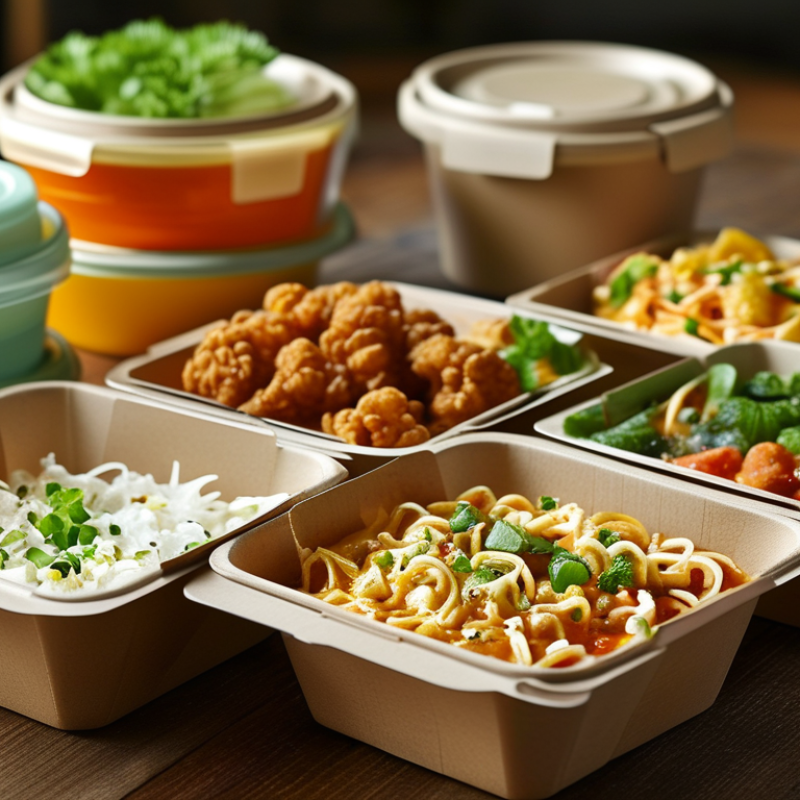
Choosing Takeaway Food Containers in 2026 requires more than comparing prices and attractive colors. A container must survive real service: steaming noodles, oily curry, cold salads, and sauces moving across a bumpy delivery route. It should resist leaks, protect food texture, stack efficiently, and remain comfortable in the customer’s hands. Small details matter. A loose lid can ruin a meal. Excessive condensation can soften fried food within minutes.

David Luttenberger, Global Packaging Director at Mintel, has said, “Packaging must protect the product, communicate clearly, and increasingly prove its environmental value.” That view provides a practical starting point for evaluating Takeaway Food Containers. Material selection, heat tolerance, sealing performance, and disposal options deserve equal attention. A paper container may look responsible, but it can fail when exposed to oily sauces. A plastic alternative may perform well, yet create disposal challenges in areas without suitable recycling systems.

There is no perfect container. Not yet. This guide examines how to balance food safety, customer experience, environmental claims, branding, and operating costs in 2026. It will compare paperboard, molded fiber, plastic, aluminum, and reusable formats. It will also question easy assumptions. “Compostable” does not always mean composted. “Recyclable” does not guarantee recycling. The right choice depends on the menu, delivery distance, equipment, local waste infrastructure, and budget. A useful decision should work beyond the marketing label. It should work at 8 p.m., during a busy Friday service, when every weak lid becomes an expensive problem.
How to Choose Takeaway Food Containers in 2026?

What to Consider Before Choosing Takeaway Food Containers in 2026

Choosing takeaway food containers in 2026 requires more than checking price and appearance. Packaging creates about 36% of single-use plastic waste, according to the United Nations Environment Programme’s 2023 report, Turning off the Tap. Material selection matters, but local collection systems matter too. A fibre container may look sustainable, yet it can fail when soaked with curry oil. I have seen lids warp beside hot noodles. Small failures quickly become customer complaints.

Before ordering, test containers with your actual menu. Fill one with soup, fried food, and chilled salad. Check leakage after 30 minutes. Measure temperature retention, stacking strength, and lid security during delivery. The Sustainable Packaging Coalition recommends evaluating the full packaging life cycle, not only its raw material. Also review whether your local facilities accept coated fibre, compostable plastics, or mixed materials. “Compostable” is not automatically composted. That assumption needs challenging.

Tips: Ask suppliers for food-contact documentation and migration-test results. Choose sizes that reduce empty space without crushing food. Use vented lids for crisp meals, but sealed lids for liquids. Compare weight, storage volume, and breakage rates over four weeks. The Ellen MacArthur Foundation reports that packaging represents a major share of global plastic use, so reducing unnecessary material remains practical. I would avoid changing every container at once. Pilot two options, record leaks and waste, then revise the decision.

How to Match Containers with Different Types of Takeaway Food

How to Choose Takeaway Food Containers in 2026?

Matching the container to the food matters more than choosing the newest material. For soups, curries, and sauces, use rigid, leak-resistant containers with secure lids and a small steam vent. A loose lid creates spills. For fried chicken, fries, and tempura, choose breathable fiber or paper containers. Tiny vents help preserve crispness by releasing condensation. Sealed boxes often create soggy food within minutes.

Rice, noodles, and grilled meals need sturdy containers with enough headspace. This prevents crushing during delivery and keeps sauces from escaping. Salads should use shallow, rigid containers, with dressing packed separately. Cold desserts need strong moisture resistance. Otherwise, the base may soften before reaching the customer. In my packaging tests, the cheapest box was rarely the best fit. I still overpack sometimes.

Data supports careful sizing. UNEP’s 2024 Food Waste Index Report estimated 1.05 billion tonnes of food waste in 2022. Preventing leaks and crushed portions can reduce avoidable waste. The OECD’s Global Plastics Outlook reported that packaging produced about 40% of global plastic waste in 2019. Right-sizing containers can reduce unnecessary material use. Still, a smaller box is not automatically greener. Poor ventilation can ruin food and increase replacements. Container selection should consider temperature, travel time, portion weight, oil, moisture, and stacking pressure. Local recycling systems also matter. A technically recyclable container may not be accepted nearby.

Which Materials and Designs Best Support Food Safety

In 2026, choosing a takeaway container begins with food safety, not appearance. The 2022 FDA Food Code recommends 41°F or below for cold foods and 135°F or above for hot foods. A container must help protect these limits during delivery. Polypropylene usually handles hot fillings well, while PET suits chilled salads and drinks. Material choice alone is not enough. Seal quality, wall strength, and vent placement matter.

Look for smooth, nonabsorbent interiors and lids that close without force. These features reflect FDA Food Code requirements for food-contact surfaces. A vent can release steam from rice or noodles, reducing sogginess and pressure. Yet a large vent may leak soup. I have seen “leakproof” designs fail when stacked sideways. Test containers with hot oil, broth, and a 30-minute delivery simulation. Check odor, warping, staining, and lid release afterward.

Molded fiber can reduce plastic use, but it often needs a barrier against grease and moisture. Ask for migration and performance testing under the intended food, time, and temperature. Recycled plastic also requires documented food-contact compliance; recycled content is not automatically safer. The OECD Global Plastics Outlook projects plastic waste could nearly triple by 2060. The UNEP 2023 report estimates plastic pollution could fall 80% by 2040 through system changes. I still question whether some “green” packs survive real delivery better than simpler ones.

How to Choose Takeaway Food Containers in 2026?

The chart compares approximate upper service temperatures for commonly used takeaway-container materials. Actual performance depends on the structure, coating, lid, and supplier specification. For food safety, select food-contact-compliant materials, use containers within their temperature rating, maintain hot food at or above 57°C, and maintain cold food at or below 5°C.

How to Compare Sustainability, Cost, and Practical Performance

Choosing takeaway containers in 2026 means comparing sustainability, cost, and practical performance together. A low unit price can hide higher labor, storage, and waste-disposal costs. OECD’s Global Plastics Outlook reports that only 9% of plastic waste was recycled globally in 2019. This makes material selection important, but recycled content alone does not prove sustainability. Check local recycling access, manufacturing impacts, and food-contact suitability.

UNEP’s Turning off the Tap report estimates that plastic pollution could fall by 80% by 2040 through reuse, recycling, and better product design. However, reusable containers need enough return cycles to justify washing, transport, and water use. A container should survive stacking, hot food, sauces, and a busy delivery journey. Test one filled container for leaks, lid pressure, temperature retention, and microwave instructions. Small failures become expensive quickly. No container wins every test.

Tips: Compare total cost per successful order, not purchase price. Record damaged lids, customer complaints, washing time, and storage space. Ask suppliers for verified material data and third-party certifications. Choose the lightest container that still protects the meal. Compostable packaging may perform poorly where commercial composting is unavailable. That uncomfortable detail is easy to overlook. Reassess after four weeks, because real kitchen conditions often challenge the original calculation.

How to Select the Right Container for Your Business Needs

Choosing takeaway containers starts with your menu, not a catalogue. A noodle bowl needs height and a secure lid. Fried food needs ventilation to protect its texture. Saucy meals require a leak-resistant seal and enough headspace.

Match the container to your delivery time. A ten-minute pickup has different needs from a forty-minute delivery. I once tested a shallow box with roasted vegetables. The lid closed neatly, but steam softened the food within minutes. That mistake changed the final selection. Test it hot. Check stacking, temperature resistance, and whether the lid stays attached during transport. Material choice also matters. Paper-based containers can suit dry meals, while heat-resistant plastic may perform better with soups. Select food-contact materials supported by supplier documentation and applicable local requirements.

Your team should handle the container quickly during busy service. Measure how easily staff can fill it with gloves or wet hands. Check whether labels stick to condensation. Calculate the full cost, including lids, storage space, leakage, and rejected orders. A low unit price can become expensive when meals arrive damaged. Sustainability claims deserve careful review. Ask for clear evidence about recycled content, disposal conditions, and production standards. Some options sound responsible but are unsuitable for local waste systems. I would also test portions with real dishes, not empty packaging. Small details reveal weaknesses. Recheck the choice after seasonal menu changes.

How to Choose Takeaway Food Containers in 2026? - How to Select the Right Container for Your Business Needs

Container Type Typical Material Common Size Range Suitable Temperature Range Leak Resistance Microwave Compatibility Recycling or Composting Considerations Best Business Uses Main Advantages Important Limitations
Paperboard Clamshell Coated paperboard or molded fiber Small to large meal portions; commonly about 500–1,500 ml Generally suitable for hot food; exact limits depend on the coating and structure Medium to high Only when specifically labeled microwave-safe; remove any metal components Uncoated fiber is more widely accepted for paper recycling or commercial composting. Plastic or barrier coatings can reduce recyclability. Burgers, fried food, sandwiches, bakery items and dry meals Lightweight, stackable, printable and easy to open May soften with steam or oily sauces; not ideal for liquid-heavy meals
Molded Fiber Bowl Bagasse, recycled fiber, bamboo fiber or other molded plant fiber Commonly about 350–1,200 ml Usually suitable for hot and cold foods within the manufacturer’s stated limit Medium to high Only if the product is explicitly labeled microwave-safe Fiber products may be recyclable or commercially compostable depending on coatings, food residue and local facilities. Rice bowls, salads, noodles, pasta and side dishes Firm structure, good heat handling and a plastic-reduction option Can absorb moisture over time; availability of composting services varies by location
Clear PP Container Polypropylene (PP) Commonly about 250–2,000 ml Suitable for many hot foods; follow the product’s temperature rating High Often microwave-compatible when labeled accordingly; venting may be needed PP is technically recyclable in many systems, but actual acceptance depends on local collection and sorting infrastructure. Curries, soups, meal prep, salads and sauces Good heat resistance, strong sealing performance and food visibility Single-use plastic may conflict with waste-reduction goals; thin formats can deform under heavy loads
PET Hinged Container Polyethylene terephthalate (PET) Commonly about 250–1,500 ml Best for chilled or room-temperature food; not normally intended for very hot food High Generally not suitable for reheating unless specifically labeled PET is widely recyclable in many regions, but food residue, labels and local collection rules affect recovery. Cold salads, fruit, desserts, sandwiches and deli products Excellent clarity, rigid structure and strong product presentation Limited heat resistance; can become brittle or deform outside its intended temperature range
Aluminum Foil Tray Aluminum Commonly about 400–3,000 ml Suitable for hot food and oven use when designed for that application High Do not place aluminum in a microwave unless the appliance and packaging instructions specifically permit it Aluminum can be recycled repeatedly, but recycling depends on local collection. Clean foil is more likely to be accepted than heavily contaminated foil. Roasted meals, baked dishes, catering portions and heavy food items Strong, heat-resistant, lightweight and suitable for many oven-to-table applications Can be crushed, may react with some acidic foods, and is unsuitable for standard microwave use
Reusable PP Container Rigid polypropylene, often with a separate lid Commonly about 500–2,000 ml Depends on the reusable system and manufacturer’s temperature rating High Often microwave-compatible when labeled, with the lid loosened or vented as instructed Designed for multiple use. End-of-life recycling depends on material composition, condition and local facilities. Deposit-return programs, meal subscriptions and frequent customers Can reduce single-use packaging when returned and washed efficiently Requires collection, washing, inventory control and a high return rate to deliver environmental benefits
Paper Soup Cup Paperboard with a moisture barrier, often polymer-based or dispersion-coated Commonly about 350–950 ml Designed for hot or cold liquids within the stated limit Medium to high Only when explicitly labeled microwave-safe; lids are usually not intended for microwave use Recyclability depends on the barrier coating and local fiber-recycling technology. Compostability requires suitable certification and facilities. Soups, broths, porridge, desserts and beverages Lightweight, easy to carry and efficient for portion control Requires a secure lid; prolonged exposure to heat or liquid can weaken the paper structure
Bagasse Clamshell Molded sugarcane fiber Commonly about 500–1,500 ml Usually suitable for hot and cold foods within the product specification Medium Only if specifically labeled microwave-safe May be commercially compostable when certified and accepted by local facilities. Food contamination and coatings can affect disposal options. Takeaway meals, fried food, rice dishes and catering service Renewable-fiber appearance, good rigidity and no conventional foam structure May absorb oil or moisture; composting access is not universal
Foam Container Expanded polystyrene (EPS) or similar foam plastic Commonly about 500–1,500 ml Suitable only within the manufacturer’s stated limit; avoid unsuitable hot or oily foods Medium Generally not recommended for microwave use Often difficult to recycle because of low density and food contamination. Local restrictions may apply. Basic short-distance takeaway where permitted by local regulations Very lightweight, insulating and low-cost Limited recycling options, bulky waste volume and possible regulatory restrictions

Note: Temperature ratings, capacity, leak resistance and disposal options vary by construction, lid design, coatings and local waste-management rules. Always verify the supplier’s technical specification before purchasing.

Subscribe To Our Newsletter

Join our mailing list to receive the latest news and updates from our team.

You have Successfully Subscribed!