How to Choose the Best Chromium Carbide Overlay Plate?
Choosing the right Chromium Carbide Overlay Plate begins with understanding the wear problem, not simply comparing prices. Mining chutes, cement mixers, coal hoppers, and recycling equipment face different combinations of abrasion, impact, heat, and corrosion. A plate that performs well inside a limestone transfer chute may fail quickly under repeated heavy impact. The operating details matter.
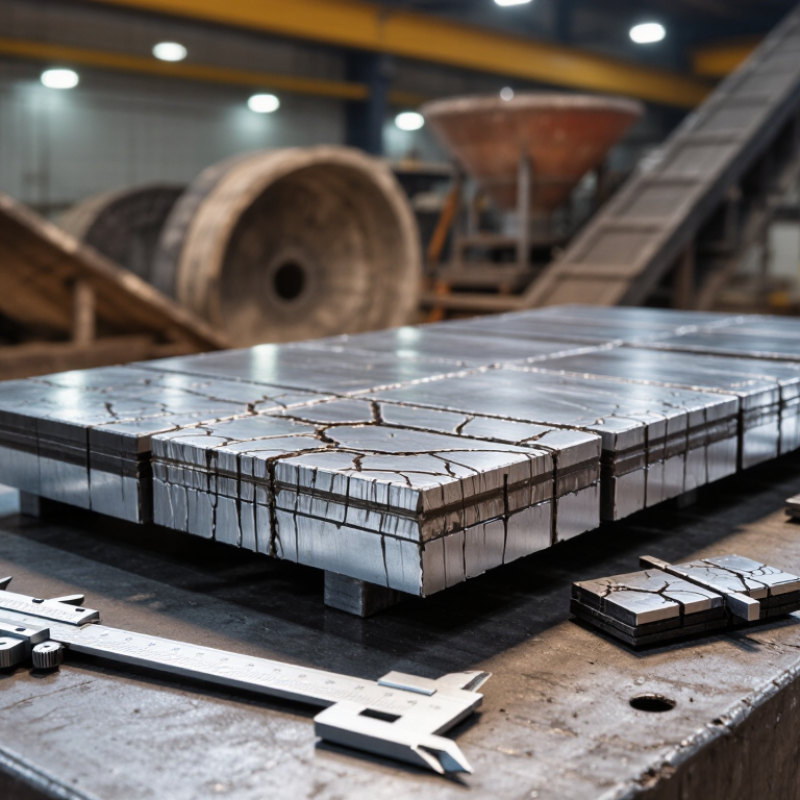
An experienced selection process examines base steel, overlay chemistry, hardness, thickness, crack pattern, and welding method. It also considers material size, sliding speed, impact energy, and service temperature. Ask for test certificates, hardness reports, and traceable production records. Reliable manufacturers should explain their welding process clearly and provide practical installation guidance. Surface hardness alone is not enough. Some plates measure impressively but lack the toughness needed for demanding applications.
Field experience can reveal what a catalogue cannot. Inspect worn plates, measure the remaining thickness, and photograph failure areas before choosing a replacement. Speak with maintenance teams who understand shutdown costs and repair limitations. A trial section may provide stronger evidence than a confident sales claim. Results can vary.
There is no universal best plate. The ideal Chromium Carbide Overlay Plate balances wear resistance, toughness, fabrication needs, and total service life. Even expert recommendations deserve review when conditions change. Incorrect assumptions about impact or temperature can shorten performance dramatically. This guide explains the main selection criteria, common mistakes, and questions buyers should ask before approving a purchase. The goal is a defensible decision based on operating evidence, verified quality, and realistic expectations.
Identify Wear Conditions: Impact, Abrasion, and Operating Temperatures
How to Choose the Best Chromium Carbide Overlay Plate?
Start by identifying how the plate will wear. Impact damage creates dents, cracks, and local spalling. Abrasion produces grooves, thinning, and polished wear tracks. A crusher discharge chute may receive heavy rocks every few seconds. That application needs an overlay with strong impact tolerance, not simply the highest hardness. Conversely, a conveyor handling dry sand may need better resistance to continuous sliding abrasion. Harder is not always better.
Operating temperature can change the decision. Hot clinker, furnace dust, and exhaust ducts may expose the plate to repeated heating and cooling. Check the overlay chemistry, bonding method, and substrate limits at the actual temperature. For service near 450°C, request test data instead of relying on room-temperature hardness. Thermal cycling can open small cracks. Those cracks may be acceptable in some overlays, but dangerous where impact is severe.
Inspect the failed plate before ordering a replacement. Measure the remaining overlay, record crack patterns, and photograph the feed material. Ask whether moisture, sharp particles, or trapped material increased wear. In maintenance reviews, teams often blame the plate too quickly. I have found that poor support or loose bolts can cause early failure. The first choice may still be wrong. Compare expected impact, abrasion rate, temperature changes, and plate thickness together. Use field evidence, not hardness numbers alone.
Match Alloy Chemistry: Typical 20–35% Chromium and 0.5–1.5% Carbon
Choosing the best chromium carbide overlay plate starts with alloy chemistry, not thickness alone. For abrasive service, a practical range often includes 20–35% chromium and 0.5–1.5% carbon. Chromium supports the formation of hard chromium carbides. Carbon helps determine how much carbide develops within the metal matrix.
More carbon may improve resistance against sliding sand, crushed stone, and mineral fines. However, excessive carbide content can reduce toughness and increase cracking risk. Chromium content also needs careful review. A lower level may suit moderate abrasion, while a higher level can help in severe mineral wear. The correct balance depends on impact, temperature, and material flow speed.
Chemistry certificates deserve close attention. Check the tested values, not only the advertised range. Welding dilution can change the deposited layer, especially near the fusion line. Plate samples should also be examined for carbide distribution, hardness, crack pattern, and overlay thickness. A very hard surface is not automatically the best choice. I once treated hardness as the main answer; that view was too narrow. Field checks often reveal premature failure caused by impact or poor support, rather than insufficient chromium. Review the actual wear pattern, then compare it with the chemistry and fabrication method. Small details matter.
How to Choose the Best Chromium Carbide Overlay Plate?
Match Alloy Chemistry: Typical 20–35% Chromium and 0.5–1.5% Carbon
Chromium carbide overlay plates commonly use approximately 20–35 wt% chromium and 0.5–1.5 wt% carbon in the deposited alloy. Higher chromium can support carbide formation and wear resistance, while carbon helps form hard chromium carbides. Select the chemistry range according to the balance between abrasion, impact, and service temperature.
Select Hardness and Thickness: Commonly 55–65 HRC and 3–20 mm
Choosing the best chromium carbide overlay plate starts with hardness and thickness. These two values strongly affect wear life, weight, welding behavior, and installation.
For abrasive sliding, a hardness range of 55–65 HRC is commonly suitable. Around 55 HRC may offer better toughness when impact is present. Near 65 HRC can resist severe mineral abrasion, but it may become less forgiving under repeated shock. Harder is not always better. A plate exposed to falling rocks may crack or deform if hardness is selected without considering impact energy. Review the actual material, particle size, operating temperature, and contact pressure before deciding.
Thickness usually ranges from 3–20 mm. Thin plates, such as 3–6 mm, fit chutes, liners, and equipment with tight clearances. Medium sections around 8–12 mm often balance service life and manageable weight. Thicker plates can support longer wear intervals in high-abrasion zones, yet they add load and may complicate cutting, bending, or welding. Measure the worn area carefully, including bolt space and structural support. A thicker plate cannot compensate for poor attachment.
Real conditions are often inconsistent. One conveyor may experience both dry dust and wet, sticky ore. That changes wear behavior. Start with operating records, inspect failed liners, and compare actual thickness loss after service. Do not rely only on a catalog value. A practical selection may require adjustment after the first inspection, especially when impact and abrasion occur together.
Verify Fabrication Limits: Bend Radius, Cutting Method, and Weldability
How to Choose the Best Chromium Carbide Overlay Plate?
Verify Fabrication Limits: Bend Radius, Cutting Method, and Weldability
A chromium carbide overlay plate may resist severe abrasion, but fabrication limits can decide whether it fits your equipment. Check the minimum bend radius before ordering. This value depends on plate thickness, overlay hardness, base material, and bending direction. A plate that bends easily across its width may crack along its length. Ask for test data, not only a general specification.
Cutting method matters. Plasma and waterjet cutting can produce different heat effects and edge conditions. Thermal cutting may soften a narrow zone or create hard, brittle edges. Waterjet cutting reduces heat input, but it can cost more and require extra finishing. For small openings, drilling is often difficult because the carbide layer quickly wears conventional tools. Use suitable carbide tooling and slow, controlled feed rates.
Weldability needs equal attention. The mild steel backing usually accepts welding more readily than the overlay surface. Remove carbide material from the joint area when the design requires a direct weld. Preheating, low-hydrogen consumables, and controlled cooling can reduce cracking risks. Exact procedures should follow qualified welding trials and the backing steel grade. I have seen projects fail because fabricators trusted a familiar process without checking the overlay composition. That shortcut feels efficient. It is not always safe. Verify drawings, workshop equipment, and repair limits before cutting the first plate.
Compare Service Value: Wear Life, Cost per Hour, and Quality Standards
How to Choose the Best Chromium Carbide Overlay Plate?
Service value matters more than the lowest purchase price. Compare wear life, cost per operating hour, and quality evidence. A useful calculation is simple: plate price, installation cost, and downtime divided by expected service hours. For example, a $2,400 plate lasting 6,000 hours costs $0.40 per hour before installation. A cheaper $1,500 plate lasting 2,500 hours costs $0.60 per hour. The cheaper option is not cheaper.
Request abrasion data tested under ASTM G65 conditions. Procedure A uses 6,000 wheel revolutions and a controlled abrasive load. However, laboratory results cannot represent every chute, hopper, or crusher. Impact, moisture, welding quality, and material angle can change performance sharply. This is where buyers often overtrust hardness numbers. Harder is not always better. A brittle overlay may crack beside a loading point. Review carbide distribution, deposit thickness, dilution, flatness, and repair procedures. EN 14700 also provides a recognized framework for hardfacing consumables and classification.
Tips: Compare at least three operating references with similar material flow and impact. Ask for full test conditions, not only “excellent wear resistance.” Record actual hours, unplanned stops, and replacement labor. Quality should include traceability, dimensional inspection, and hardness mapping. ISO 9001 certification supports process control, but it does not guarantee field life. That distinction deserves attention.