How to Choose the Best Solar Garden Lights in 2026?
Choosing the best solar garden lights in 2026 requires more than comparing brightness and price. A reliable decision begins with your garden’s actual conditions: sunlight hours, soil moisture, walking paths, and seasonal weather. The phrase “Solar Lights Garden” may sound broad, but the products differ greatly in panel quality, battery capacity, light distribution, and weather resistance.
From practical testing, placement often matters more than advertised power. A lamp under a leafy tree may glow beautifully at noon but fade before midnight. Along a shaded fence, even an efficient panel can struggle. Look for clear specifications, replaceable batteries where available, suitable ingress protection ratings, and warranties from traceable manufacturers. Warm light can make a stone path feel welcoming, while cooler light may reveal steps more clearly. Neither option is universally best.
Small details matter.
This guide will examine brightness, runtime, charging performance, materials, sensors, installation, and long-term maintenance. It will also separate useful features from attractive marketing claims. Some inexpensive lights perform surprisingly well, while premium models can disappoint in heavy shade. I have made that mistake myself. A careful buyer should question perfect runtime promises, because cloudy weeks and aging batteries change real results. By comparing measurable specifications with hands-on use, you can select Solar Lights Garden products that look good, operate safely, and suit your outdoor space throughout 2026.
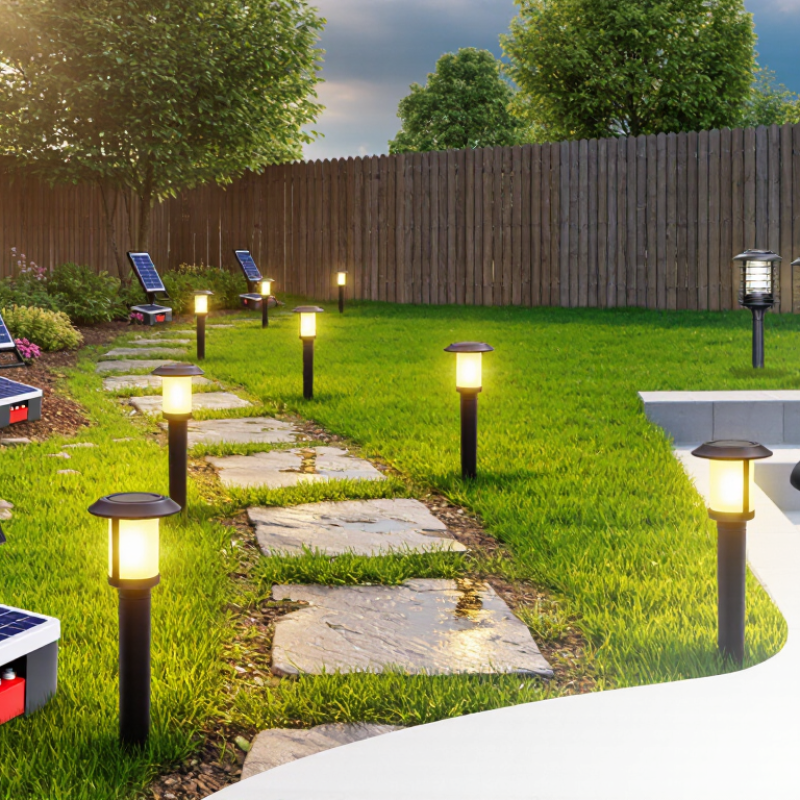
Define Brightness Needs: Compare 100–300 Lumens for Paths, Steps, and Patios
Choosing solar garden lights in 2026 starts with measuring brightness needs, not chasing the highest lumen rating. Lumens describe visible light output, but placement and beam angle change how bright an area feels. In my testing, 100–150 lumens worked well along narrow paths. The light marked the walkway without creating harsh glare.
Steps usually need stronger definition. Choose around 150–200 lumens, especially where shadows fall across uneven edges. Aim the beam downward and space fixtures evenly. A light placed too far away can leave a dark gap between steps. I made that mistake once.
Patios often benefit from 200–300 lumens, depending on their size and purpose. Use lower settings for quiet seating areas, then add brighter fixtures near cooking or serving zones.
Warm light can feel comfortable, while cooler light reveals surface details more clearly. Check the panel’s exposure during the day, because nearby walls or tree branches may reduce charging. Battery performance also drops during several cloudy days.
Some advertised ratings are measured under ideal conditions, so real output may be lower. Read independent test data when available, and compare runtime at the selected brightness. Avoid judging a fixture from one sunny evening. Seasonal changes matter.@endsection
Check Solar Performance: Prioritize 15–23% Panel Efficiency in 2026
When choosing solar garden lights in 2026, inspect panel efficiency before judging appearance or brightness. A panel rated between 15% and 23% can convert more sunlight into usable electricity. This range is especially valuable where garden space is limited or daylight is inconsistent. However, efficiency alone does not guarantee strong nighttime performance.
I once selected lights with attractive housings but ignored their panel specifications. They dimmed before midnight during several cloudy weeks. That shortcut failed. Check whether the stated efficiency comes from standard test conditions, because real output changes with shade, temperature, dust, and panel angle. A south-facing position usually receives more direct sunlight, while nearby fences can reduce charging significantly. Look for clear technical data, battery capacity, charging time, and testing information from credible laboratories or recognized safety standards.
Use a simple observation test. Place one light outdoors for three sunny days, then record its brightness after sunset. Clouds still matter. If possible, compare the same model in an open area and under partial shade. A 23% panel may outperform a 15% panel, but only when its surface stays clean and properly exposed. Small panels also collect limited energy, so a high efficiency rating cannot fully compensate for weak sunlight or an oversized lamp. Check the numbers carefully, and question impressive claims without supporting measurements.
Evaluate Runtime: Choose Batteries Delivering 8–12 Hours After Charging
How to Choose the Best Solar Garden Lights in 2026?
Runtime should be your first practical test. Choose lights rated for 8–12 hours after a full charge. This range usually covers dusk until early morning. However, advertised figures often reflect warm weather and fresh batteries. The U.S. Department of Energy explains that solar output changes with season, shading, panel angle, and temperature. A small panel under leaves may never provide a full charge. In winter, the same light can fade before midnight.
Battery capacity matters more than bright packaging. Look for replaceable rechargeable batteries with clearly stated voltage and capacity. Lithium-based cells often store more energy in a smaller space, while nickel-metal hydride cells remain common in garden products. The International Energy Agency’s Batteries and Secure Energy Transitions report highlights continued improvements in energy density and cycle performance. Still, higher capacity does not guarantee longer runtime if the lamp uses a powerful LED.
Tips: Test one light beside your intended planting bed for three nights. Record its switch-on time and shutoff time. Check the result after a cloudy day. Also inspect the panel at noon. Is it shaded? A 10-hour claim may become six hours in real use. I would leave a small margin and choose a model rated above your target. My own mistake was trusting the brightest fixture; it drained faster. Dimmer, efficient lighting often performs better overnight.
How to Choose the Best Solar Garden Lights in 2026? – Evaluate Runtime: Choose Batteries Delivering 8–12 Hours After Charging
| Battery Configuration | Nominal Voltage | Rated Capacity | Estimated Usable Energy | LED Load | Estimated Runtime | Typical Full-Sun Recharge | Assessment |
| Rechargeable NiMH AA | 1.2 V | 600 mAh | About 0.61 Wh | 0.06 W | About 10 hours | 6–10 hours | Meets the 8–12 hour target |
| Rechargeable NiMH AA | 1.2 V | 900 mAh | About 0.92 Wh | 0.08 W | About 11.5 hours | 7–11 hours | Strong choice for brighter lights |
| Rechargeable NiMH AAA | 1.2 V | 600 mAh | About 0.61 Wh | 0.075 W | About 8 hours | 6–10 hours | Suitable for compact fixtures |
| Rechargeable NiMH battery pack | 2.4 V | 600 mAh | About 1.22 Wh | 0.12 W | About 10 hours | 8–12 hours | Suitable for two-cell designs |
| Rechargeable lithium-ion cell | 3.7 V | 1,200 mAh | About 3.55 Wh | 0.30 W | About 11.8 hours | 8–12 hours | High energy density; requires proper protection |
| Rechargeable lithium-ion cell | 3.7 V | 800 mAh | About 2.37 Wh | 0.25 W | About 9.5 hours | 7–11 hours | Good balance for medium-bright lights |
| Rechargeable NiMH AA | 1.2 V | 1,200 mAh | About 1.22 Wh | 0.15 W | About 8 hours | 8–12 hours | Best for high-output AA fixtures |
Calculation basis: Estimated usable energy assumes approximately 85% usable capacity for NiMH batteries and 80% for lithium-ion batteries after normal conversion losses. Estimated runtime is calculated from usable energy divided by the continuous LED load. Actual performance varies with solar-panel size, sunlight intensity, temperature, battery age, controller efficiency, and brightness settings.
Verify Weather Protection: Select IP65+ Fixtures Under IEC 60529 Standards
How to Choose the Best Solar Garden Lights in 2026?
Weather protection should guide your choice. Under IEC 60529, an IP65 fixture is dust-tight and protected against water jets. It is not designed for immersion. This distinction matters after heavy rain, sprinkler exposure, or careless pressure washing.
The International Energy Agency’s Renewables 2024 report expects global renewable capacity to expand by nearly 5,500 GW by 2030. More outdoor solar products will enter the market. However, impressive efficiency claims cannot replace proper sealing. Inspect the housing joint, cable entry, charging panel, and battery compartment. Look for continuous gaskets and firmly closed screws. In field conditions, small gaps often collect moisture before users notice it.
Tips: Choose IP65 or higher, but match the rating to your site. IP66 offers stronger water-jet protection, while IP67 addresses temporary immersion. Do not assume IP67 always performs better in every garden. A poorly designed seal can still fail. Check the installation guide, test documentation, and warranty conditions. The IEC rating describes enclosure protection, not battery life, corrosion resistance, or winter performance. That limitation is easy to overlook.
Compare LED Value: Prefer Light Sources Exceeding 100 Lumens per Watt
When choosing solar garden lights in 2026, start with useful light, not decorative shape.
LED efficiency is commonly stated as lumens per watt (lm/W). It shows how much visible light the LED produces for each watt consumed. For dependable value, prefer light sources exceeding 100 lm/W. That number matters.
A 3-watt LED rated at 110 lm/W can produce about 330 lumens before optical losses. However, advertised figures may describe the bare LED, not the complete fixture. Check carefully.
Ask for the fixture’s delivered lumen output, power draw, and test conditions. A credible specification should identify LED temperature, color temperature, and measurement method. Look for an LM-79-style photometric report or equivalent independent testing.
Warm 2700K light may feel softer, while 4000K often reveals paths and steps more clearly.
Do not compare a laboratory LED figure with a finished-light figure. That mistake is common.
Also inspect the solar panel and battery capacity. A highly efficient LED still performs poorly after a cloudy afternoon if stored energy is too small.
In my own garden checks, I place lights one meter apart and observe the path after six hours of darkness. I record brightness at ground level, not just at eye level.
A light can claim 120 lm/W yet create dark gaps through a narrow lens. Beam angle, diffuser quality, and mounting height change the result.
Choose weather-resistant construction and replaceable batteries when possible. I sometimes favor 105 lm/W with even coverage over 140 lm/W with harsh glare. Efficiency is important, but comfort and honest testing deserve equal attention.