
How to Choose the Right Stainless Steel Powder Supplier?
Choosing a Stainless Steel Powder supplier is not a price comparison alone. It is a decision about repeatability, documentation, and whether the powder fits your process. A practical paraphrase of powder-metallurgy expert Randall M. German’s work is: “Powder characteristics and processing together shape the performance of the finished part.” That distinction matters. A powder with the right chemistry may still behave poorly if its particle-size distribution, morphology, or flow properties vary between lots. Ask how the supplier measures these properties, how often they test, and whether results are tied to specific batch numbers. Look for material certificates, traceable production records, and clear answers about sampling. Small details matter.
Experience is visible in the questions a supplier asks you, too. Do they want to know your forming method, target density, or sintering conditions? Can they explain how a change in particle shape might affect filling a narrow die cavity? A dependable supplier should discuss those details without promising that one grade suits every application. Request a representative sample and compare its documentation with your own test results. If possible, evaluate more than one production lot; a polished sample alone proves little. The lowest quote may still be the right choice, but only when performance and records support it. Supplier selection is not perfectly tidy. Specifications can miss real process variation, and early trials may expose assumptions on both sides. That is useful evidence, not a reason to rush.
Define Your Stainless Steel Powder Requirements
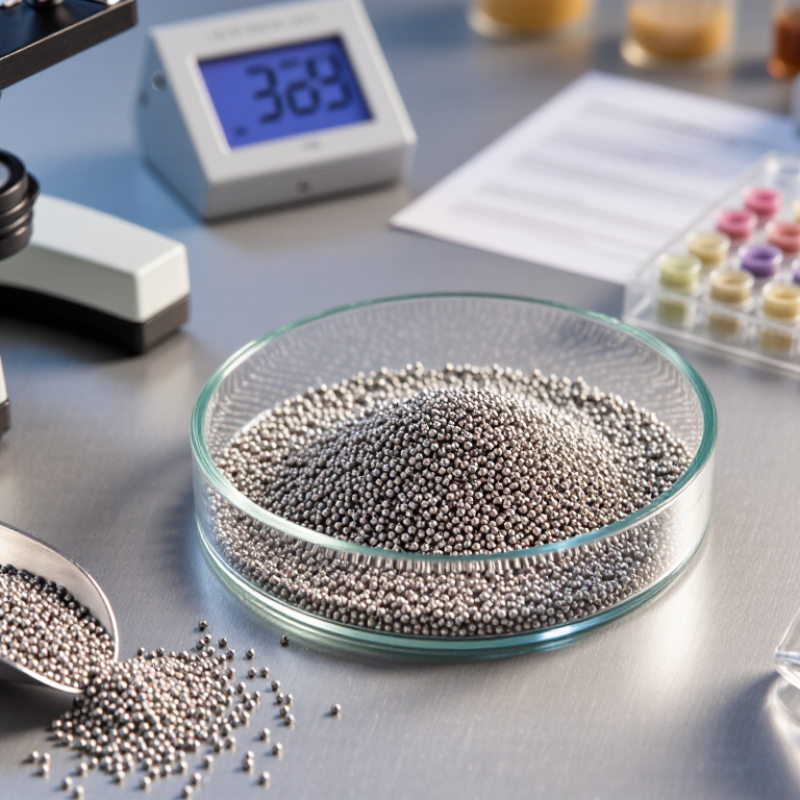
Define the powder’s job before comparing suppliers. Specify the stainless steel grade and intended process, such as additive manufacturing, molding, or thermal spraying. Each application places different demands on particle shape, flow, and packing. Small details matter. A powder that spreads smoothly in a thin layer may not suit every production method.
Set measurable requirements, not vague terms like “fine powder.” State the target particle-size range, including D10, D50, and D90 where relevant. Add limits for oxygen, moisture, and contaminants, plus acceptable apparent density and flowability. Identify required test methods and documentation, such as a lot-specific certificate of analysis. A common planning mistake is to focus on grade alone. Two powders with the same grade can behave differently because their size distribution or morphology differs.
Consider how the powder will be stored and handled. Will it face repeated opening, long storage, or humid conditions? Define packaging, shelf-life expectations, and traceability needs before requesting a quotation. If a value is uncertain, say so and ask for representative sample data. That is more useful than setting a precise limit without evidence. Test a sample using your own equipment and process settings; supplier data may not predict performance on your production line. Keep the specification practical, and revise it when trial results reveal a gap.
How to Choose the Right Stainless Steel Powder Supplier? - Define Your Stainless Steel Powder Requirements
| Requirement | What to Define | Example Inquiry Specification | What to Confirm with the Supplier |
|---|---|---|---|
| Application and process | Describe the intended process and component, such as metal additive manufacturing, powder metallurgy, thermal spraying, or another use. | Gas-atomized powder for a qualified laser powder bed fusion process. | Confirm that the powder’s size distribution, flow behavior, and morphology are suitable for the specific equipment and process parameters. |
| Stainless steel grade | Specify the grade or required chemical composition. Common options include 316L, 304L, and precipitation-hardening 17-4 PH. | 316L stainless steel, with chemistry reported against the agreed specification. | Request a chemical analysis and clarify the applicable standard, permitted composition limits, and any project-specific restrictions. |
| Particle size distribution | State the target size range and measurement method. The suitable range depends on the process and equipment. | Request a target range such as 15–45 μm for evaluation, subject to process compatibility. | Ask for the measured particle size distribution, including D10, D50, and D90 where available, plus the test method and acceptance limits. |
| Particle morphology | Define any need for spherical particles, low satellite content, or limits on irregular and hollow particles. | Spherical, gas-atomized powder with morphology supported by representative inspection data. | Clarify how morphology is assessed and request representative microscopy images or inspection results when morphology is critical. |
| Flow and packing properties | Identify flowability and packing requirements relevant to feeding, spreading, or compaction. | Report flow or apparent-density results using an agreed test method; set acceptance limits after process trials. | Confirm the test method, sample condition, and whether results are typical values or batch-specific measurements. |
| Oxygen and other interstitial elements | Set limits for oxygen, nitrogen, and other elements that may affect material performance or process suitability. | Request batch-specific oxygen and nitrogen results, with limits agreed for the application. | Check the analytical method, reporting units, and whether the supplier can meet the limits consistently across batches. |
| Quantity and batch size | Specify the sample amount, expected production volume, and preferred batch consistency. | Begin with a small evaluation lot, then define the production quantity after process validation. | Confirm minimum order quantity, available lot sizes, lead time, and whether repeat orders can be supplied to the same specification. |
| Quality records and traceability | Define the records needed for incoming inspection, qualification, and production control. | Request a lot-specific certificate of analysis, lot identification, and documented test results. | Confirm document content, traceability from powder lot to test results, change-notification practices, and retention of quality records. |
| Packaging and storage | Specify container size, moisture protection, labeling, and handling requirements. | Request sealed, clearly labeled containers appropriate to the powder quantity and transport conditions. | Confirm packaging materials, net weight, storage guidance, shelf-life policy if applicable, and safe handling documentation. |
| Qualification and supply continuity | Plan sample evaluation, approval criteria, and the process for managing future specification or production changes. | Qualify an initial lot against agreed tests before approving routine supply. | Ask about production controls, lot-to-lot data, notification of material or process changes, and contingency planning for supply interruptions. |
Example values are starting points for discussion, not universal specifications. Final chemistry, particle-size limits, test methods, and acceptance criteria should be agreed for the intended process and applicable material standard.