Top Flexible LED Work Lights for Global Buyers?
Choosing a Flexible Led Work Light involves more than comparing brightness claims. Global buyers need a dependable beam, a stable base, and controls that remain easy to use with work gloves. A mechanic may need a narrow beam beneath a vehicle, while a site inspector may need broad, even light across a panel. Small details matter: a magnetic mount that slips, a hinge that loosens, or a battery that fades before the shift ends.
Lighting researcher Dr. Mariana Figueiro is known for studying how light affects people, but her research does not establish which work light is best. No verified quotation from a Flexible Led Work Light specialist was provided, so this introduction avoids inventing one. That restraint matters. Product decisions should rest on testable specifications, clear warranty terms, and practical evaluations—not polished claims alone.
The coming guide compares flexible work lights by beam control, durability, charging options, mounting, and suitability for different tasks. It will also consider the trade-offs buyers can overlook, including weight, glare, and replacement-battery availability. Not every feature is useful. A brighter lamp can still be awkward in a cramped engine bay. And a low price may hide compromises. The right choice depends on the job, the working environment, and the evidence behind the product.
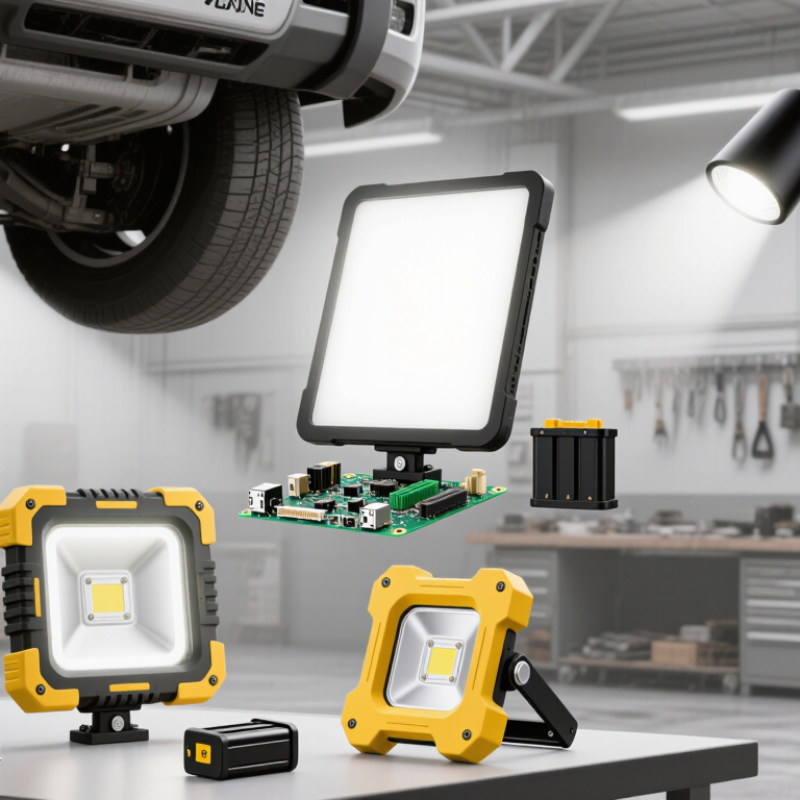
Define Flexible LED Work Lights by Mounting Style, Reach, and Beam Control
Flexible LED work lights are best compared by how they mount, how far they reach, and where their beam lands. A magnetic base can hold securely on a clean steel panel, but it offers little help on aluminum or painted surfaces. A clamp suits shelves and workbenches; check its jaw opening and whether the contact pads protect the finish. A freestanding base is easier to reposition, though it may crowd a narrow floor space. Small details matter.
Reach is more than arm length. A hinged or gooseneck neck can direct light into an engine bay, cabinet, or machine enclosure, while a longer arm may sag if its joints are weak. Look for joints that stay put after adjustment, and test them with the lamp angled downward.
Beam control matters just as much. A focused beam can reveal a screw head across a bench; a wider, diffused beam reduces harsh shadows over a larger task area. Some lights offer both, but extra adjustment can mean more parts to inspect. Not every setup fits. Compare the mounting surface, working distance, and task before choosing; a bright light aimed poorly is still frustrating.
And honestly, published reach figures do not always show how stable a light feels in a cramped workspace.
Compare LM-79-Tested Lumen Output, Efficacy, and Color Temperature
Flexible LED work lights should be compared by measured performance, not just claims on a product page. An LM-79 test report can show total lumen output and input power under stated test conditions. Check that the report matches the exact light configuration, including its LED arrangement and operating mode. Small differences matter. A higher lumen figure does not always mean more useful light at the work surface; beam direction and distance affect what reaches a bench or machine.
Efficacy, expressed in lumens per watt, helps buyers compare light output against energy use. For example, divide reported lumens by measured watts, rather than relying on a rounded marketing figure. Color temperature also deserves a close look: 4000 K appears more neutral, while 5000 K looks cooler in many work areas. Neither is automatically better. Consider the task and surrounding light. One limitation is easy to miss: a laboratory report describes a tested sample under specific conditions, not every field setup. Flexible arms can also shift during use, changing where the light falls. Ask for the full report, note its test conditions, and treat the figures as a sound comparison point, not a guarantee of identical jobsite results.
Check IEC 60529 Ratings: IP65 Is Dust-Tight and Water-Jet Resistant
Top Flexible LED Work Lights for Global Buyers?
When comparing flexible LED work lights, check the IEC 60529 rating on the complete product. An IP65 rating means the enclosure is dust-tight and protected against water jets under specified test conditions. Dust should not enter the enclosure, and water jets from any direction should not cause harmful effects. That is useful around dusty workshops, loading areas, and outdoor maintenance tasks. It is not a promise of waterproofing.
IP65 does not mean the light can be submerged or exposed to every cleaning method. A pressure washer, damaged cable seal, or loose connector may create risks the rating does not cover. Look for clear test information and check whether the rating applies with the supplied cables and covers fitted. Ratings can be easy to misread. I have seen buyers focus on the housing and overlook the connector.
Tips: Check seals before use, especially after repeated bending or transport. Keep plugs properly covered, and follow the maker’s cleaning instructions. If you need immersion protection, compare the stated rating with that specific requirement rather than assuming IP65 is enough.
Verify Impact Protection: IK08 Represents 5 J Under IEC 62262
For global buyers, a flexible LED work light may be bent, repositioned, and carried between demanding job sites. Its moving joints and exposed lens can face knocks from tools or contact with hard surfaces. IK08 represents resistance to an impact of 5 joules under IEC 62262. That is a defined test rating, not a promise that a light will survive every fall or strike. Real work is messier.
Check that the rating applies to the exact model and configuration you plan to buy. Ask for test documentation that identifies the product and standard, rather than relying on a general product-page claim. Inspect the hinge, housing seams, lens, and cable entry; these details can affect durability in daily handling. IK and IP ratings describe different things: impact resistance does not establish protection against dust or water. A rating is useful, but it cannot replace checking the design. I would want to know how the lamp performs after repeated repositioning, too.
Tips: Confirm the IK08 test evidence, then compare it with your actual work conditions. Ask whether flexible joints and accessories were included in the tested configuration. Small details count.
Top Flexible LED Work Lights for Global Buyers? - Verify Impact Protection: IK08 Represents 5 J Under IEC 62262
Use the IK code to compare the enclosure’s resistance to mechanical impact. The values below are reference impact-energy levels in IEC 62262; they are not product performance claims.
| IK code | Impact energy | Buyer interpretation | What to verify for a flexible LED work light |
| IK00 | No protection specified | No IK impact-protection level is stated. | Ask for the tested IK level and supporting test documentation. |
| IK01 | 0.14 J | Lowest defined IK impact-energy level. | Check whether the tested configuration matches the supplied light. |
| IK02 | 0.20 J | Low impact-energy level. | Confirm the rating applies to the enclosure, not just a component. |
| IK03 | 0.35 J | Defined resistance to a higher impact energy than IK02. | Review the test report for the impact points and test setup. |
| IK04 | 0.50 J | Defined resistance to a 0.50 J impact level. | Check whether exposed joints, covers, and lens areas were included. |
| IK05 | 0.70 J | Defined resistance to a 0.70 J impact level. | Confirm the rating is documented for the complete product assembly. |
| IK06 | 1 J | Defined resistance to a 1 J impact level. | For portable use, examine test coverage of handles, brackets, and housings. |
| IK07 | 2 J | Defined resistance to a 2 J impact level. | Request evidence identifying the tested model and enclosure configuration. |
| IK08 | 5 J | The IK08 impact-energy level is 5 J under IEC 62262. | Verify the certificate or report states IK08 and covers the exact supplied product. |
| IK09 | 10 J | Defined resistance to a 10 J impact level. | Confirm the test documentation and product configuration before comparison. |
| IK10 | 20 J | Highest level in the IK01–IK10 numeric scale. | Check that the claimed rating is supported by documentation for the complete product. |
Note: IK impact protection is distinct from IP ingress protection. An IK rating does not by itself indicate resistance to dust or water. Compare ratings only when the test documentation identifies the applicable standard, product model, and tested configuration.
Match IEC 60598 Safety, Voltage, and Runtime to Global Jobsite Needs
Flexible LED work lights must survive impact, heat, dust, and awkward mounting positions. IEC 60598-1 sets general safety requirements for luminaires; IEC 60598-2-4 covers portable general-purpose luminaires. Buyers should request test documentation for the relevant parts, not rely on a vague “IEC compliant” claim. Check insulation, cable strain relief, thermal limits, and the stated ingress-protection rating. Small print matters.
Voltage compatibility needs equal care. A site may supply 100–120 V or 220–240 V, with different frequencies and plug systems. Confirm the light’s input range, frequency rating, and plug configuration before shipping. A wide-range driver helps, but it does not make every cord or connector suitable. For battery models, compare runtime at the same brightness setting. A “10-hour” claim may describe a dim mode, not full output.
Runtime claims deserve scrutiny. Ask whether testing used a new battery, a specific temperature, and continuous operation. The International Energy Agency estimates lighting accounts for about 15% of global electricity use, underscoring why efficient output matters alongside safety. I have seen buyers focus on lumen figures and overlook beam spread; a bright hotspot can leave a workbench edge in shadow. Real jobsites vary. Match the light to the task, then verify its ratings against local requirements.