
How to Choose a Portable Light Strip in 2026?

Choosing a Portable Light Strip in 2026 is no longer about chasing the brightest specification. It is about matching light to real situations: a dim campsite, a narrow wardrobe, a rented apartment, or a bedside reading corner. The best option should feel practical in your hands, not impressive only on a product page. Battery capacity, charging speed, flexibility, color accuracy, heat management, and adhesive strength all affect daily use. Small details matter. A strip that peels away after one night is not truly portable.

Lighting researcher Dr. Mariana Figueiro has warned, “Light at the wrong time can disrupt our circadian rhythms.” Her observation adds an important layer to this buying decision. Bright blue-white light may help visibility, but it can feel harsh before sleep. Warmer settings may be more comfortable for evening use. Look for adjustable color temperature, reliable dimming, and controls that remain responsive with cold or wet fingers. An IP rating can help with splash resistance, but it does not make every product suitable for heavy rain.

Field testers also reveal weaknesses that packaging often hides. Some strips advertise long runtimes, yet those figures may assume low brightness. Others use attractive app controls but lose connection frequently. We should question these claims. A careful comparison should examine independent reviews, warranty terms, battery testing, and replacement support. There is no perfect model. However, by evaluating actual conditions instead of headline features, you can choose a Portable Light Strip that remains useful, comfortable, and dependable beyond the first impressive demonstration.
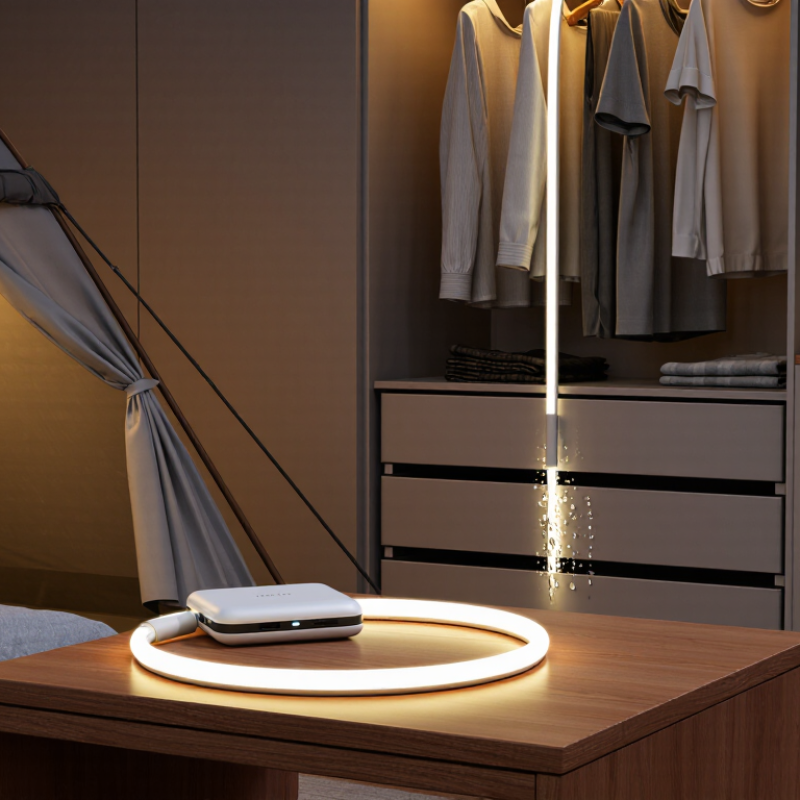
How to Choose a Portable Light Strip in 2026?

Define Your Portable Light Strip Needs and Intended Use

How to Choose a Portable Light Strip in 2026?

Define Your Portable Light Strip Needs and Intended Use

Start with the place, not the product. A bedroom shelf needs softer light than a campsite table. Measure the area, then estimate the required length. A strip for reading should provide steady, comfortable brightness. Decorative lighting can use lower output and warmer color. Check whether you need adjustable colors or only simple white illumination.

Think about power before appearance. USB charging suits short indoor sessions, while a larger battery helps during travel. Look for a clear runtime rating at your preferred brightness. Water resistance matters near tents, balconies, and outdoor cooking areas. However, an outdoor rating does not make every connection weatherproof. I once ignored cable placement and lost useful light behind a chair. That mistake changed how I plan installations.

Tips:

Test the strip in the intended space before fixing it permanently. Check its weight, bend radius, control distance, and charging time. Choose diffused covers when visible light points feel harsh. Keep spare clips available; adhesive can weaken on dusty surfaces. Avoid placing the strip near high heat or blocking ventilation around its battery. A remote control sounds convenient, but physical buttons may work better outdoors. Consider repairability, too. A replaceable cable can extend service life, although some compact designs sacrifice this feature for lighter weight.

Compare Power Sources, Battery Life, and Charging Options

How to Choose a Portable Light Strip in 2026?

A portable light strip should match your daily power routine. USB-powered models work well at desks, in vehicles, and during short outdoor tasks. They can use a wall adapter, laptop, or power bank. Rechargeable models reduce cable clutter and improve portability. However, built-in batteries add weight and slowly lose capacity. I prefer models with a clear battery indicator.

Battery life depends on brightness, color effects, and temperature. A strip rated for ten hours may last much less at full brightness. Check runtime at the brightness level you actually use. Battery capacity matters, but it is not the only measurement. A 5,000 mAh battery can perform differently across devices. I once trusted the advertised runtime and regretted it.

Choose charging options that fit your schedule. USB-C charging is practical because compatible cables are common. A full charge should not require an entire night. Look for charging time, charging indicators, and pass-through use if you need light while charging. Power banks are useful for travel, but some switch off when the strip draws little energy. Solar charging sounds convenient, yet cloudy weather makes it unreliable. Test it before depending on it.

Evaluate Brightness, Color Modes, and Lighting Controls

How to Choose a Portable Light Strip in 2026?

Brightness is more than a high lumen number. Check lumens per metre, then test the strip at its intended distance. A reading of 300 lumens may feel strong on a desk but weak behind a sofa. The International Energy Agency reports that lighting uses about 15% of global electricity, so efficient output matters during long use. Look for adjustable brightness, stable dimming, and low heat around the controller. Flicker can be uncomfortable, even when your eyes do not notice it immediately.

Color modes should match the task. Warm white near 2700K feels softer, while 4000K to 5000K supports focused work. For colored scenes, inspect saturation and transition speed. The CIE color science standards explain why color appearance depends on both light quality and surrounding surfaces. A strip with many presets is not automatically better. Some modes look impressive for ten seconds, then become tiring. My practical test uses a white card, a wooden surface, and skin tones. Results can still vary between rooms.

Tips: Choose a strip with a physical control option, not only an app. Test dimming at its lowest setting. Check whether color changes remain smooth. The U.S. Department of Energy’s solid-state lighting research highlights efficiency, thermal management, and color quality as connected priorities. I would also measure battery life at medium brightness. Maximum brightness figures often look excellent on paper, but real performance may drop sharply after an hour.

Check Portability, Durability, Installation, and Safety Features

Choosing a portable light strip in 2026 starts with honest portability. A compact reel should fit inside a small bag without sharp bends. Check its weight, battery capacity, charging time, and working hours. A light strip that needs charging every evening may become inconvenient quickly. I have carried strips on weekend trips, and flexible wiring mattered more than expected. Still, my first choice was not always the most practical one.

Durability depends on more than thick plastic. Look for protected connectors, strong adhesive backing, and a strip that resists twisting. An IP rating can help when using lights near occasional splashes, but it does not make every product waterproof. Read the care instructions carefully. Test the strip on a clean, dry surface before permanent installation. Removable clips may work better on painted walls than adhesive, although they can look less tidy.

Installation should feel simple and controlled. Choose clear controls, stable mounting points, and a battery compartment away from heat. Safety deserves close attention. Check for overload protection, insulated wiring, automatic shutoff, and credible electrical safety testing. Keep the strip away from fabric, water, and blocked ventilation. Do not charge a damaged battery. Do not cover the power unit while operating. A lower brightness setting can reduce heat, but it is not a substitute for safe placement. I still inspect connectors after travel because small cracks are easy to miss.

Match Key Specifications With Your Budget and 2026 Use Case

How to Choose a Portable Light Strip in 2026?

Match the light strip’s specifications to your budget and actual 2026 use case. A compact strip for travel needs low weight, USB-C charging, and reliable battery life. For a desk setup, adjustable brightness and color temperature matter more than extreme length. Measure the space before buying. A strip that is too long creates messy loops and uneven lighting.

Check brightness in lumens, not vague marketing language. Look for a high color rendering index when filming products, cooking, or reading. Around 90 CRI is a practical target for natural-looking colors. Confirm the runtime at your preferred brightness, not the lowest setting. My own tests often reveal shorter runtimes than advertised. That difference deserves attention.

Weather resistance can help during outdoor trips, but an IP rating does not make every strip waterproof. Verify the exact rating and protect the charging port. A basic model may suit occasional travel, while frequent creators may justify better controls, stronger diffusion, and replaceable mounting parts. Avoid paying for features you will not use. Still, the cheapest option can become expensive when its adhesive fails or its battery weakens quickly. In 2026, compare warranty terms, charging time, weight, and repairability alongside price. A simple checklist works better than impulse buying.

Subscribe To Our Newsletter

Join our mailing list to receive the latest news and updates from our team.

You have Successfully Subscribed!