
Top Material Handling Equipment Manufacturers Worldwide
Top Material Handling Equipment Manufacturers Worldwide
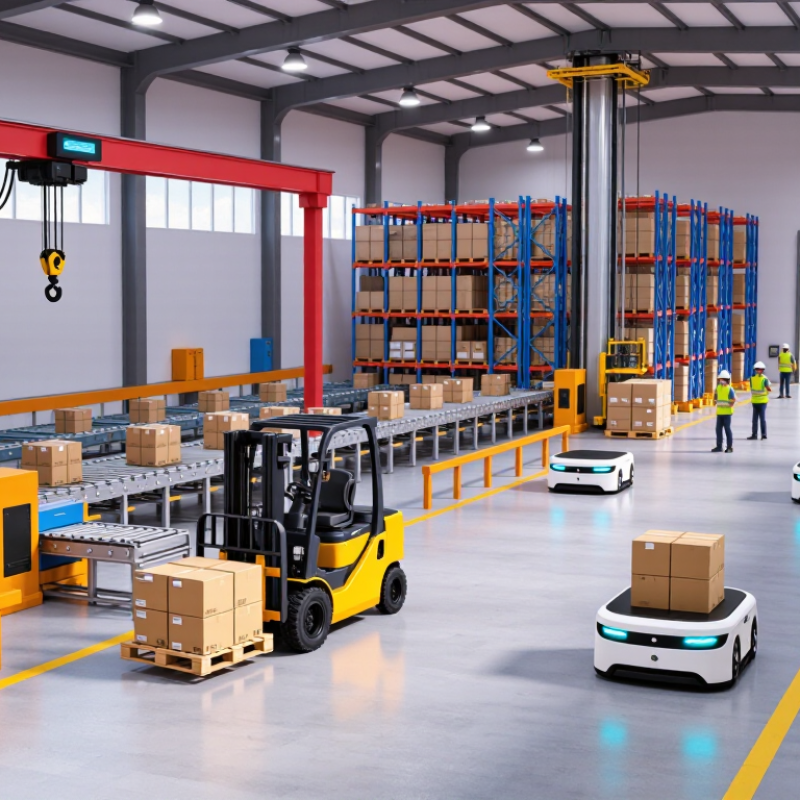
Material handling keeps warehouses, factories, ports, and distribution centers moving. Forklifts, conveyors, cranes, automated storage systems, and mobile robots now work beside human operators. The equipment may look industrial, but its effects are visible everywhere: shorter picking routes, fewer empty pallets, and steadier truck loading.
Industry data shows why manufacturers deserve closer evaluation. MHI’s 2024 Annual Industry Report identifies technology investment as a continuing supply chain priority, especially in automation, robotics, and artificial intelligence. The International Federation of Robotics also reports sustained growth in professional service robots, including logistics systems used for transport and fulfillment. Market studies from Grand View Research and Fortune Business Insights indicate that the global material handling equipment market is expanding, although their values differ because they define equipment categories differently.
The difference matters.
A credible manufacturer ranking should examine more than revenue or brand recognition. It should compare product reliability, load capacity, energy use, safety design, software compatibility, maintenance networks, and documented customer experience. A 5-ton forklift with poor battery support can create more cost than value. A sophisticated automated system can also disappoint when integration is weak.
No ranking is flawless. Public reports may mix regional data, estimates, and supplier-reported figures. Therefore, this guide considers established manufacturers through multiple evidence points, including annual reports, technical specifications, independent market research, and service coverage. Readers should still verify local certifications, replacement-part availability, operator training, and total ownership costs before making a purchase decision. Performance in a Japanese warehouse may not transfer directly to a Brazilian port or a European cold-storage facility.
What Is Material Handling Equipment and Why Manufacturers Matter
Material handling equipment includes the tools used to move, store, protect, and control goods inside a facility. It covers conveyors, lifting devices, storage systems, carts, pallet equipment, and automated vehicles. A conveyor may carry cartons across a packing area, while a lift truck positions heavy loads on high racks. In a working warehouse, every movement affects speed, safety, and product quality. Small details matter.
Manufacturers matter because equipment must match real operating conditions, not just a catalog description. Experienced engineering teams study load weight, aisle width, floor condition, travel distance, and daily workload. They test frames, wheels, controls, sensors, and braking systems before delivery. A clear load chart can prevent serious misuse. Detailed manuals help operators work consistently. Reliable technical support also reduces downtime when a motor overheats or a sensor stops responding.
Good manufacturers listen to warehouse teams and maintenance technicians. They may adjust platform height, guard placement, control layout, or service access after observing daily work. That practical feedback improves usability. Still, no design is perfect. An operator may find a control awkward, or maintenance staff may need more space around a drive unit. Regular inspections reveal these weaknesses. Records showing wear, repairs, and operating hours help engineers refine later equipment. The most useful solution often comes from measured performance, careful testing, and honest communication rather than impressive specifications.
Top Material Handling Equipment Manufacturers Worldwide - What Is Material Handling Equipment and Why Manufacturers Matter
A market-neutral overview of major equipment categories, operating roles, selection criteria, and manufacturer responsibilities.
| Equipment Category | Primary Material Movement | Typical Equipment Examples | Common Operating Environments | Key Selection Criteria | Why Manufacturer Capability Matters |
|---|---|---|---|---|---|
| Industrial Trucks | Horizontal movement, lifting, stacking, and loading of unit loads |
| Warehouses, distribution centers, manufacturing plants, ports, and logistics yards | Load capacity, lift height, turning radius, power source, aisle width, floor conditions, operator visibility, and required safety features | Engineering quality, stability testing, operator ergonomics, battery or fuel-system integration, service coverage, spare-parts availability, and compliance support directly affect safety and uptime. |
| Conveyors | Continuous or controlled movement of cartons, totes, pallets, parcels, and bulk materials |
| Production lines, fulfillment centers, parcel hubs, airports, food facilities, and distribution operations | Load type, throughput, line speed, incline, accumulation requirements, layout flexibility, cleaning needs, noise, and controls integration | Manufacturers determine the quality of system design, guarding, drive reliability, controls compatibility, maintainability, and the ability to scale the installation. |
| Storage and Retrieval Systems | Organized storage, buffering, and retrieval of inventory |
| High-volume warehouses, cold stores, spare-parts centers, retail distribution, and industrial storage areas | Storage density, inventory profile, access frequency, building height, fire protection, load configuration, temperature, and automation requirements | Structural calculations, rack protection, system compatibility, seismic considerations, software integration, installation quality, and inspection support influence long-term performance. |
| Hoists and Cranes | Vertical lifting and overhead transfer of heavy or suspended loads |
| Steel production, machine shops, construction, shipyards, maintenance areas, and heavy manufacturing | Rated load, span, lift height, duty cycle, travel speed, headroom, environmental conditions, controls, and inspection requirements | Load-path design, mechanical reliability, limit controls, overload protection, installation standards, inspection programs, and operator training are essential to safe lifting. |
| Automated Mobile Equipment | Driverless transport of materials between defined locations |
| Smart warehouses, factories, hospitals, fulfillment centers, and repetitive internal transport routes | Navigation method, payload, route complexity, traffic control, battery charging, fleet size, system integration, and emergency stopping | Reliable navigation, cybersecurity, safety-rated controls, fleet-management software, interoperability, mapping, commissioning, and lifecycle support determine operational value. |
| Sortation Systems | Routing and separating items according to destination, order, size, or product type |
| Parcel hubs, e-commerce fulfillment, postal operations, airports, and retail distribution centers | Item dimensions, weight range, throughput, destination count, barcode or vision requirements, accuracy, noise, and maintenance access | Mechanical precision, sensor integration, software reliability, fault recovery, throughput validation, and maintenance planning affect sorting accuracy and delivery performance. |
| Loading Dock Equipment | Transfer of goods between vehicles and building floors |
| Distribution centers, warehouses, manufacturing facilities, cold-chain sites, and retail backrooms | Vehicle height variation, load weight, weather exposure, dock frequency, trailer safety, energy efficiency, and available pit depth | Correct load ratings, structural durability, interlocks, weather sealing, installation accuracy, and preventive maintenance reduce dock incidents and loading delays. |
| Packaging and Unitizing Equipment | Stabilizing, wrapping, sealing, labeling, and preparing products for handling or shipment |
| Food and beverage, consumer goods, pharmaceuticals, manufacturing, and third-party logistics operations | Product dimensions, package material, line speed, pallet pattern, hygiene requirements, changeover time, and quality control | Equipment consistency, guarding, changeover design, automation controls, material efficiency, integration engineering, and technical service influence product protection and labor productivity. |
| Bulk Material Handling Equipment | Loading, conveying, feeding, storing, and discharging loose materials |
| Mining, agriculture, cement, chemicals, power generation, food processing, and recycling | Material density, particle size, moisture, abrasiveness, flowability, dust control, corrosion exposure, and required throughput | Material-specific engineering, wear resistance, dust management, containment, explosion-risk assessment, energy efficiency, and maintenance access are critical. |
| Work Platforms and Access Equipment | Safe positioning of people and tools at elevated or difficult-to-reach work areas |
| Warehouses, construction sites, aircraft maintenance, facilities management, and industrial plants | Working height, platform capacity, reach, terrain, indoor or outdoor use, maneuverability, fall protection, and emergency lowering | Stability, control design, guardrails, emergency systems, inspection documentation, operator training, and service programs are central to worker protection. |
| Digital Control and Warehouse Software | Information flow, equipment coordination, inventory visibility, and process control |
| Automated warehouses, manufacturing plants, distribution networks, and multi-site logistics operations | Data accuracy, integration protocols, response time, cybersecurity, reporting, user permissions, scalability, and system availability | Software interoperability, data security, diagnostics, remote support, upgrade paths, and dependable commissioning determine how effectively equipment operates as one system. |
| Manufacturer Evaluation Factors | Applies across lifting, transport, storage, automation, and control equipment |
| Relevant to businesses comparing equipment suppliers for new installations, replacements, expansions, or modernization projects | Total cost of ownership, equipment availability, energy use, warranty terms, training, spare parts, response time, documentation, and local support | Manufacturers matter because their design standards, testing processes, production quality, support network, and lifecycle services influence safety, productivity, reliability, compliance, and return on investment. |
Note: Equipment specifications, capacities, operating limits, and regulatory requirements vary by application, jurisdiction, configuration, and site conditions. Final selection should be validated through a qualified engineering and safety review.