
Lorry Mechanic Tools help technicians inspect, maintain, and repair heavy vehicles safely and accurately. The right equipment can turn a difficult job into a controlled series of checks. A torque wrench tightens wheel fasteners to the specified setting, while a diagnostic scanner can reveal fault codes from electronic systems. A hydraulic jack and axle stands support a lorry during inspections beneath the chassis. Each tool has a clear purpose.
Small details matter. Clean sockets grip fasteners better, and a calibrated torque wrench helps prevent guesswork. Mechanics also rely on inspection lamps, tyre-pressure gauges, multimeters, and sturdy hand tools. Their choices depend on the vehicle, the fault, and the workshop’s procedures. No single kit covers every repair.
Knowing what each item is used for matters as much as owning it. A scanner may point toward a problem, but it does not confirm every cause. A loose connection, worn component, or overlooked measurement can change the diagnosis. That is worth remembering. This guide explores common lorry mechanic tools, their practical uses, and the checks that help technicians work with greater confidence. It also considers where tools have limits, because careful judgment remains essential.
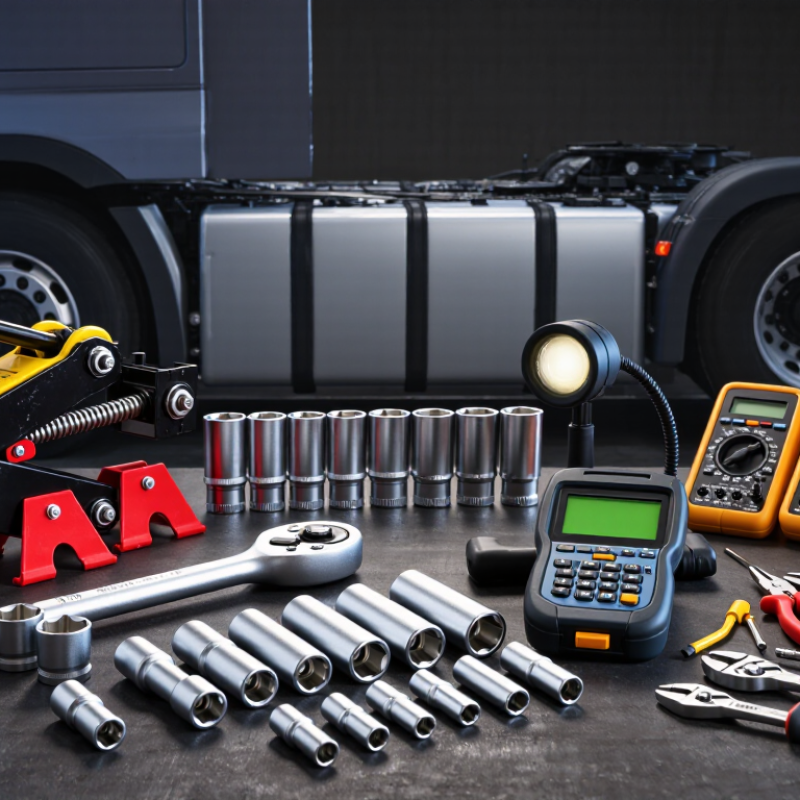
Lorry mechanic tools are the equipment technicians use to inspect, maintain, and repair heavy vehicles. Their size and strength suit large engines, suspension parts, wheels, and braking systems. A socket set helps remove stubborn fasteners, while a calibrated torque wrench tightens them to the specified force. This matters because loose or overtightened connections can cause damage.
Diagnostic tools support accurate fault-finding. A scan tool can read vehicle control-system codes, but those codes are clues, not automatic answers. Mechanics compare them with symptoms, visual checks, and service information. Small details matter. A worn wire near a vibrating engine, for example, may explain an intermittent warning light better than a code alone.
Lifting equipment, wheel-handling tools, and axle stands help technicians access heavy components safely. Electrical meters can check batteries, circuits, and charging systems. Each tool has limits, and using the wrong one can damage a fastener or produce a misleading reading. A seized bolt may still resist even with the correct socket. That takes patience. Careful inspection, suitable tools, and recorded measurements help make repairs more consistent and easier to verify.
Lorry maintenance relies on several tool categories, each suited to a different job. Hand tools, such as spanners, sockets, screwdrivers, and pliers, handle routine adjustments and component removal. The correct size helps prevent rounded fasteners, especially on older vehicles with corroded fittings. Fit matters. A torque wrench checks that wheel nuts and other critical fasteners are tightened to the specified value, rather than simply feeling secure.
Lifting and support equipment includes jacks, axle stands, and wheel-handling aids. These tools must match the vehicle’s weight and be used on stable ground. Diagnostic tools form another category: scan devices can reveal electronic fault codes, while multimeters help check voltage, continuity, and battery condition. For air-brake and hydraulic systems, suitable pressure gauges and leak-checking equipment help technicians assess performance. Measuring tools, inspection lamps, and mirrors can expose wear or damage in cramped spaces. Safety equipment matters too, including gloves, eye protection, and wheel chocks. A tool may look suitable but still be wrong for a particular lorry. Checking its condition and rating takes time, though skipping that check can create a bigger problem.
Representative tools are grouped by their typical maintenance use. The bars count the examples listed for each category; they are not industry survey results.
Hand tools support routine adjustments, while diagnostic tools help identify electrical or engine faults. Lifting equipment, measuring tools, fluid-service tools and impact tools support specific workshop tasks.
A lorry’s warning light is a clue, not a diagnosis. Mechanics connect a diagnostic scanner to the vehicle’s service port and read fault codes, live sensor data, and system status. A code can point toward a circuit or component, but it does not prove that part has failed. The mechanic compares the reading with service information and checks the wiring, connectors, and operating conditions. Small details matter. A loose plug or corroded contact may create symptoms that resemble a costly component fault.
Testing equipment helps confirm what the scanner suggests. A digital multimeter can measure voltage, resistance, and continuity in circuits such as charging or lighting systems. Pressure gauges and temperature probes help check whether readings match the vehicle’s specifications. Mechanics may also use a battery tester before investigating a slow start. A pressure reading can look convincing and still be wrong if the engine is cold or the gauge is poorly connected. That is why measurements need context, suitable test procedures, and properly maintained equipment. Even careful diagnosis is not perfect; an intermittent fault may disappear during testing, so recording conditions and retesting can be worthwhile.
How Hand and Power Tools Repair Lorry Components
Hand tools give mechanics control when repairing lorry components. A ratchet and socket set can remove wheel-end fasteners, while a torque wrench helps tighten them to the specified value. Pliers, pry bars, and bearing pullers handle smaller, stubborn jobs. Small tools matter. A rushed measurement can still mislead.
Power tools speed up repetitive work. An impact wrench can loosen a seized chassis bolt, but mechanics should use a calibrated torque wrench for final tightening. A multimeter checks voltage and continuity in lighting or charging circuits; a diagnostic scanner can help identify electronic faults. For context, the U.S. Bureau of Labor Statistics’ Occupational Outlook Handbook projects 3% employment growth for diesel service technicians and mechanics from 2023 to 2033. It reported a May 2023 median annual wage of $60,640. These figures describe the occupation, not tool performance.
Lorry mechanic tools help inspect, adjust, and repair heavy vehicle components, from wheel fasteners to air-brake fittings. Their size and force make safe handling essential. Before use, check sockets for cracks, handles for looseness, and electrical leads for damaged insulation. A tool that looks usable may still fail under load. Keep the work area dry, well lit, and clear of hoses or parts that could trip someone.
Use the correct tool for each task, and follow its operating instructions. Support a raised vehicle with rated stands; never rely on a jack alone. Wear suitable eye protection and gloves, but keep loose clothing away from moving equipment. After work, wipe off grease and moisture, then store tools in dry, secure compartments. It is easy to postpone cleaning when a repair runs late. That habit can hide damage and shorten tool life.
Tips: Check torque tools at the intervals stated by their maker, and avoid using them as ordinary ratchets. Label damaged tools and remove them from service until assessed. Small routines matter. Even a careful inspection can miss something, so pause if a tool feels or sounds wrong.
Join our mailing list to receive the latest news and updates from our team.