
7 Tips for Choosing the Right Unionwell Sealed Switch?
Choosing the right Unionwell sealed switch requires more than matching voltage and mounting size. The switch must survive the environment around it.
According to IEC 60529, an IP rating describes protection against solid objects and water ingress. It does not automatically confirm chemical resistance, impact strength, or long-term reliability. That distinction matters in factories, vehicles, outdoor equipment, and damp control panels. Grand View Research’s industrial automation market analysis identifies growing demand for dependable control components as automation expands across manufacturing and logistics. MarketsandMarkets also links industrial automation growth with stronger requirements for durable sensing and switching devices. The message is clear: small components can influence large systems.
In real applications, examine seven practical areas before ordering. Check the IP rating, contact arrangement, electrical load, actuator feel, terminal design, operating temperature, and expected service life. A switch beside a washdown station faces different stress from one inside a dry instrument cabinet. Water droplets, oily gloves, vibration, and repeated clicks leave evidence. Look for it.
Unionwell sealed switch models may suit different operating conditions, but specifications still require careful comparison. Confirm whether published ratings apply to resistive loads, motor loads, or both. Review test conditions rather than trusting attractive numbers alone. A higher rating is not always the better choice. Overspecification can increase cost and complicate installation.
This guide explains how to compare these details with practical judgment. It also recognizes an uncomfortable truth: datasheets cannot predict every field failure. Installation quality, cable routing, and maintenance habits matter too. A thoughtful selection reduces risk before the first switch is installed.
Understand the Role and Basic Types of Sealed Switches
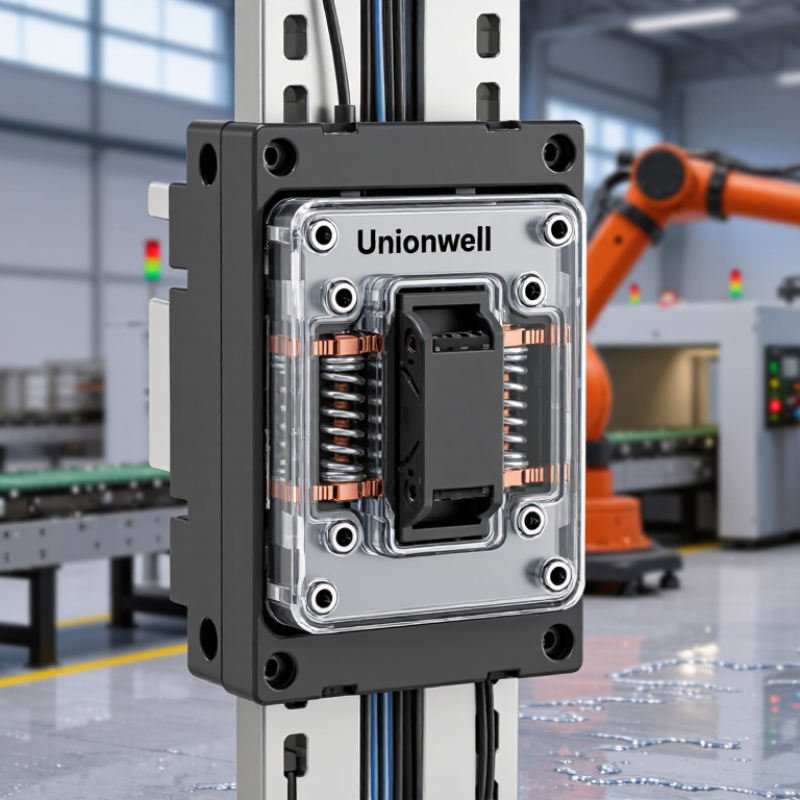
A sealed switch controls an electrical circuit while limiting the entry of dust, water, oil, and other contaminants. Its protective housing or seal helps maintain reliable contact inside equipment. This matters in outdoor panels, factory machines, medical devices, and vehicle controls. A switch may look simple, but its environment changes everything. A damp workshop can expose weaknesses quickly.
Common types include sealed pushbutton switches, sealed toggle switches, membrane switches, and sealed micro switches. Pushbuttons suit start controls and emergency interfaces. Toggle switches offer clear physical feedback. Membrane switches save space and provide a smooth, cleanable surface. Micro switches support precise position sensing in compact mechanisms. Magnetic reed switches work without direct contact and suit doors or guarded covers.
Check the required IP rating before choosing a component. IP65 can resist dust and water jets, while submersion requires a higher rating. Also compare current capacity, voltage, operating force, travel, terminal style, and expected cycles. A switch rated for light signals may fail under motor loads. Use a relay when the switched load exceeds its specification. I have found that installation details matter as much as the switch itself. A damaged gasket ruins protection. Small mistakes happen. Test the assembled unit under realistic heat, vibration, and moisture conditions, rather than trusting a datasheet alone.
7 Tips for Choosing the Right Sealed Switch? - Understand the Role and Basic Types of Sealed Switches
| Tip | Selection Dimension | What to Check | Why It Matters | Practical Guidance |
|---|---|---|---|---|
| 1 | Environmental sealing | Ingress Protection rating, dust exposure, water spray, immersion, chemicals, and temperature | The seal protects internal contacts from moisture, dust, oil, and contaminants that can cause unreliable switching. | Choose the lowest IP rating that fully matches the real installation conditions. An IP rating does not automatically indicate chemical or UV resistance. |
| 2 | Electrical load | Rated voltage, continuous current, inrush current, AC or DC operation, and load type | Motors, lamps, solenoids, and capacitive loads may draw more current during switching than their normal operating current. | Verify the manufacturer's rating for the exact AC or DC load. Use a relay, contactor, or solid-state interface when the load exceeds the switch rating. |
| 3 | Circuit configuration | SPST, SPDT, normally open, normally closed, or changeover contacts | The contact arrangement determines whether the switch performs simple on/off control, circuit selection, or position monitoring. | Use SPST for one circuit, SPDT for switching between two circuit paths, and normally closed contacts where a circuit should remain closed until actuation. |
| 4 | Actuation method and force | Plunger, roller lever, hinge lever, push button, float, or magnetic actuation; operating force and travel | The actuator must match the available movement, alignment, speed, and mechanical force of the equipment. | Select a roller or lever for moving targets, a plunger for direct contact, and a magnetic or float actuator when physical contact is undesirable. |
| 5 | Mechanical and electrical life | Expected operating cycles, switching frequency, contact material, and bounce characteristics | Frequent actuation and electrical arcing can wear contacts and reduce service life. | Compare both mechanical and electrical life ratings. For fast electronic signals, confirm bounce time or use suitable signal conditioning. |
| 6 | Installation and compatibility | Mounting dimensions, terminal style, connector, cable exit, panel thickness, and available space | A switch may meet the electrical requirements but still fail to fit the enclosure or connect to the existing wiring. | Check the complete mechanical drawing, terminal orientation, mounting hardware, bend radius, and service access before ordering. |
| 7 | Compliance and validation | Applicable safety standards, test conditions, documentation, and sample testing | Certification and application testing help confirm that the switch is suitable for the intended market and operating environment. | Review datasheets and certificates, then test sealing, temperature, vibration, load switching, and actuation in the actual application. |
Basic Types of Sealed Switches
| Switch Type | Typical Actuation | Main Function | Common Applications | Key Advantage |
|---|---|---|---|---|
| Sealed push-button switch | Manual pressing | Operator-controlled on/off or momentary signaling | Outdoor controls, machinery panels, emergency or reset interfaces | Simple human interface with protection against dust and water when correctly installed |
| Sealed limit switch | Plunger, roller, or lever movement | Detects the position or travel limit of moving equipment | Conveyors, machine guards, access doors, and automated mechanisms | Provides positive mechanical position feedback |
| Sealed toggle or rocker switch | Manual lever or rocker movement | Maintained or momentary circuit control | Vehicle equipment, control panels, portable instruments, and power systems | Clear switching position and convenient panel operation |
| Magnetic reed switch | Magnetic field from a nearby magnet | Non-contact detection of opening, closing, or position | Doors, windows, security systems, counters, and fluid-level devices | No mechanical contact between the actuator and switch body |
| Sealed float switch | Liquid level movement | Opens or closes a circuit at a preset fluid level | Tanks, pumps, condensate systems, and overflow protection | Direct level detection with a simple switching output |