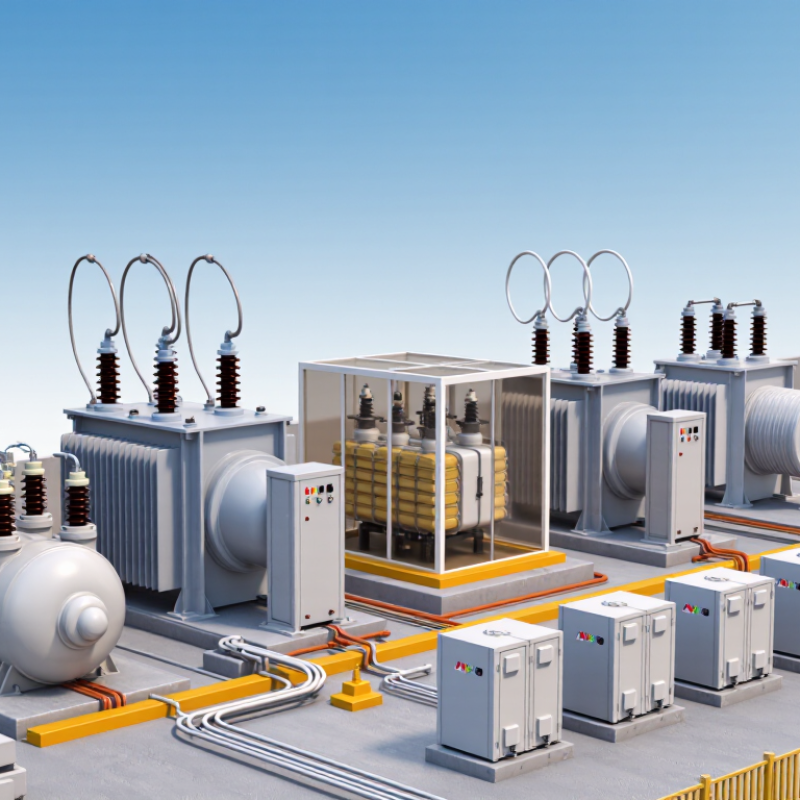
Top 10 Types of 11kV to 400V Distribution Transformers

Moving electricity from an 11kV feeder to a 400V low-voltage network demands more than a suitable nameplate rating. A transformer must manage load diversity, voltage regulation, heat, fault stress, installation space, and maintenance access. This guide introduces the Top 10 Types of 11kV to 400V Distribution Transformers, with attention to practical selection rather than catalogue language.

At the centre is the 11kv To 400v Distribution Power Transformer. Its design affects efficiency, safety, service life, and operating cost. Oil-immersed units remain common for outdoor substations, while cast-resin dry-type transformers suit buildings, tunnels, and areas with stricter fire concerns. Other categories include hermetically sealed, amorphous-core, compact, low-loss, and high-efficiency designs. Each type has trade-offs. Cooling, noise, footprint, protection, and recycling requirements can change the best choice.

Martin Heathcote, author of The J&P Transformer Book, states, “The transformer is the heart of the electrical system.” That concise view reflects field experience. A poorly selected unit can run hot beside a dusty factory wall, suffer voltage drop during motor starting, or leave little room for inspection. Small details matter. Cable routing matters. Ambient temperature matters.

This overview uses engineering principles, manufacturer practices, and real installation considerations. It does not pretend that one transformer type fits every site. That would be convenient, but wrong. Project data can also be incomplete, especially during early design. Therefore, readers should verify load profiles, short-circuit levels, local standards, environmental conditions, and future expansion before approving a 11kv To 400v Distribution Power Transformer.

Top 10 Types of 11kV to 400V Distribution Transformers

Definition and Role of 11kV to 400V Distribution Transformers

Top 10 Types of 11kV to 400V Distribution Transformers

An 11kV to 400V distribution transformer reduces medium voltage for safe local use. It commonly supplies factories, commercial buildings, farms, and residential networks. The transformer receives 11kV through its high-voltage winding and delivers 400V through its low-voltage winding. A neutral point also supports three-phase, four-wire systems.

Its role is practical and continuous. It separates voltage levels, limits electrical stress, and helps maintain reliable power near the load.

Common designs include:

  • oil-immersed
  • dry-type
  • cast-resin
  • pole-mounted
  • pad-mounted
  • compact
  • hermetically sealed
  • amorphous-core
  • dual-voltage
  • monitored transformers

Each type suits different conditions. Dry-type units fit indoor areas where fire risk and ventilation matter. Oil-immersed units often provide efficient cooling outdoors. Small details matter.

During selection, engineers check rated power, impedance, vector group, fault level, cooling method, insulation, and installation space. They also review local regulations and applicable IEC 60076 requirements.

In field work, cable length, dust, humidity, and unbalanced loads can change performance. A neat specification is not enough. Site conditions sometimes expose assumptions that looked reasonable on paper. Regular checks of temperature, noise, oil condition, earthing, and connections can reveal developing faults early. Personally, I would not treat efficiency alone as the deciding factor; maintainability and safe access deserve equal attention.

Core Classification Criteria for 11kV to 400V Transformers

An 11kV to 400V distribution transformer is not classified by voltage ratio alone. The core criteria include phase arrangement, insulation medium, cooling method, installation location, and load duty. A practical site review often identifies ten common types: single-phase, three-phase, oil-immersed, dry-type, naturally cooled, forced-air cooled, indoor, outdoor, hermetically sealed, and tap-changing transformers.

Three-phase units are common in factories and commercial buildings, while single-phase units suit smaller rural or residential loads. Oil-immersed designs generally handle higher capacity and outdoor exposure well. Dry-type transformers reduce liquid-related risks and fit cleaner indoor environments. Natural air cooling is simpler and quieter. Forced-air cooling supports heavier demand, but fans require inspection and maintenance.

Installation conditions can change the correct choice. An outdoor transformer may need a weatherproof enclosure, corrosion protection, and adequate drainage. An indoor dry-type unit needs clear ventilation space and attention to noise. Fixed-ratio transformers are suitable where the 11kV supply remains stable. Off-circuit or on-load tap changers help control a fluctuating 400V output, although they add cost and maintenance points. Vector group, impedance, short-circuit strength, and insulation level also deserve careful checking. A simple label can mislead. The “best” type depends on actual load behavior, ambient temperature, fault levels, and future expansion. I have found that overlooked harmonics can make an apparently correct selection perform poorly.

Top 10 Types of 11 kV to 400 V Distribution Transformers

Core Classification Criteria for 11 kV to 400 V Transformers

The chart compares ten commonly specified 11 kV/400 V three-phase distribution-transformer rating classes. The low-voltage full-load current is calculated from I = S ÷ (√3 × 400 V), where S is the transformer rating in kVA.

Core classification criteria include rated power, installation type, cooling method, winding arrangement, vector group, impedance, tap-changing method, insulation system, and indoor or outdoor enclosure. Actual ratings and construction should be confirmed against the applicable project specification and IEC 60076 requirements.

Main Transformer Types by Construction and Installation

Top 10 Types of 11kV to 400V Distribution Transformers

A practical classification starts with construction. Oil-immersed conservator transformers use a tank, radiator, and expansion vessel. Sealed oil-filled transformers reduce moisture entry with a closed tank. They suit outdoor substations when fire controls and oil containment are available. Dry-type air-cooled transformers remove liquid hazards and often serve indoor electrical rooms. Cast-resin transformers add solid insulation around the windings, improving moisture resistance. VPI dry-type transformers use vacuum pressure impregnation for stronger winding insulation. Each design behaves differently under heat, dust, overload, and poor ventilation. Site experience matters. Datasheets alone can mislead.

Installation creates four more common types. Indoor transformers need clearances, ventilation, and accessible protection equipment. Outdoor transformers require weatherproof enclosures and a suitable foundation. Pole-mounted transformers save ground space but face structural and lightning constraints. Pad-mounted transformers place the complete unit on a concrete base, often near buildings or industrial loads. Kiosk or compact substations combine the 11kV switchgear, transformer, and 400V distribution section in one enclosure. They simplify layout, though maintenance access can feel cramped. Space matters.

These ten types can overlap. A cast-resin unit may be indoor and compact, while an oil-filled unit may be outdoor and pad-mounted. Selection should consider load profile, harmonics, ambient temperature, noise, fire risk, cable length, and future expansion. Engineers should verify insulation levels, earthing, short-circuit withstand, and protection coordination against applicable standards, such as IEC 60076 and local requirements. A common mistake is choosing only by rated kVA. That looks efficient, but it can ignore ventilation losses and actual starting currents. Reality is less tidy.

Transformer Types by Cooling, Insulation, and Phase Arrangement

Top 10 Types of 11kV to 400V Distribution Transformers

Transformer Types by Cooling, Insulation, and Phase Arrangement

An 11kV to 400V transformer must match the site, not only the voltage ratio. Oil-immersed units commonly use ONAN cooling, where natural oil circulation removes heat. They suit outdoor substations and steady industrial loads. Dry-type transformers use air cooling and avoid liquid leakage risks. Cast-resin insulation performs well inside buildings, especially where fire control matters. Forced-air cooling can increase capacity, but fans require maintenance and reliable power.

Insulation choice affects service life. Oil-paper systems offer strong thermal performance, yet moisture and dissolved gas testing remain essential. Dry insulation needs careful control of dust, humidity, and ventilation.

Three-phase transformers are standard for balanced factory and commercial networks. Single-phase units may serve small rural loads or special equipment. Phase arrangement also includes the winding connection and neutral point. A suitable vector group can reduce nuisance faults and support parallel operation.

Tips: Check ambient temperature, altitude, harmonics, and load growth before selecting cooling. Inspect cable termination space in the enclosure. Do not assume a larger rating solves every problem. Field measurements may reveal unbalanced loads that calculations miss. In practice, no selection is perfect. Recheck protection settings after commissioning, because real operating conditions often differ from the design sheet.

How to Select the Right 11kV to 400V Transformer Type

Selecting an 11kV to 400V transformer starts with the site, not the catalogue. Estimate present demand, future motor starting, harmonic loads, and transformer diversity. The IEA’s Electricity 2024 report projects global electricity demand to grow by about 4% annually through 2026. That growth can make a small transformer expensive sooner than expected. Leave practical headroom, but avoid excessive oversizing, which increases no-load losses.

For outdoor substations, oil-immersed ONAN transformers often suit harsh conditions and higher capacities. Indoor commercial buildings may favor cast-resin dry-type units because they reduce liquid-fire concerns and simplify placement. IEC 60076 provides the core testing and performance framework. Check rated power, impedance, vector group, tap range, insulation level, and short-circuit withstand together. A 400V system also needs careful attention to neutral sizing and earthing. Details matter.

The U.S. Department of Energy’s 2024 distribution-transformer rule highlights the long-term value of lower losses, with projected national energy savings over the equipment’s operating life. Yet efficiency alone should not decide the purchase. Ask for guaranteed load and no-load losses, temperature-rise data, sound levels, and routine test records. Consider dust, salt, altitude, ventilation, and maintenance access. I have seen projects focus on purchase price, then discover that poor access makes inspection difficult. The specification may look complete. It sometimes is not.

Top 10 Types of 11kV to 400V Distribution Transformers – How to Select the Right 11kV to 400V Transformer Type
No. Transformer Type Typical Construction and Cooling Typical Rating Range Main Characteristics Best-Fit Applications Main Advantages Limitations and Maintenance Selection Guidance
1 Conservator-Type Oil-Immersed Transformer Mineral-oil insulation with a conservator tank, radiator surfaces and ONAN cooling Oil-immersed ONAN Typically 50 kVA to 2,500 kVA for distribution networks Uses an expansion space to accommodate changes in oil volume caused by temperature variation. A breather is normally fitted to control moisture entering the conservator. Outdoor substations, utility distribution networks, industrial facilities and commercial developments with adequate space. Established design, good efficiency, strong overload capability and generally lower initial cost than dry-type alternatives. Requires oil-quality testing, leak inspection and periodic checks of bushings, breathers and protection devices. Combustible liquid requires suitable fire and environmental controls. Choose this type when outdoor installation, cost efficiency and conventional maintenance access are more important than minimizing fire risk.
2 Hermetically Sealed Oil-Immersed Transformer Sealed tank containing insulating oil, with no free communication between the oil and the atmosphere; commonly cooled by ONAN Sealed tank ONAN Typically 50 kVA to 2,500 kVA The tank may use flexible corrugations or a gas cushion to accommodate oil expansion. Atmospheric moisture and oxygen are largely excluded. Outdoor substations, locations with high humidity or dust, and installations where low routine maintenance is preferred. Reduced moisture ingress, no silica-gel breather maintenance and lower exposure of oil to oxidation. Internal faults can be more difficult to inspect directly. Tank condition, pressure-relief equipment and oil leaks still require regular inspection. Consider this design where a sealed enclosure is beneficial and the transformer will be installed outdoors with appropriate oil containment.
3 Oil-Immersed Transformer with Off-Circuit Tap Changer Oil-immersed transformer fitted with a de-energized tap changer, normally offering several voltage adjustment positions DETC Oil-immersed Commonly available across small and medium distribution ratings Allows the 11 kV primary winding ratio to be adjusted only when the transformer is isolated and de-energized. Typical adjustment is often around ±2.5% or ±5%, depending on the design. Networks where the incoming medium-voltage level varies seasonally or where commissioning voltage adjustment is required. Simple, robust and less costly than an on-load tap changer. It can improve the 400 V output voltage under known supply conditions. Voltage cannot be changed while energized. Incorrect tap selection can produce an unsuitable secondary voltage or excessive flux. Select the tap range from the actual 11 kV operating voltage, not only the nominal voltage. Confirm the required secondary voltage at normal load.
4 Natural-Ester-Immersed Transformer Transformer filled with biodegradable natural ester fluid; available in sealed or conservator configurations and normally ONAN cooled Natural ester ONAN Commonly used from small distribution ratings to large plant transformers, subject to manufacturer design Natural ester fluids generally have a higher fire point than conventional mineral oil and can provide good moisture tolerance for cellulose insulation. Indoor or environmentally sensitive sites, renewable-energy projects, urban substations and areas requiring improved fire performance or biodegradability. High fire point, good biodegradability and potential to extend paper insulation life when the system is correctly designed. Usually higher purchase cost. Fluid compatibility, temperature limits, testing procedures and local fire regulations must be verified. Use when environmental impact, fire safety and long insulation life justify the additional cost and specialized fluid management.
5 Synthetic-Ester-Immersed Transformer Transformer filled with synthetic ester fluid, typically in a sealed tank and cooled by natural air circulation through the tank and radiators Synthetic ester Sealed or conservator Commonly selected for distribution and special-purpose installations where high fire performance is required Synthetic ester fluids have a high fire point and are generally less biodegradable than natural esters but can offer strong thermal and oxidation stability. Indoor substations, tunnels, high-rise buildings, transport infrastructure and sites with demanding fire-safety requirements. Improved fire safety compared with conventional mineral oil and suitability for installations with limited fire separation. Higher fluid and equipment cost. The specification must address fluid compatibility, enclosure ventilation and disposal requirements. Choose this type when fire performance and thermal stability are critical and the project budget supports a specialty insulating fluid.
6 Cast-Resin Dry-Type Transformer, AN Medium-voltage windings encapsulated in solid resin; no liquid insulation; cooled by natural air circulation Dry type AN Typically 100 kVA to 3,150 kVA, subject to design and installation conditions Uses air as the cooling medium and cast resin as the principal insulation around the windings. It is commonly installed inside a ventilated enclosure or room. Indoor commercial buildings, hospitals, data facilities, factories and locations where liquid leakage is unacceptable. No liquid leakage, low fire risk, reduced environmental contamination risk and generally straightforward visual inspection. Usually larger or more expensive than an equivalent oil-filled unit. Ventilation, dust control, humidity management and acoustic design are important. Select AN cooling when the continuous load can be served without forced fans and maximum simplicity and low auxiliary power are desired.
7 Cast-Resin Dry-Type Transformer, AF Cast-resin dry-type transformer fitted with fans for forced-air cooling Dry type AF Commonly used where additional capacity is needed from a dry-type platform Fans increase heat removal and may allow a higher permissible rating than the natural-air rating, provided the manufacturer specifies the rating and duty. Indoor substations with intermittent peaks, restricted footprint, variable loads or limited space for a larger naturally cooled transformer. Higher output capability from a given enclosure size and improved response to short-duration load peaks. Fans add noise, control complexity and maintenance requirements. The transformer must be able to operate safely at its natural-air rating if fans fail. Use AF only after confirming fan redundancy, alarms, controls, acoustic limits and the required continuous rating without forced cooling.
8 Open-Wound VPI Dry-Type Transformer Windings impregnated with resin under vacuum and pressure, normally air-cooled; the core and coils are not fully cast in solid resin VPI Dry type Commonly used for low- and medium-voltage industrial distribution, subject to insulation and environmental class Vacuum pressure impregnation improves mechanical strength and moisture resistance without completely encapsulating the windings in cast resin. Industrial plants, motor-control systems, indoor substations and installations with controlled, relatively clean environments. Good thermal performance, serviceability and flexibility for industrial applications; no liquid insulation is required. More sensitive to conductive dust, salt, chemicals and persistent condensation than a fully cast design. Enclosure and environmental protection are essential. Choose VPI when the room is clean and dry, service access is available and industrial thermal performance is more important than maximum encapsulation.
9 Amorphous-Core Oil-Immersed Transformer Oil-immersed transformer using an amorphous-metal magnetic core to reduce no-load losses; commonly ONAN cooled Low no-load loss Oil-immersed Most commonly applied to distribution ratings where the transformer remains energized for long periods The core material has lower hysteresis losses than conventional grain-oriented electrical steel, particularly when the transformer operates at light load. Utility distribution, commercial networks and renewable-energy sites with long energization periods and relatively low average loading. Reduced no-load energy consumption can lower lifetime operating losses, especially for continuously energized transformers. Higher initial cost and possible constraints on core size, mechanical design and availability. Load losses still depend on winding design and loading. Evaluate total cost of ownership using local electricity tariffs, annual load profile, capitalization of losses and expected operating life.
10 Compact Packaged Substation Transformer Integrated 11 kV/400 V transformer package combining the transformer with medium-voltage switching, low-voltage distribution and a protective enclosure; the transformer may be oil-filled or dry-type Packaged unit Outdoor or indoor Commonly supplied from approximately 100 kVA to several MVA, depending on the package design Factory-assembled solution with coordinated protection, metering, cable compartments and an enclosure. The transformer technology is selected separately within the package. Construction sites, solar and wind facilities, remote loads, industrial compounds and projects requiring rapid installation. Reduced site assembly, compact footprint, coordinated equipment and potentially shorter installation time. Limited customization after manufacture. Access, ventilation, segregation, arc-fault performance, transport weight and civil works must be checked carefully. Select this option when speed, compactness and integrated protection are priorities. Specify the transformer medium, cooling, enclosure rating and maintenance access clearly.
Common Technical Basis for an 11 kV to 400 V Transformer: The primary voltage is normally 11 kV line-to-line and the secondary voltage is 400 V line-to-line at 50 Hz in many distribution systems. A 400/230 V, three-phase, four-wire secondary is commonly used, with 230 V available between phase and neutral. Dyn11 is a frequently used vector group, but the correct vector group, neutral arrangement, impedance, tap range, insulation level, short-circuit withstand, losses and protection requirements must be confirmed against the local network standard and project load-flow study.
Important Selection Checks: Confirm maximum demand, diversity factor, motor starting current, harmonic content, expected ambient temperature, altitude, indoor or outdoor location, fire and environmental requirements, fault level, earthing arrangement, voltage regulation, noise limits, enclosure protection, future expansion and applicable standards such as the IEC 60076 series.

Subscribe To Our Newsletter

Join our mailing list to receive the latest news and updates from our team.

You have Successfully Subscribed!