
China’s vacuum equipment sector continues to attract global buyers seeking dependable performance at controlled costs. In 2026, a Value Vacuum Pump must offer more than a low purchase price. It should provide stable vacuum levels, efficient power use, practical maintenance, and consistent production quality. These expectations matter in food packaging, laboratory systems, electronics, chemical processing, and industrial automation.
This guide examines ten Chinese manufacturers with strong market visibility and relevant technical capabilities. The review considers pump design, operating range, materials, noise control, energy consumption, certifications, customization, and after-sales support. Factory experience also matters. A polished catalogue cannot replace reliable test data, clear documentation, and responsive engineering advice. Some companies may excel in dry vacuum technology, while others remain stronger in oil-sealed rotary vane or water-ring systems. The best choice depends on the application.
Real conditions can be less perfect. Published specifications may use different testing standards, making direct comparisons difficult. Delivery promises can also change with component availability and export requirements. Buyers should request recent performance reports, warranty terms, spare-parts lists, and reference installations before ordering. Small details matter.
The selected manufacturers are presented as practical candidates, not universal winners. Their suitability may vary by industry, region, and operating environment. Readers should verify current certifications and technical claims independently. A reliable Value Vacuum Pump should reduce operating risk, not merely appear affordable on paper. Cost matters. So does evidence.
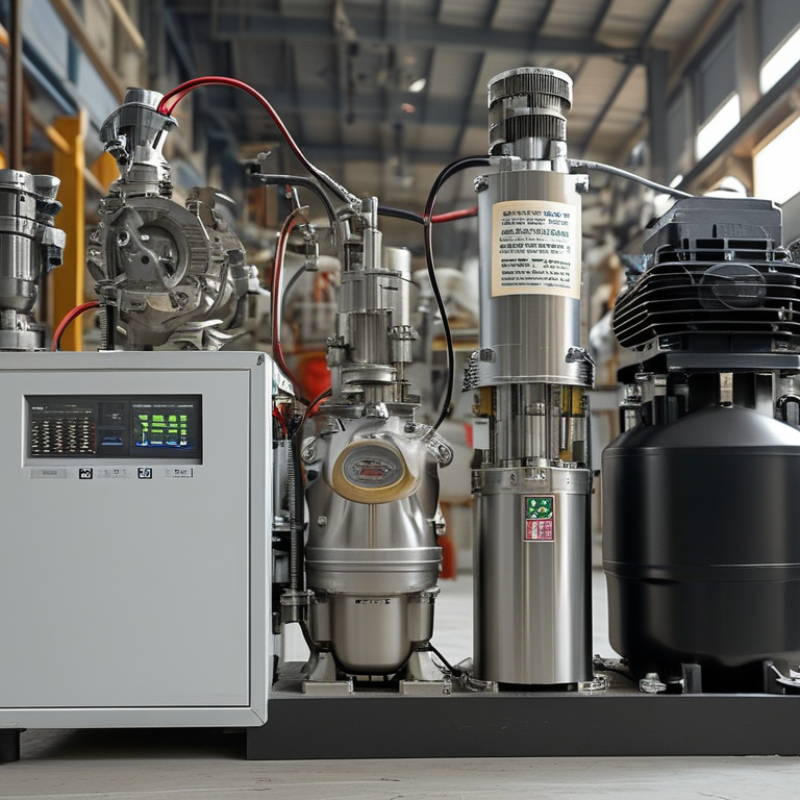
China’s value vacuum pump manufacturing landscape in 2026 is moving beyond low purchase prices. Buyers now compare ultimate vacuum, leakage rates, service access, and power consumption. Grand View Research estimates that the global vacuum pumps market will grow at about 6% annually through 2030. This expansion supports China’s large production base, especially for packaging, refrigeration, chemicals, laboratory equipment, and general process machinery.
Factory visits often reveal the real difference. A low-cost pump may use thinner housings, simpler oil separation, or less precise machining. These choices reduce the invoice but can increase vibration and maintenance. Energy efficiency is becoming harder to ignore. The International Energy Agency reports that electric motor systems consume a major share of industrial electricity. Therefore, a pump running continuously can create hidden operating costs. Not every “value” model performs equally. That needs checking.
Tips: Request a 24-hour endurance test, measured at the stated vacuum level. Check noise, oil mist, seal replacement time, and local spare-part availability. Ask for test records, not only catalog figures. Also compare total cost over three years. A small price gap can disappear after repeated servicing. Buyers should leave room for doubt, because published performance may reflect ideal laboratory conditions rather than dusty production floors.
Value is more than a low quotation. Evaluate each Chinese vacuum pump manufacturer through measurable performance, production capability, and long-term support. Request test reports showing ultimate pressure, pumping speed, leak rate, noise, and power consumption. Check whether these results come from internal testing or independent laboratories. The distinction matters. Ask for serial-number traceability, material specifications, calibration records, and documented quality procedures. A polished brochure is not enough.
Review the pump’s real operating environment. Confirm gas composition, working temperature, duty cycle, oil compatibility, and required maintenance intervals. Inspect machining quality, sealing surfaces, electrical protection, and spare-part availability. Factory audits can reveal assembly discipline, storage conditions, and testing equipment. Customer references are useful, but they may not match your application. Compare at least three suppliers using the same technical requirements and total-cost model. Include installation, energy use, repairs, downtime, and warranty terms. The cheapest unit can become expensive after repeated service problems.
Tips: Ask for a witnessed performance test before shipment. Require clear acceptance limits in the contract. Check response times for technical support. Keep one sample running under realistic conditions for several weeks. No checklist is perfect. Unexpected vibration, temperature changes, or operator habits may expose weaknesses that laboratory data misses. A careful evaluation should leave room for doubt, verification, and revision.
China’s top 10 value vacuum pump manufacturers are often judged by more than purchase price. A useful comparison includes pumping speed, ultimate vacuum, operating noise, energy use, and maintenance access. From practical sourcing experience, manufacturers offering clear specifications are easier to evaluate. They should explain performance under real working conditions, not only laboratory figures. Strong suppliers also provide drawings, test records, spare parts, and responsive technical support. However, a low quote may hide higher oil, power, or repair costs.
Value depends on application. Rotary vane pumps may suit general packaging and laboratory work. Dry pumps can reduce oil contamination in cleaner processes. Water-ring designs may handle vapor better, though their water demand needs attention. The best choice should match pressure range, gas composition, duty cycle, and installation environment. No shortlist is perfect. Buyer requirements change, and published data may need independent verification.
Tips: Request a performance curve and factory test report before ordering. Check whether replacement seals, filters, and oils are locally available. Ask for noise and temperature data during continuous operation. Confirm warranty coverage, delivery time, and remote troubleshooting procedures. A sample test is wise when the process is sensitive. Also inspect the pump’s service history, not just its catalog appearance. Small details matter. One overlooked fitting can delay commissioning and weaken an otherwise good investment.
China Top 10 Value Vacuum Pump Manufacturers 2026
China’s leading value-focused vacuum pump manufacturers now cover rotary vane, dry screw, scroll, diaphragm, roots booster, and liquid-ring designs. This range supports laboratories, food packaging, semiconductor processes, coating lines, and chemical production. Grand View Research projects the global vacuum pumps market to grow steadily through 2030, driven by semiconductor and pharmaceutical investment. Product selection therefore needs more than a low purchase price.
Technology differences appear on the factory floor. Oil-sealed pumps can deliver strong ultimate vacuum at moderate cost, but oil mist may affect clean processes. Dry screw and scroll pumps reduce contamination risks and simplify maintenance. Roots boosters improve pumping speed when paired with a suitable backing pump. Sensors, variable-frequency drives, and remote alarms also help control energy use. MarketsandMarkets identifies energy efficiency and digital monitoring as important industry trends.
Application fit remains decisive. A food-packaging line may prioritize clean operation and quick servicing. A coating system may require stable pressure under continuous load. Chemical plants need material compatibility, leak resistance, and documented safety testing. I would inspect noise levels, seal replacement intervals, and local spare-parts coverage before comparing quotations. A cheap pump can become expensive after repeated downtime. That assumption needs checking. Some published specifications also use different test conditions, making direct comparisons imperfect. Independent performance tests and traceable certificates provide stronger evidence than attractive catalog numbers.
The following table presents an anonymized comparison of representative Chinese vacuum-pump supplier profiles. Technical figures are typical market ranges for commonly offered configurations and should be verified against the final model datasheet, operating conditions, and quotation.
| No. | Anonymized Supplier Profile | Main Product Range | Core Technology | Typical Displacement / Capacity | Typical Ultimate Pressure | Typical Applications | Value-Oriented Strength | Relevant Standards / Options |
|---|---|---|---|---|---|---|---|---|
| 01 | Profile A — General Industrial Vacuum Specialist | Oil-sealed rotary vane pumps; two-stage laboratory pumps; vacuum accessories | Two-stage rotary vane compression with gas ballast and forced-air cooling | 2–300 m³/h | 0.5–5 Pa | Packaging, vacuum drying, electronics, general laboratory service | Broad selection, simple maintenance, competitive initial cost | CE-oriented configurations; oil mist filters; inlet filters; voltage customization |
| 02 | Profile B — Dry Scroll and Dry Vacuum Supplier | Dry scroll pumps; oil-free diaphragm pumps; compact dry vacuum systems | Orbiting scroll compression and chemically resistant diaphragm technology | 1–60 m³/h | 1–150 Pa | Food and pharmaceutical laboratories, coating, semiconductor support, clean processes | Oil-free operation and lower contamination risk | PTFE wetted parts; corrosion-resistant valves; low-noise packages; CE options |
| 03 | Profile C — Water-Ring Process Pump Manufacturer | Single-stage and two-stage liquid-ring pumps; complete separators and recirculation units | Liquid-ring compression using water or process-compatible sealing liquid | 15–3,000 m³/h | 3–120 hPa | Chemical processing, mining, paper production, power plants, condensate extraction | Handles wet gases, condensable vapors, and moderate liquid carryover | Cast iron, stainless steel, and duplex material options; mechanical seals; skid systems |
| 04 | Profile D — Claw and Dry Screw Technology Supplier | Dry claw pumps; dry screw pumps; integrated vacuum boosters | Contactless claw rotors and oil-free screw compression | 25–1,000 m³/h | 0.01–1 hPa | Pneumatic conveying, plastics, packaging, metallurgy, vacuum heat treatment | Low operating contamination and reduced oil-management requirements | Variable-frequency drives; purge-gas systems; inlet protection; PLC integration |
| 05 | Profile E — Roots Booster and Vacuum System Integrator | Roots blowers, booster pump sets, backing-pump packages, automatic control cabinets | Positive-displacement Roots boosting combined with rotary vane, screw, or liquid-ring backing pumps | 30–10,000 m³/h | 0.001–10 hPa | Vacuum furnaces, drying systems, vacuum coating, distillation, central vacuum plants | High pumping speed and application-specific package engineering | Bypass protection; soft-start control; PLC/HMI; pressure and temperature monitoring |
| 06 | Profile F — Oil-Injected Screw Vacuum Manufacturer | Oil-injected screw vacuum pumps; variable-speed industrial packages; separators and filters | Twin-screw compression with oil injection for sealing, cooling, and lubrication | 100–3,000 m³/h | 0.1–10 hPa | Industrial packaging, plastics, meat processing, central vacuum, material handling | Efficient continuous-duty operation and stable performance under load | VFD control; high-efficiency motors; oil-level monitoring; remote alarms |
| 07 | Profile G — Piston and Diaphragm Laboratory Pump Supplier | Oil-free piston pumps; diaphragm pumps; laboratory vacuum stations | Reciprocating piston and chemically resistant diaphragm compression | 0.5–30 m³/h | 40–500 hPa | Filtration, rotary evaporation, gel drying, medical equipment, analytical laboratories | Compact footprint, oil-free operation, and accessible service parts | PTFE diaphragms; solvent-resistant designs; vacuum regulators; laboratory controllers |
| 08 | Profile H — Diffusion and High-Vacuum Equipment Supplier | Oil diffusion pumps; high-vacuum valves; heaters, traps, and vacuum chambers | Vapor-jet diffusion stages backed by mechanical or dry pumps | 100–10,000 L/s | 10⁻⁵–10⁻⁸ Pa | Vacuum coating, thin-film deposition, research equipment, electron-beam processes | Cost-effective high-vacuum performance for batch and laboratory systems | Water cooling; cold traps; thermocouple monitoring; ISO-K, KF, or CF interfaces |
| 09 | Profile I — Vacuum Pump and Customized Skid Builder | Packaged vacuum skids, multi-pump systems, separators, condensers, and piping modules | Combination systems using liquid-ring, rotary vane, screw, or Roots technologies | 50–20,000 m³/h | 0.5–500 hPa | Chemical plants, pharmaceutical production, food processing, wastewater treatment | Turnkey engineering, simplified installation, and process-specific customization | Pressure transmitters; stainless-steel piping; ATEX-related design review; PLC control |
| 10 | Profile J — Refrigeration and HVAC Vacuum Supplier | Portable two-stage rotary vane pumps; service kits; micron gauges and charging accessories | High-speed oil-sealed rotary vane compression for evacuation and dehydration | 1.5–15 m³/h | 1–15 Pa | Air-conditioning installation, refrigeration service, heat pumps, small vacuum chambers | Portable design, readily available replacement parts, and low purchase cost | Gas ballast; anti-suckback valve; manifold compatibility; 110/220/380 V options |
Selecting a Chinese vacuum pump supplier requires more than comparing online prices. Define the application first: chamber volume, target pressure, gas composition, operating hours, and required pumping speed. An oil-sealed pump may suit general industrial work. A dry pump can reduce contamination concerns in cleaner processes. The specification must match real conditions, not only the catalogue.
During supplier evaluation, request performance curves, material details, motor ratings, noise data, and factory test records. Check whether the supplier tests each unit before shipment. Ask for sample reports with serial numbers. I also recommend a video factory audit or an independent inspection. Look at machining areas, assembly cleanliness, spare-parts storage, and calibration practices. Small details reveal process discipline.
Do not ignore after-sales support. Confirm response times, warranty limits, repair procedures, and available wearing parts. Clarify packaging, delivery terms, electrical standards, and installation guidance in writing. A low quotation can hide expensive seals, filters, or difficult maintenance. I have seen buyers focus too heavily on initial cost. That judgment often needs review. No audit is perfect. Request customer references from similar applications, then verify operating conditions and long-term service experience. A capable supplier should explain technical limitations clearly, rather than promise every result.
Join our mailing list to receive the latest news and updates from our team.