
Top 10 In Building DAS Solutions Companies?

Reliable mobile coverage inside a building depends on more than signal strength. Thick concrete walls, metal-coated glass, elevators, and crowded equipment rooms can all affect performance. In Building DAS Solutions address these challenges by distributing cellular signals through a network of antennas, cabling, and shared equipment. The right design can improve coverage across offices, hospitals, hotels, campuses, and large public venues. Details matter.

This guide introduces ten companies working in the In Building DAS Solutions market. It is a starting point, not a universal ranking. A provider’s fit depends on the building, local carrier requirements, supported frequency bands, installation constraints, and ongoing service needs. Buyers should ask for relevant project experience, realistic coverage plans, clear testing methods, and support commitments. A sample floor plan can help reveal weak areas, such as a basement corridor or a busy lobby. No shortlist captures every building. Some vendors may suit complex venues, while others may better serve smaller properties or specific regions. That distinction is easy to miss. Compare proposals carefully, and verify claims against the site’s actual requirements before choosing a partner.
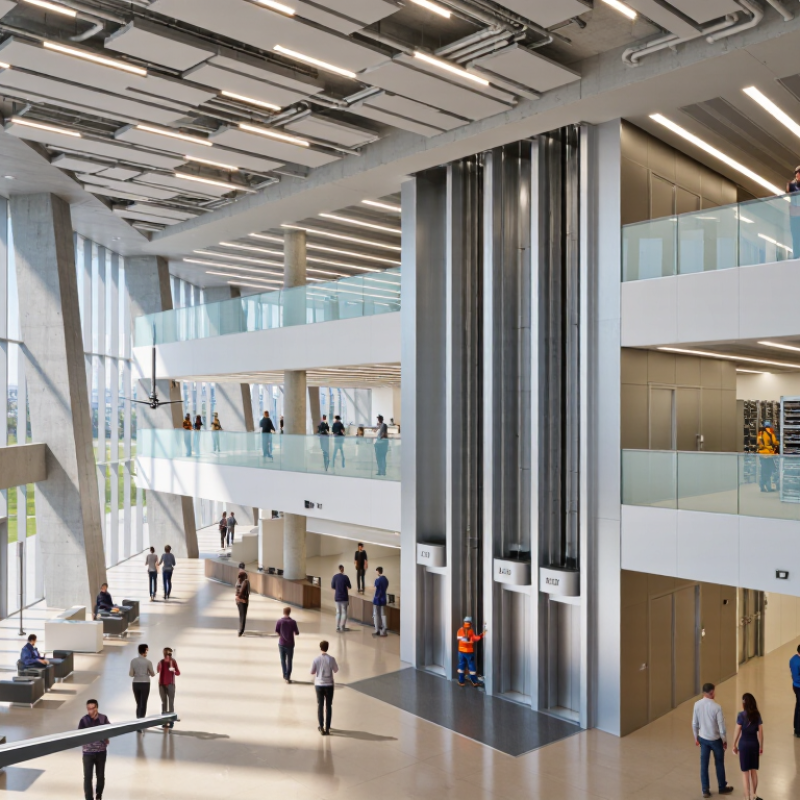
Top 10 In Building DAS Solutions Companies?

What In-Building Distributed Antenna Systems Do

An in-building distributed antenna system (DAS) carries cellular signals through a building instead of relying on one outdoor tower to reach every room. A donor antenna or local base station feeds a head-end, which distributes signals over fiber or coaxial cable to remote units and small antennas. Those antennas can be placed along corridors, near meeting rooms, or across underground levels where concrete and metal weaken reception. The result is more even coverage, not a guarantee of faster service everywhere.

The June 2024 Mobility Report recorded a 25% year-over-year rise in global mobile-network data traffic in the first quarter of 2024, and projected roughly 20% annual growth through 2029. These figures describe network-wide traffic, not indoor demand alone, but they show why capacity planning matters.

A properly designed DAS must account for building materials, user density, frequency bands, and the carriers it is intended to support. It also needs on-site testing: a strong signal near the lobby may fade in a stairwell or behind a fire door.

That gap matters. DAS can improve coverage, but poor antenna placement or limited capacity can leave frustrating dead zones. A walk-test after installation is useful, and sometimes humbling.

How In-Building DAS Solutions Are Designed and Deployed

In-building distributed antenna systems begin with a clear picture of how a property is used. Engineers review floor plans, construction materials, and expected traffic, then measure signal levels across representative areas. Concrete stairwells, underground parking, and glass-heavy lobbies can behave differently. A quick walk-through helps, but it cannot replace a structured radio-frequency survey.

Designers use survey data to estimate coverage and capacity, then plan antennas, cabling, and equipment locations. Small details matter. An antenna hidden above a metal ceiling may perform poorly, while one placed near a corridor junction can serve several rooms. The system may use fiber and coaxial cable to connect remote units with a central equipment location. Each path needs careful planning to limit signal loss and interference.

Deployment usually involves coordination with building teams, since cable routes and equipment cabinets must fit around other services. Installers label connections, secure cables, and check that antennas match the approved design. Then test again. Commissioning should measure signal strength and quality in practical locations, including elevators and meeting rooms where access allows. Results can reveal weak corners or unexpected interference. No model predicts every obstruction perfectly; that is an uncomfortable, useful reminder. Clear test records also make later maintenance and troubleshooting more reliable.

Key Criteria for Comparing DAS Solution Companies

Choosing an in-building DAS solution company starts with the building, not a sales pitch.

Ask how its team surveys floor plans, wall materials, cable routes, and existing signal strength. A practical proposal should identify coverage gaps and explain which frequency bands and capacity targets it supports. Ask for measured results from comparable buildings. Ask for evidence. A polished diagram alone cannot show how signals behave behind concrete stairwells or in underground parking areas.

Compare installation experience, system monitoring, maintenance response, and future expansion options.

Request a clear breakdown of equipment, labor, testing, and ongoing support. The provider should explain how it coordinates with your existing network and meets applicable building and safety requirements. Check whether acceptance testing includes measurements across different floors and busy areas. Not just promises. Also consider whether staff can access readable performance reports. Some proposals still leave support responsibilities vague; that deserves a direct question.

Tips: Walk the site with the provider before comparing prices. Ask who fixes faults, how quickly they respond, and what happens when occupancy grows. Keep sample test reports, assumptions, and service terms together. If a detail remains unclear, pause before signing.

Top 10 In-Building DAS Solutions Companies

A credible top 10 in-building DAS solutions companies list should compare engineering capability, not just advertised coverage. Useful checks include design documentation, installation experience, commissioning tests, and ongoing support. Ask how each provider handles concrete cores, basement parking, elevators, and crowded stairwells. These spaces expose weak planning quickly. Coverage is measurable.

The June 2024 Mobility Report forecast global mobile data traffic at about 130 exabytes per month in 2023, rising to roughly 403 exabytes by 2029. That growth raises the value of dependable indoor capacity, but it does not prove that every building needs DAS. A proper site survey should map signal strength, user density, existing cabling, and likely future demand before anyone recommends equipment.

When comparing ten providers, request sample test results and a clear explanation of system ownership, maintenance, and upgrade costs. Check how solutions support multiple carriers and frequency bands, where relevant. Independent commissioning matters; a neat equipment room does not guarantee coverage at a desk or loading bay. Still, scorecards miss awkward retrofit constraints. That is worth admitting. Concrete, fire-rated barriers, and limited riser space can change both cost and performance. Favor teams that explain trade-offs plainly and document what their design cannot solve.

Top 10 In-Building DAS Solutions Companies

This provider-neutral comparison covers ten common in-building coverage solution types, not a ranked list of companies. Actual bands, capacity, carrier participation, and design requirements depend on the site and local network conditions.

# Solution Type Typical Application Signal Source Distribution Approach Key Strength Important Consideration
1 Neutral-host active DAS Large venues, airports, hospitals, and multi-tenant buildings One or more operator-approved base-station or radio sources Fiber-fed remote units distribute signals to antennas throughout the property Can support multiple operators and broad indoor coverage from a coordinated system Requires operator coordination, careful RF design, and ongoing system monitoring
2 Carrier-specific active DAS Buildings where a particular mobile operator requires dedicated indoor coverage Radio equipment or signal source associated with the participating operator Active head-end and remote units connected over fiber Allows the system to be designed around the participating operator’s requirements Coverage for other operators is not automatic and may require additional integration
3 Passive DAS Small or medium-sized buildings with suitable donor signal and modest capacity needs Off-air signal captured by a donor antenna or a compatible radio source Coaxial cable, splitters, couplers, and passive antennas Relatively simple architecture with no powered remote units along the distribution path Passive components do not add signal power; cable loss and source quality limit performance
4 Hybrid active-passive DAS Multi-floor properties that need active distribution with localized passive branches Operator radio source, base-station source, or approved off-air source Fiber to remote units, followed by coaxial distribution to local antennas Combines long-distance fiber transport with practical short-run antenna distribution Requires balanced link budgets and careful planning of remote-unit and antenna locations
5 Fiber-fed DAS Campuses, tunnels, high-rise buildings, and geographically extended properties Centralized radio source or approved signal interface Optical fiber carries signals between the head-end and distributed radio units Fiber supports long runs and helps reduce signal loss over distance compared with long coaxial runs Optical transport does not itself create coverage; radio units, antennas, and a suitable source are still needed
6 Public-safety DAS Buildings subject to emergency-responder radio coverage requirements Local public-safety radio system, subject to the authority having jurisdiction Dedicated or appropriately isolated distribution network with indoor antennas Can improve in-building radio coverage for emergency communications where required Band, acceptance testing, backup power, monitoring, and code requirements vary by jurisdiction
7 Small-cell overlay Offices, retail locations, and targeted indoor areas with localized capacity needs Operator-provided or enterprise-managed small-cell equipment, depending on the deployment One or more low-power radio nodes serve defined indoor areas Can add localized capacity and coverage without deploying a large distributed antenna network Operator access, backhaul, interference coordination, and supported bands must be confirmed
8 Venue-focused DAS Stadiums, convention centers, arenas, and other high-density gathering spaces Multiple operator radio sources or other authorized network interfaces High-capacity head-end and distributed antennas arranged for dense user areas Designed to address both coverage and capacity demands in crowded locations Event traffic patterns, sectorization, venue geometry, and operator participation affect design
9 Enterprise in-building DAS Corporate offices, manufacturing facilities, and large commercial properties Operator-connected radio source or another approved source appropriate to the deployment Centralized equipment feeds distributed antennas across the building Provides a coordinated approach to indoor cellular coverage across multiple work areas Requirements differ by building; the system should be designed around measured coverage and capacity needs
10 In-building DAS with off-air donor source Sites where usable outdoor cellular signals are available near the building Outdoor donor antenna receives an existing network signal Received signal is amplified or distributed indoors through a compatible system May extend an existing outdoor signal indoors without a dedicated on-site base station Performance depends on donor-signal quality, isolation, applicable regulations, and operator approval

How to Choose an In-Building DAS Provider

Choosing an in-building DAS provider starts with the building, not a sales promise. Ask for a site survey that measures signal levels across offices, stairwells, elevators, and basement areas. A useful report should explain expected coverage, capacity, frequency-band support, and known limitations. Numbers matter. Ask how the design will handle peak demand, not just an empty building during testing.

Check the provider’s experience with buildings similar to yours, including construction materials and tenant needs. Concrete walls, coated glass, and metal shelving can weaken signals in different ways. Request examples of completed projects and speak with building operators about installation disruption and ongoing support. Confirm who coordinates with carriers and other contractors. Get a clear breakdown of equipment, labor, maintenance, and future expansion costs. The lowest quote may leave out important work.

Before signing, agree on measurable acceptance tests and a process for correcting weak spots. Ask how performance will be monitored after occupants move in, and who responds when coverage changes. A reliable provider should explain trade-offs in plain language, rather than promise perfect service everywhere. I would still question any design that looks flawless on paper; real buildings are messy, and furniture or tenant layouts can change. Make sure the system can adapt.

Article Source:

Subscribe To Our Newsletter

Join our mailing list to receive the latest news and updates from our team.

You have Successfully Subscribed!