
Choosing an Aluminum Casement Window supplier is not just a price comparison. It is a decision about hardware, glazing, fabrication quality, and support after installation. A slim frame may look impressive in a showroom. On site, hinge strength, gasket fit, and drainage details matter just as much. Small details show.
Fenestration researcher Dr. Helen Sanders’s building-science work offers a useful perspective for this guide. Paraphrased, rather than presented as a verbatim quotation: “A window’s performance should be judged as part of the whole building, not by its frame alone.” That principle helps buyers look beyond product photos. Check published air, water, and structural performance data where available. Ask how finishes are tested, what warranty terms cover, and whether replacement hardware can be obtained. Also confirm that the tested configuration matches the size and glazing you plan to order.
This Top 10 guide compares suppliers through practical factors: product range, customization, documented performance, manufacturing capabilities, and service clarity. A supplier with a polished catalog may still be a poor fit for a coastal project or a tight renovation schedule. No ranking can predict every project. Supplier information changes, and local installation quality can alter the outcome. Treat the list as a starting point, then request current specifications and project references. Even careful comparisons leave gaps. That is worth admitting. A strong choice is one whose claims can be checked and whose products suit the building, budget, and climate—not simply the most attractive brochure.
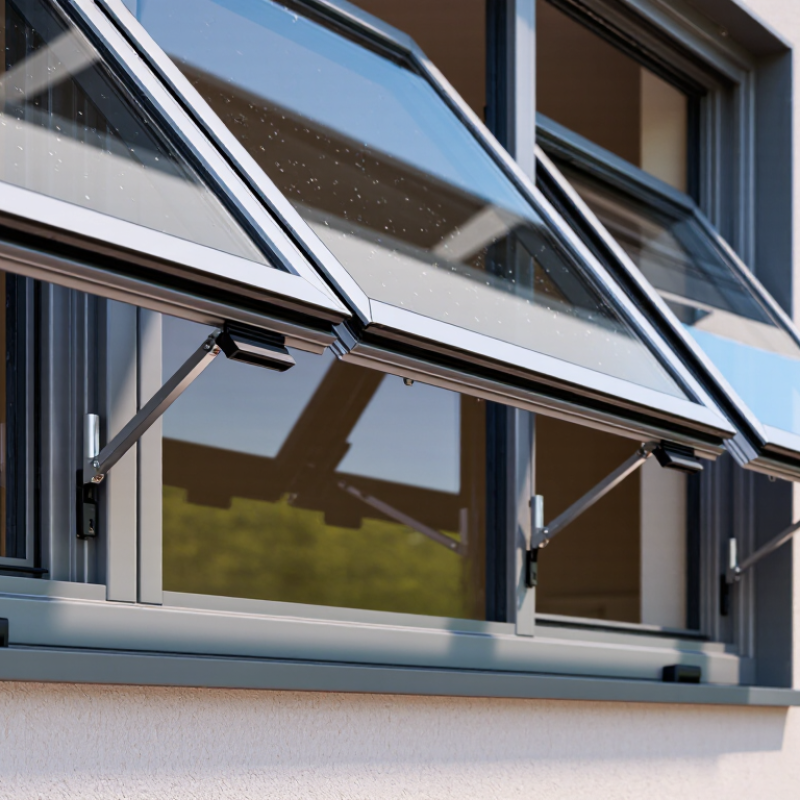
Aluminum casement window suppliers provide more than frames. They typically offer profiles, corner joints, hinges, handles, locking points, and weather seals as a coordinated system. Ask for section drawings that show frame depth and drainage paths. These details affect how the window fits a wall and sheds rain. Some suppliers also provide thermal-break profiles, which place an insulating material between the inner and outer aluminum sections.
Glass options may include double or triple glazing, low-emissivity coatings, and different safety configurations. The right choice depends on climate, noise, sunlight, and the building’s structure. A useful supplier can explain performance figures and identify what is included in the quoted unit. Check finish samples in daylight; a color chip can look quite different beside brick or pale plaster. Small detail, big difference.
Reliable support matters after selection, too. Look for clear fabrication drawings, hardware schedules, care instructions, and guidance on measuring the opening. Samples help, but they do not replace checking dimensions on site. Confirm lead times, packaging, delivery arrangements, and how damaged components are handled. Specifications can look tidy on paper, yet installation exposes gaps in communication. I would ask who answers technical questions when the installer finds an unexpected sill condition. That answer is not always obvious, and it deserves a little thought.
Top 10 Aluminum Casement Window Suppliers?
Criteria for Comparing Aluminum Casement Window Suppliers
Choosing a supplier means checking more than frame color and quoted price. Ask for documented U-factor and solar heat gain coefficient ratings, plus air, water, and structural test results. The U.S. Department of Energy estimates that windows account for 25–30% of residential heating and cooling energy use. That makes verified thermal performance worth examining closely. Look for NFRC-rated product data and test reports tied to the exact window configuration you plan to buy. A rating for one glass package may not apply to another.
Compare thermal-break design, glass options, hardware durability, and drainage details. Request installation instructions, lead times, warranty terms, and a clear process for replacement parts. A supplier’s response to technical questions can reveal how well its support team understands the product. Still, polished catalogs do not prove reliable field service. Check references for projects with similar opening sizes and weather exposure, then ask what went wrong and how it was resolved.
Tips: Request sample cross-sections and inspect the thermal break, seals, and corner joints. Confirm test reports come from a qualified laboratory, and compare equivalent configurations—not just headline ratings. If a supplier cannot explain a result plainly, pause and ask again.
This suggested 100-point framework prioritizes measurable factors such as thermal performance, weather resistance, and structural testing. The weightings are a comparison guide, not an industry standard; adjust them to suit your project.
The ten supplier profiles compare capabilities rather than relying on polished catalog images. They cover manufacturers serving custom homes, apartment projects, and commercial renovations. Key differences include frame depth, thermal-break design, glass options, hardware, finish choices, and order flexibility. A narrow frame can bring in more daylight, but it may not suit every opening or climate. Details matter.
Performance deserves equal attention. The U.S. Department of Energy’s Energy Saver guidance estimates that windows account for about 25–30% of residential heating and cooling energy use. Ask each supplier for tested U-factor and solar heat gain coefficient values, plus the applicable test standard. Check whether figures apply to the complete window or only its glass. That distinction is easy to miss. The ten profiles also consider fabrication consistency, installation guidance, warranty terms, and delivery support. A strong product can still disappoint when measurements or site preparation are poor.
Tips: Compare the same window size and glazing configuration across quotes. Request section drawings, finish samples, and written lead times. Confirm who handles field measurements and service claims. One honest caveat: published performance data may not predict comfort in every building, especially where installation quality varies.
Aluminum casement window suppliers may look similar online, but their products can differ once drawings are reviewed. Some offer slim frames for wider glass areas; others favor reinforced profiles for large or wind-exposed openings. Ask whether thermal breaks are continuous, and request section drawings rather than relying on catalogue images. Details matter. Hardware also varies: multi-point locks, friction stays, hinge limits, and replacement-part availability all affect daily use. Compare glazing options, including acoustic laminates and low-emissivity coatings, against the project’s climate and noise conditions.
Service can be just as important as product range. One supplier may provide site measurements, shop drawings, and installation guidance; another may ship windows only, leaving coordination to the contractor. Clarify who checks opening tolerances, handles damaged units, and answers technical questions after delivery. Request finish samples and written warranty terms. Ask for proof. Lead times may change with custom colors or unusual sizes, so confirm dates against the construction schedule. A polished sample can hide uneven corner joints or stiff hardware; inspect a full-size unit if possible. I would not rank service above product quality in every case, but weak follow-up can make a well-specified window frustrating to install.
Choosing an aluminum casement window supplier starts with your project conditions, not a catalog cover. Measure opening sizes, wall depth, wind exposure, and whether windows face driving rain. Request test data for air leakage, water resistance, and structural pressure. Check that the tested sizes match your specifications. A neat brochure is not proof. Ask for drawings that show frame profiles, thermal breaks, glazing, hardware, and drainage paths. Small details matter: a handle that clears an interior blind can prevent daily frustration. Confirm how custom dimensions affect lead times and replacement parts. Keep it specific.
Review fabrication and installation support together. A supplier may produce consistent frames, yet unclear site guidance can leave installers guessing about anchors and perimeter sealing. Ask for written installation instructions, warranty terms, service response times, and references for similar projects. If possible, inspect a sample corner and operate a full-size sash. Listen for rubbing, check the lock, and look for even gasket contact. Compare quotes line by line, including glazing, finishes, delivery, and packaging. Cheapest is not always best. Still, premium features are wasted when an opening is poorly measured. I would ask one awkward question: what happens if the first unit arrives out of square? The answer may reveal more than the sales pitch.
The entries below are supplier profiles, not named or ranked companies. Use them to compare prospective suppliers and verify project-specific claims in writing.
| Profile | Typical project fit | Key capabilities to compare | Evidence to request | Potential trade-off |
|---|---|---|---|---|
| 1. Local custom fabricator | Renovations and non-standard openings | Made-to-measure sizes, finish options, site coordination | Shop drawings, written tolerances, finish samples, warranty terms | Performance documentation and production capacity can vary |
| 2. Regional window manufacturer | Residential projects needing local service | Standard and configurable sizes, regional delivery, service access | Product data for the exact series, service coverage, lead-time schedule | Options may be limited to the manufacturer’s product range |
| 3. Commercial fenestration supplier | Commercial buildings and larger window packages | Project documentation, coordinated submittals, larger-unit options | Test reports, engineering data, installation details, project references | May require higher order quantities or longer planning |
| 4. Thermally broken system specialist | Projects where limiting heat transfer through the frame matters | Thermal-break frame design, glazing compatibility, drainage details | Whole-window U-factor data for the specified size and glazing configuration | Thermal performance depends on the complete window assembly, not frame type alone |
| 5. High-performance glazing supplier | Energy-conscious designs and varied climate conditions | Glazing choices, low-emissivity coatings, gas-fill options where offered | U-factor and SHGC values for the specified complete window | A glazing upgrade may affect price, appearance, and availability |
| 6. Coastal-climate supplier | Sites exposed to salt air, wind-driven rain, or severe weather | Corrosion-conscious finish options, weather seals, drainage design | Written finish-care guidance and applicable air, water, and structural test data | Suitability depends on exposure, installation, and maintenance |
| 7. Retrofit and replacement specialist | Existing homes and window replacement work | Opening measurement, removal planning, trim and flashing coordination | Measurement process, installation scope, project references, site inspection terms | Existing wall conditions can change the installation scope |
| 8. Design-focused custom supplier | Architect-led projects with specific appearance requirements | Color selection, sightline options, hardware and configuration choices | Finish samples, approved drawings, hardware schedule, sample-unit review | Custom finishes and configurations may increase cost or lead time |
| 9. Export-oriented manufacturer | Bulk orders or projects sourcing internationally | Production scale, export packaging, configurable specifications | Incoterms, shipping plan, inspection records, local-code compliance documents | Shipping, customs, and after-sales logistics need careful coordination |
| 10. Distributor with installation network | Projects seeking supply and installation coordination | Product sourcing, installer coordination, delivery scheduling | Installer credentials, responsibility split, warranty contacts, installation checklist | Clarify whether product and installation warranties are separate |
Selection tip: Compare the exact window configuration, including size, glazing, hardware, and installation conditions. Where relevant, request independently verified air-leakage, water-penetration, structural, and energy-performance data; confirm that the cited rating applies to the proposed product and local requirements.
Join our mailing list to receive the latest news and updates from our team.