
China Top 10 Brass Terminal Connector Manufacturers

China’s Brass Terminal Connector market includes suppliers serving appliance, automotive, lighting, and industrial-control applications. This guide introduces ten manufacturers for buyers comparing product range, customization, and production support. A Brass Terminal Connector may look simple on a drawing, yet small differences in alloy, thread fit, plating, or contact geometry can affect assembly and service life.

The comparison focuses on practical questions: Does the supplier provide clear dimensional drawings? Can it discuss wire size, current requirements, and mounting conditions? Are material details, sample checks, and inspection records available for review? Details matter. Buyers should confirm them directly, since catalog descriptions may not show every production variation. Where possible, request samples and compare dimensions, surface finish, and fit in the intended housing before placing a large order. For terminals used near heat or vibration, ask how the design and material choices suit those conditions. Test fit matters.

The manufacturers are presented as a starting point, not a guaranteed ranking or endorsement. Supplier capabilities can change, and a polished website is not proof of consistent output. Ask about tooling ownership, lead times, packaging, traceability, and how defects are handled. Then match the answers to your drawings and application risks. One caveat remains: public information is uneven, so some profiles may need independent verification. This guide aims to make the first screening clearer, while leaving final technical and commercial checks with the buyer.
China Top 10 Brass Terminal Connector Manufacturers

Brass Terminal Connectors: Types, Features, and Applications

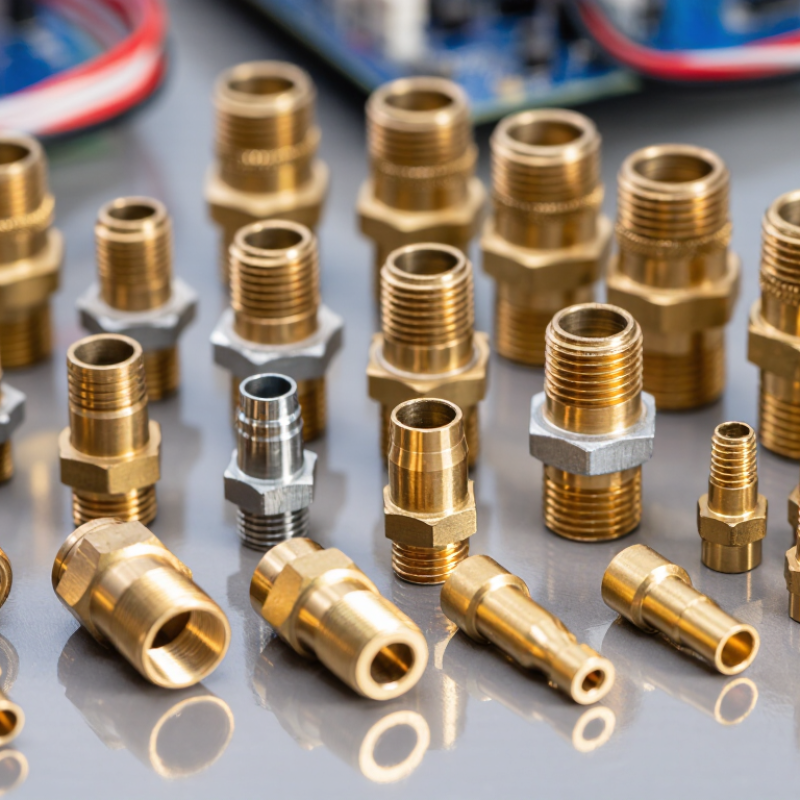
Brass terminal connectors come in several forms. Screw-clamp types hold stripped wire beneath a metal plate. Crimp terminals use a compressed barrel, while threaded studs secure ring terminals with a nut. PCB versions connect wires directly to circuit boards. Each design suits a different assembly method. Brass is easy to machine and provides reliable electrical contact, though its conductivity is lower than copper’s. Tin or nickel plating can help protect contact surfaces, but the right finish depends on the environment.

These connectors appear in control panels, appliances, vehicle wiring, and power distribution equipment. A compact screw terminal can fit inside a small enclosure; a stud connector can handle repeated service access. Check the wire range, current rating, temperature rating, and mounting dimensions before selection. Tighten screws to the specified torque. Too little pressure may loosen the connection; too much can damage strands or threads. That detail is easy to miss. Real installations also face vibration, heat, and occasional moisture, so a catalog description alone may not settle the choice.

Tips: Match the connector to the conductor material and size. Strip only the specified length, then check that no strands escape the clamp. For crimp types, use a compatible tool and inspect the finished barrel. A quick pull test helps, but it does not replace the required electrical checks.

Brass Terminal Connectors: Copper Content in Common Brass Alloys

Brass alloy selection affects machinability, formability, and corrosion resistance in terminal connector components. The chart shows published copper-content ranges for three standard brass alloys; actual suitability depends on the connector design and operating conditions.

How China’s Brass Terminal Connector Industry Is Structured

China’s brass terminal connector industry is built around a layered supply chain, not a single type of factory. At the upstream end, suppliers provide brass rod, strip, and other metal stock. Connector manufacturers then cut, stamp, turn, or forge the material into terminals and fittings. Plating, heat treatment, and packaging may happen in-house or through nearby specialist workshops. The exact setup varies.

This structure allows factories to handle different order sizes and product designs. A small workshop may focus on turned parts, while a larger plant can combine machining, inspection, and assembly. Buyers should ask which processes are performed on-site and which are subcontracted. It matters. A drawing can specify dimensions, but consistent production also depends on material records, tool maintenance, and inspection methods. Practical checks may include thread gauges, calipers, and contact-resistance testing, depending on the connector’s use.

Manufacturing clusters can shorten transport between suppliers and processors, though location alone does not prove quality. Capacity claims need verification. Request sample parts, material specifications, and a clear explanation of batch inspection. One detail is easy to overlook: plating thickness and surface condition can affect fit and electrical contact. Documentation may also differ between suppliers, so comparisons should use the same technical requirements. Even then, a sample may not reveal every issue that appears during longer production runs.

Selection Criteria for Evaluating Chinese Manufacturers

Selecting a Chinese brass terminal connector manufacturer starts with the part, not the catalog. Define alloy grade, wire range, current, operating temperature, plating, and mounting dimensions before comparing quotes. Request mill certificates, then verify brass chemistry through independent testing of sampled parts. Check contact resistance, pull-out force, torque retention, and salt-spray results against the intended application. Small details matter. A polished sample proves little if production batches vary. Ask for inspection records, lot traceability, and documented corrective actions.

Capacity and process control deserve equal scrutiny. Review tooling ownership, monthly output, stamping and machining controls, and peak-season lead times. Ask to inspect dated production records and confirm test equipment is calibrated. MarketsandMarkets’ 2023 Connectors Market report valued the global market at USD 84.5 billion in 2023 and projected USD 118.8 billion by 2028, a 7.1% annual growth rate. That signals a crowded supply base, not guaranteed quality. One weakness in this checklist: certificates can look stronger than factory control. Compare a pilot lot with later shipments, and put acceptance limits in the purchase specification.

China Top 10 Brass Terminal Connector Manufacturers - Selection Criteria for Evaluating Chinese Manufacturers

This is a supplier-evaluation framework, not a ranked list or a claim about any specific manufacturer. Request current, product-specific evidence and confirm that test methods and acceptance limits match your application.

No. Selection criterion Suggested weight What to evaluate Evidence to request
1 Product and application fit 15% Confirm connector dimensions, thread type, conductor range, mounting method, operating environment, and intended use. Check that the offered design matches the drawing and application requirements. Dimensioned drawings, product specifications, material and finish details, and a sample matching the quoted configuration.
2 Brass alloy and material control 12% Check that the brass alloy, temper, and any relevant mechanical or electrical properties are specified and consistent with the product requirements. Do not assume all brass grades are interchangeable. Material specification and traceable material test documentation, such as a mill certificate or equivalent supplier record, linked to the relevant production lot.
3 Electrical performance 12% Evaluate contact resistance, current-carrying performance, and temperature rise against the requirements for the connector’s intended use. Acceptance limits depend on product design and the applicable specification. Test reports identifying the sample, test setup, method, measured results, and acceptance criteria. Confirm that the test conditions represent the intended application.
4 Mechanical performance 10% Assess thread quality, dimensional consistency, clamping performance, retention, and resistance to damage during installation. Confirm specified tightening torque where applicable. Inspection records, dimensional reports, and mechanical or torque-test results for the relevant product version.
5 Plating and corrosion resistance 10% Verify plating type, thickness requirements, coverage, adhesion, and suitability for the operating environment. Corrosion performance should be assessed using a stated method and agreed acceptance criteria. Finish specification, plating-thickness records, and applicable corrosion-test reports. Check that reported results correspond to the same material and finish configuration.
6 Quality management and process control 10% Review production controls, inspection planning, nonconformance handling, corrective action, and change management. An ISO 9001 certificate relates to a quality management system; it does not by itself certify a particular connector. Current quality-system certificate with its scope and validity, process-control documents, sample inspection records, and a description of corrective-action procedures.
7 Product and regulatory documentation 9% Check the standards and regulatory requirements relevant to the destination market and product type. For applicable terminal blocks, IEC 60947-7-1 covers terminal blocks for copper conductors for mounting on a support rail; applicability must be confirmed for the specific product. Applicable declarations, certificates, or test reports with scope, model coverage, issuing body, and validity details. Verify that the documents cover the quoted product rather than a different product family.
8 Restricted substances and material declarations 8% Confirm requirements for substances such as those regulated by RoHS or identified under REACH, where applicable to the product and market. Requirements and exemptions can depend on product category and jurisdiction. Product-specific material declarations or test reports, with the tested or declared product configuration, date, and applicable regulatory scope clearly identified.
9 Traceability and batch consistency 7% Determine whether finished goods can be linked to production dates, inspection records, and material batches. Review how the supplier manages revisions and production changes. Sample lot labels, inspection records, batch-traceability examples, and written procedures for product or process changes.
10 Capacity, delivery, and export readiness 7% Assess realistic production lead times, available capacity, packaging, order flexibility, communication, and experience preparing export shipments. Validate delivery capability using the buyer’s expected order pattern. Written lead-time and capacity commitments, packaging specifications, sample export documents where available, and references or performance records relevant to comparable orders.
Total suggested evaluation weight 100% Adjust weights to reflect the product’s technical requirements, destination market, and purchasing priorities.

Profiles of 10 Leading Brass Terminal Connector Manufacturers

Profiles of ten leading Chinese brass terminal connector manufacturers should compare measurable capabilities, not catalogue claims. Look for brass grades, machining tolerances, plating options, and documented inspection routines. A useful profile also notes whether a supplier makes crimp, screw, or PCB terminals, and which wire sizes each design accepts. Small details matter. A terminal that fits a drawing but loosens under vibration is not a reliable substitute. Ask for evidence: sample inspection records, material certificates, and repeatability data from production batches.

The market is expanding, but broad figures need careful interpretation. Fortune Business Insights reported a global electrical connector market value of about USD 78.9 billion in 2023, with growth projected through 2032. That figure covers many connector types, not brass terminals alone. It signals demand context, not a forecast for any single factory. Across ten supplier profiles, compare annual capacity, tooling ownership, export experience, and response time for custom drawings. Also check how each factory controls burrs, thread quality, and plating thickness. These affect installation and contact performance. Yet a polished catalogue cannot prove consistent output; request current samples and independent test results. Some suppliers disclose more than others, and that gap deserves attention.

Manufacturing Processes, Quality Standards, and Market Trends

Brass terminal connectors are commonly made through bar turning, stamping, or forging, depending on their geometry and production volume. Machining can create precise threads and contact faces, while stamping suits thinner components. The chosen route affects cost, consistency, and material use. Small details matter. Burrs around a screw opening can interfere with wire insertion, so deburring and surface finishing deserve attention. Plating may improve corrosion resistance, but its thickness and coverage should match the intended environment.

Quality control should connect material records with measurable checks. Inspect dimensions such as thread fit, clamping width, and overall length using calibrated tools. Electrical tests can assess contact resistance and temperature rise under defined conditions. Sampling alone may miss occasional defects; a clear inspection plan should combine process checks with final testing. Market demand is also shifting toward compact designs, dependable performance, and more traceable production. Automated machining helps repeatability, though setup errors can still affect every part in a batch.

Tips: Ask how manufacturers control burrs, plating coverage, and dimensional variation. Request test criteria and sample inspection records before comparing quotations. Measure twice. A lower price may reflect a different material specification or inspection scope, so compare equivalent requirements. Some trade-offs remain imperfect: tighter tolerances can improve fit, but may raise machining time and cost. Decide which dimensions affect assembly most, then prioritize those checks.

Subscribe To Our Newsletter

Join our mailing list to receive the latest news and updates from our team.

You have Successfully Subscribed!