
What Are the Top Commercial Flood Lights in 2026?

Commercial Flood Lights in 2026 are judged by more than raw brightness. A high lumen rating can look impressive on a product page, yet still leave dark patches beneath a loading dock canopy. Beam spread, mounting height, glare control, weather resistance, and dependable performance all shape the result. Small details matter.

Lighting researcher Dr. Mariana Figueiro has called light “a powerful drug.” Her work concerns light and human health, not commercial flood-light rankings, but the phrase is a useful reminder: illumination affects people as well as surfaces. The right fixture should help workers see clearly without shining into drivers’ eyes or nearby windows.

This guide examines leading commercial options through practical criteria: light output, energy use, construction, controls, warranty terms, and suitability for sites such as parking lots, warehouses, and building exteriors. It also considers installation realities, including pole height, aiming, and maintenance access. A fixture that performs well in a catalog may disappoint when mounted too low or aimed carelessly. That part is easy to overlook.

No single model fits every property. A coastal site, a busy truck yard, and a small storefront face different demands. Product specifications can also change, so buyers should confirm current ratings and warranty details before purchasing. The comparisons ahead aim to make those trade-offs clearer, while admitting that real-world results depend on thoughtful design and installation.
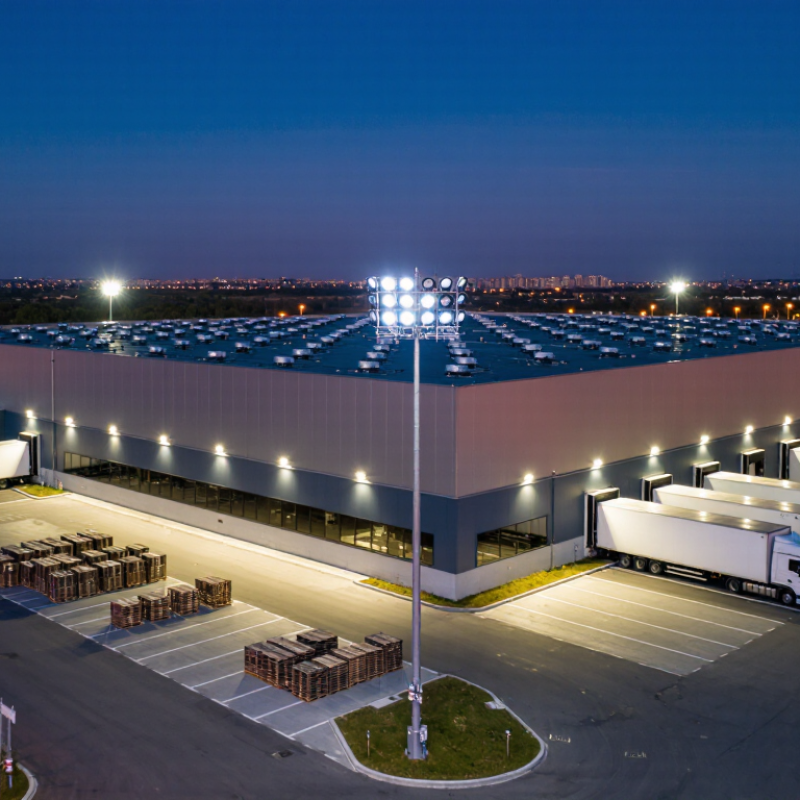
What Are the Top Commercial Flood Lights in 2026?

What Commercial Flood Lights Are and How They Work

Commercial flood lights are high-output fixtures designed to illuminate broad outdoor areas, such as loading bays, parking lots, building entrances, and work yards. Unlike a narrow spotlight, a flood light spreads its beam across a wider zone. The exact coverage depends on its optics, mounting height, and aiming angle.

Most modern commercial units use LED chips powered by an internal driver. The driver regulates electricity and helps keep the light output steady. Reflectors or lenses shape the beam, while a metal housing moves heat away from the LEDs. Heat matters. Poor heat control can shorten a fixture’s useful life. Some models also support photocells or timers, which switch lights according to daylight or a set schedule.

In practical use, brightness alone does not determine performance. A lighting plan should consider the area’s size, mounting points, desired uniformity, and nearby homes or roads. A fixture with a very wide beam may leave the ground dim if mounted too high. Aim lights carefully to reduce glare and wasted spill. Check the product’s light output, beam pattern, weather protection, and rated operating temperature before choosing it. Specifications can be confusing, and I would not assume that a higher wattage automatically means better coverage.

Which Features Define a Top Commercial Flood Light in 2026

A top commercial flood light in 2026 should match its beam to the actual site, not just advertise a high lumen figure. A loading bay needs even coverage across doors and vehicle lanes; a sign or facade may need a narrower, controlled beam. Check the photometric distribution and mounting height before comparing output. A bright fixture can still leave dark patches. Not ideal.

Efficiency matters, but usable light matters more. Review measured efficacy, color consistency, glare control, and whether the fixture maintains output in heat. A sturdy housing, effective thermal design, and suitable ingress protection help in wet, dusty, or exposed locations. Ask for test data rather than relying on a product summary. The fine print counts.

Controls can improve operation when they fit the job. Dimming, photocells, or occupancy sensing may reduce unnecessary runtime, but poorly configured controls can create uneven lighting or unwanted shutoffs. Surge protection and replaceable components also affect long-term reliability. Compare warranty terms and service access, not only purchase price. One honest limitation: no single fixture suits every site. A nighttime walkthrough after installation can reveal glare or shadows that a specification sheet misses.

How Leading Commercial Flood Light Types Compare

What Are the Top Commercial Flood Lights in 2026?
How Leading Commercial Flood Light Types Compare

LED, metal-halide, and halogen flood lights suit different sites. LEDs start quickly, offer controllable beam patterns, and generally need less maintenance. Metal-halide fixtures produce strong light for large yards, but require warm-up time and frequent lamp changes. Halogen lights render colors naturally, though their heat and energy use can make them costly for long nightly operation. The U.S. Department of Energy reports that LEDs use at least 75% less energy and last up to 25 times longer than incandescent lighting. That benchmark is not a direct comparison with metal halide, so check each fixture’s wattage, lumen output, and rated life before deciding.

For a loading bay, compare measured light on the ground, not just the lumen figure on a box. A narrow beam may reach a gate but leave dark patches beside it. IEA reporting puts lighting at about 15% of global electricity use, making efficiency a practical concern, not a spec-sheet contest. Still, a poorly aimed LED can waste light and annoy nearby workers. I would verify the beam angle and glare on site; paper specifications do not show the whole story.

Tips: Match optics to mounting height, check dimming compatibility, and review the warranty. Test one fixture after dark before ordering for the full site.

What Are the Top Commercial Flood Lights in 2026? — How Leading Commercial Flood Light Types Compare
Flood Light Type Typical Applications Typical Input Power Typical Light Output Common Strengths Key Considerations
Standard LED Floodlight Building exteriors, loading areas, parking lots, walkways, and general site lighting About 30–500 W per fixture Roughly 4,000–75,000 lumens Broad range of sizes and beam patterns; instant-on operation; generally low maintenance compared with traditional HID fixtures Choose optics and mounting height to control glare and light spill; verify the fixture’s delivered lumens, not just LED-chip output
High-Mast LED Floodlight Ports, distribution yards, large parking areas, industrial sites, and transportation facilities About 200–1,000 W per fixture Roughly 25,000–160,000 lumens Designed for high mounting heights and wide-area illumination; can reduce the number of fixtures needed in some layouts Requires careful photometric planning, suitable pole and mounting hardware, and safe access for installation and maintenance
Sports-Lighting LED Floodlight Outdoor courts, playing fields, stadiums, and recreational facilities About 300–1,500 W per fixture Roughly 40,000–225,000 lumens High-output options and precise beam control can support uniform field illumination and reduce spill when properly aimed Match the design to the sport, field dimensions, mounting positions, and any broadcast or glare-control requirements
Solar LED Floodlight Remote sites, perimeter areas, signs, and locations where running electrical wiring is difficult Solar-powered; panel and battery capacity determine usable output Varies widely by system and operating mode Can operate without a grid connection and may simplify installation where trenching or cabling is impractical Check battery capacity, autonomy during cloudy periods, panel exposure, and whether published output is sustained or a peak rating
LED Retrofit for Existing Floodlight Housing Sites with existing fixtures or infrastructure that can be retained Depends on the replacement lamp or retrofit kit and existing fixture Depends on the retrofit product and optical compatibility May reuse existing housings or wiring and reduce the scope of a lighting upgrade Confirm compatibility, thermal performance, listing, and light distribution; replacing the full fixture may be preferable if the housing is damaged or inefficient

Note: Figures are broad, indicative ranges for commercial products, not guaranteed specifications or a product ranking. Actual power, light output, efficiency, durability, and suitability vary by fixture design, optics, installation, and operating conditions. Compare photometric files and project requirements before selection.

How to Match Flood Lights to Commercial Applications

Commercial flood lights work best when their beam pattern suits the task, not simply when their lumen rating is high. A loading dock needs bright, even coverage across doors, ramps, and truck lanes. Wide-beam fixtures can reduce dark patches, while careful aiming helps keep light out of drivers’ eyes. Small details matter.

Parking areas call for consistent illumination across stalls and pedestrian routes. Check mounting height, spacing, and the fixture’s distribution pattern together. A powerful light mounted too high or aimed poorly may create glare without improving visibility. On building façades, narrower beams can highlight walls and entrances, but avoid harsh hotspots that obscure architectural detail.

Match the housing to the location, too. Exposed outdoor fixtures should resist water, dust, and impact; coastal or industrial sites may need extra corrosion protection. Consider controls such as photocells or dimming where operating schedules allow them. Color temperature affects appearance, and cooler light is not automatically clearer. Review product photometrics, compare them with a site plan, and verify results after installation. Honestly, calculations can miss nearby trees, reflective pavement, or a fixture that gets nudged during maintenance. A nighttime walk-through can reveal issues the spreadsheet won’t.

What Are the Top Commercial Flood Lights in 2026?

Match flood lights to the application by checking the maintained illuminance target, beam coverage, mounting height, and local lighting requirements.

Typical planning ranges shown in lux (lx); actual requirements vary with the task, site conditions, and applicable standards. Confirm targets with a qualified lighting designer.

What to Consider for Installation, Energy Use, and Maintenance

A commercial floodlight can look powerful on a specification sheet and still leave dark patches across a loading yard. Before installation, map the work area and note mounting height, nearby windows, vehicle routes, and places where shadows could hide hazards. Aiming matters. A tilted fixture may send light into the sky or neighboring properties instead of onto the ground. Use photometric layouts to compare beam patterns, spacing, and target light levels before drilling mounting holes.

Energy use depends on more than wattage. Match output to the task, then consider controls such as photocells, timers, or occupancy sensors where suitable. The U.S. Department of Energy’s Energy Saver guidance says LEDs use at least 75% less energy and can last up to 25 times longer than incandescent lighting. That comparison is useful context, not a guarantee of savings over every existing commercial fixture. Check the actual input watts, operating hours, and utility rates for a realistic estimate. Small details matter.

Maintenance should be planned before the lights go up. Choose fixtures with suitable weather protection, and make sure workers can reach them safely for inspection and cleaning. Dust, insects, and water marks can reduce useful light, even when a fixture still turns on. Keep a simple log of failures, cleaning dates, and control settings. It may feel excessive at first. But records can reveal a recurring problem, such as a sensor aimed at passing traffic or a fixture that needs more frequent cleaning than expected.

Subscribe To Our Newsletter

Join our mailing list to receive the latest news and updates from our team.

You have Successfully Subscribed!