
Choosing among the Top 10 Maize Flour Mill Machines for Sale Worldwide is not simply a matter of comparing prices. A suitable Maize Flour Mill Machine must match the grain, target flour texture, daily capacity, available power, and cleaning requirements. A compact mill may suit a local processor, while a larger roller system can support continuous production. The difference becomes clear on the factory floor: examine the feed hopper, listen for uneven vibration, and check how easily operators can reach the sieves.
This guide compares machine types and practical buying factors, including capacity, milling stages, maintenance access, and supplier support. It also highlights a detail buyers sometimes overlook: maize moisture can affect both flour consistency and machine performance. Ask suppliers for test results using maize similar to yours. Then verify what the stated capacity measures; figures may depend on grain condition and desired fineness.
A useful principle for this article is: “Choose for the maize you process every day, not just the capacity printed on the brochure.” This is an original editorial line, not a verified quotation from a named industry expert. A real expert quotation should be added only after its wording and source are confirmed. Machines differ. So do operating conditions. Some comparisons may also remain incomplete when suppliers publish limited technical data. That is worth questioning before purchase.
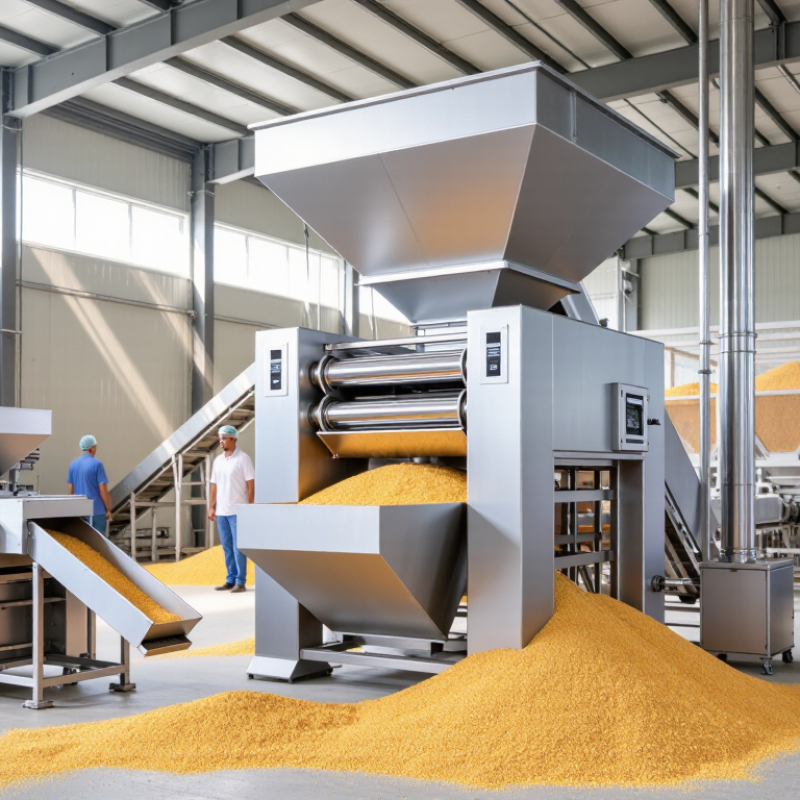
A maize flour mill converts cleaned kernels into flour through controlled cleaning, conditioning, grinding, and sifting. A typical dry-milling line may include screens, a destoner, a degerminator, mills, sifters, and conveyors. Screens remove stalks and light debris, while the destoner separates stones that could damage equipment. Conditioning adjusts grain moisture before processing. The degerminator separates much of the germ and outer layers, depending on the flour being made. Not every mill does.
Grinding machines reduce the maize to smaller particles. Hammer mills use fast-moving hammers; roller mills crush grain between rotating cylinders. Sifters then separate fine flour from larger particles, which may return for further grinding.
The final texture depends on screen openings, roller settings, grain moisture, and the maize itself. Real kernels vary. Operators need to check flour consistency during a run, rather than rely on one setting for every batch.
Dust extraction, guards, and regular inspection also matter: worn screens or loose belts can affect output and create avoidable hazards. Small details matter. A practical choice of mill depends on the desired flour, available power, and planned production rate.
When comparing maize flour mill machines, start with the maize you actually process. Grain moisture, kernel size, and cleanliness affect output and flour texture. Ask for the machine’s rated capacity, then check whether it applies to your grain and desired fineness. A figure measured under ideal conditions may not match a busy mill. Small details matter.
Examine the milling stages and adjustment options. A mill that can produce different particle sizes may suit varied customers, but changing settings should be practical for operators. Check which parts contact the grain, how they are cleaned, and how often screens, rollers, or hammers need inspection. Dust control and noise also matter in a small workroom. Not always obvious.
Compare power use against expected daily production, rather than judging motor size alone. Ask about spare-part availability, maintenance instructions, and the skills needed for routine repairs. If possible, test a sample batch and inspect the flour for consistency, heat, and unwanted coarse particles. A spreadsheet can still mislead; local grain and working conditions deserve a real trial. Allow room in the budget for installation and upkeep, not just the purchase price. A high-capacity machine may sit idle if supply or demand is limited.
Maize kernel composition provides useful context when comparing milling, sifting, and bran-separation capabilities.
Raw yellow maize per 100 g: carbohydrate 74.26 g, protein 9.42 g, and total fat 4.74 g. Dietary fibre (7.3 g) is included within total carbohydrate, so it is shown for reference and should not be added to the other values. These are food-composition figures, not machine performance ratings; compare mills separately by rated throughput, power use, extraction rate, and screen configuration. Source: USDA FoodData Central, raw yellow corn.
Ten maize flour mill machines for sale worldwide should be compared by crop condition, required output, and service access—not price alone. FAOSTAT records about 1.16 billion tonnes of maize produced globally in 2022. That scale does not mean every kernel becomes flour. Buyers should match equipment to local grain moisture, impurities, and the products customers actually want. Small details matter.
A practical ten-machine shortlist includes a pre-cleaner, destoner, dampener, degerminator, roller mill, hammer mill, plansifter, purifier, dust collector, and weighing-and-bagging machine. The first two remove light debris and stones before milling. Dampening helps prepare kernels, while a degerminator separates parts of the grain. Roller and hammer mills offer different grinding approaches; they are not always needed together. A plansifter sorts flour by particle size, and a purifier can improve separation. Dust collection supports a cleaner working area.
USDA’s Grain: World Markets and Trade reports track global maize supply and trade, useful context when estimating grain availability. Yet a forecast is not a guarantee of steady local supply.
One awkward truth: advertised capacity can look impressive, but real output depends on grain quality, operator skill, and maintenance. Ask suppliers for test results using maize similar to yours. Check spare-part access, screen sizes, cleaning needs, and power use before ordering. A bagging scale may seem minor, but inaccurate weights create costly problems over time.
Maize mill selection is a throughput-and-quality trade-off, not a race for the largest motor. USDA Foreign Agricultural Service’s Grain: World Markets and Trade (July 2024) estimated 2023/24 world maize production at about 1.23 billion tonnes. That scale does not dictate what one plant should process. A small hammer mill suits local batches; roller systems with cleaning, degermination, and sifting can deliver steadier commercial output and more uniform fractions. Compare rated kilograms per hour only when grain moisture, screen size, and extraction settings match. Otherwise, the number can mislead.
Power needs usually rise with throughput and finer grinding, but motor kilowatts alone do not predict cost per tonne. Idle time, worn hammers, and clogged screens matter too. Check a flour sample with a sieve test; a hand-feel check is only a clue. Codex Alimentarius CXS 154-1985 sets a 15% maximum moisture level for maize flour. It is a useful storage check, not proof of good milling. Ask suppliers for measured output, power draw, sieve results, and flour moisture from the same maize batch. Small detail, big difference.
Selecting a maize flour mill starts with the grain and the job, not the catalogue headline. The USDA Foreign Agricultural Service’s December 2024 Grain: World Markets and Trade report projected global corn production at about 1.22 billion tonnes for 2024/25. That scale says little about your site, though. Match rated capacity to local supply, operating hours, flour fineness, and available power. Ask whether the quoted throughput applies to your maize variety and moisture level. A neat specification sheet can still mislead.
Check the basics. Before buying, inspect the screens, rollers or plates, bearings, and dust-control setup. Ask for a trial using your own grain, then compare flour texture, output, and energy use. For storage, North Dakota State University Extension’s grain-drying guidance gives corn moisture targets based on storage duration and temperature; use its charts rather than assuming one number fits every climate. Wet grain can cause uneven feeding and spoilage, while overly dry grain may increase breakage. Small differences matter.
Build maintenance into the purchase. Keep a log of operating hours, vibration, bearing temperature, and screen changes. Clean flour residue from contact surfaces after shutdown, and isolate power before opening guards. Follow the maker’s service intervals, but inspect sooner if noise or heat changes. Replace worn parts before they damage adjacent components. It sounds obvious; busy mills still miss it. Record downtime and flour yield each week, then question any sudden change instead of adjusting settings by guesswork.
A practical comparison of common equipment classes used in maize flour processing. Select equipment according to the required product, raw grain condition, target throughput, local power supply, food-safety requirements, and available service support.
| No. | Machine | Main Function | Selection Checks | Routine Maintenance |
|---|---|---|---|---|
| 1 | Vibrating Grain Cleaner | Removes coarse and fine impurities, such as stalk fragments, dust, and undersized material, using screens and airflow. | Check screen sizes, screen area, airflow adjustment, dust-control connections, and rated throughput against the full line. | Clean screens and aspiration passages regularly. Inspect screen condition, fasteners, bearings, and vibration components; replace damaged screens. |
| 2 | Destoner | Separates stones and other dense particles from cleaned maize, helping protect downstream equipment. | Confirm suitability for the grain’s size and moisture, adjustable airflow and deck settings, access for cleaning, and dust extraction needs. | Remove collected stones and dust. Keep the deck and air passages clear, and inspect the deck surface, fan, bearings, and vibration mounts. |
| 3 | Magnetic Separator | Captures ferrous metal particles from the grain stream before milling. | Check installation location, product-flow coverage, magnet accessibility, cleaning method, and compatibility with the required food-safety controls. | Inspect and clean the magnetic surfaces at a documented frequency. Check for damage, corrosion, or loose components and record findings. |
| 4 | Maize Dampener or Conditioner | Adds a controlled amount of water to maize to prepare it for a specified milling process. | Look for adjustable water dosing, even mixing, adequate conditioning time, cleanable contact surfaces, and controls suited to the target product. | Clean water lines, nozzles, and the mixing chamber. Check dosing accuracy, seals, and moving parts; prevent standing water and residue buildup. |
| 5 | Maize Degerminator | Separates portions of the germ and bran from the maize kernel for processes that require degerminated meal or flour. | Match the machine to the intended product and upstream conditioning. Check adjustment range, expected separation quality, wear-part availability, and access for inspection. | Remove product deposits and inspect working surfaces, screens, belts, and bearings. Replace worn parts as specified by the equipment supplier. |
| 6 | Roller Mill | Reduces maize particles between rotating rolls; commonly used where controlled particle size and staged milling are required. | Check roll configuration, adjustment range, feeding consistency, motor and electrical requirements, guarding, and the availability of roll servicing. | Keep rolls and feed passages clean. Inspect roll surfaces, alignment, bearings, drive belts, and guards; follow the supplier’s instructions for roll dressing or replacement. |
| 7 | Hammer Mill | Grinds maize by impact and is often used for meal or flour production where a screen controls the discharged particle size. | Confirm screen options, target fineness, feed rate, motor supply, dust collection, noise controls, and suitability for the intended product. | Check hammers, screen, rotor, bearings, and fasteners for wear or damage. Clean safely after isolation and replace worn components in balanced sets as directed. |
| 8 | Plansifter or Flour Sifter | Separates milled material by particle size, returning larger particles for further reduction when the process is designed for recirculation. | Check the number and arrangement of sieve decks, mesh options, required flour grades, access for screen changes, and conveying connections. | Brush or vacuum sieves using the approved cleaning method. Inspect mesh, seals, tension, drive components, and product-contact surfaces for damage or buildup. |
| 9 | Air Classifier or Aspiration System | Uses controlled airflow to remove light bran and dust or to separate fractions, depending on the mill layout. | Assess airflow control, collection equipment, dust-management requirements, product losses, and compatibility with the plant’s ventilation system. | Clean ducts, filters, and collection points. Inspect fans, belts, seals, and filter condition; check for leaks and maintain dust-control equipment as specified. |
| 10 | Flour Packing and Weighing Machine | Measures and fills flour into bags or other suitable containers for storage and distribution. | Choose a format compatible with the intended package, required weighing range, bag material, sealing method, cleaning needs, and local electrical supply. | Clean product-contact parts and weighing components. Verify weighing accuracy, inspect seals and sensors, and replace worn filling or sealing parts. |
How to select: Define whether the target product is whole-maize meal, sifted flour, or degerminated flour before choosing the process layout. Ask suppliers for a process flow, capacity basis, power requirements, included accessories, installation requirements, and maintenance documentation. Maintenance note: Cleaning and inspection intervals depend on operating hours, grain condition, and machine design; follow the equipment manual, isolate power before servicing, and keep records of inspections and replacements.
Join our mailing list to receive the latest news and updates from our team.