
Top 10 Trackless Transfer Cart Manufacturers in China

Moving a heavy die across a factory floor can look simple until the route changes, the load shifts, or production space gets tight. A Trackless Transfer Cart offers flexible, rail-free movement for materials between workstations, warehouses, and assembly areas. But the right model depends on more than its advertised capacity. Floor condition, turning space, travel distance, charging arrangements, and operator workflow all matter.

This guide to the Top 10 Trackless Transfer Cart Manufacturers in China introduces suppliers for buyers comparing equipment and engineering support. It considers practical factors such as load range, drive and steering options, control systems, customization, safety features, and after-sales service. These details help frame useful questions before requesting a quotation or arranging a site assessment. A polished catalog is not proof of a dependable fit. Ask for clear specifications, relevant project references, and realistic delivery and support information. Details matter. Manufacturer capabilities and product configurations can change, so verify current information directly with each supplier. A shortlist is only a starting point. Your floor, load, and daily operating pattern should shape the final choice.
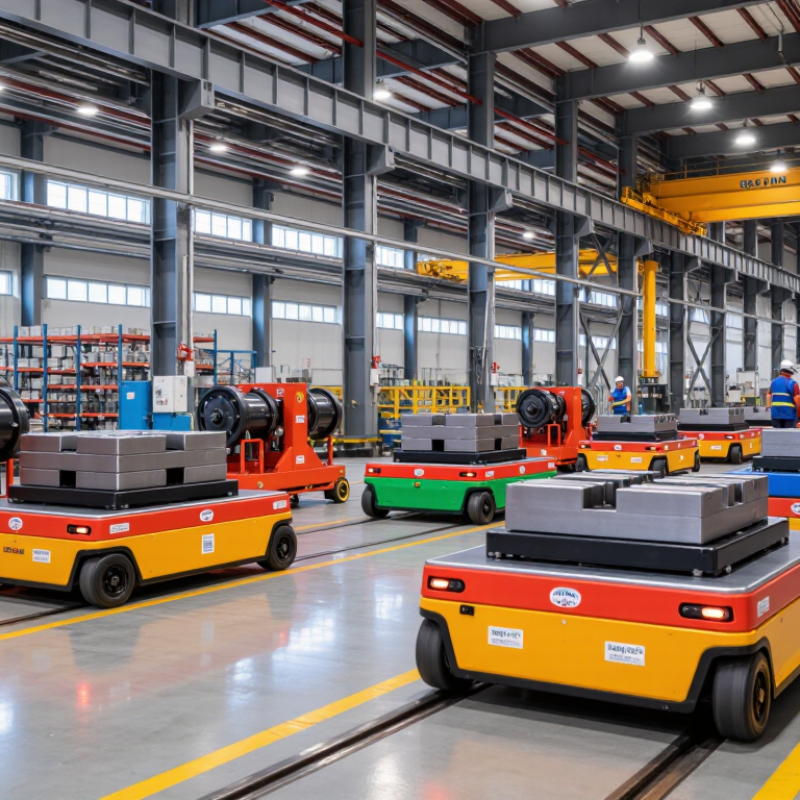
Top 10 Trackless Transfer Cart Manufacturers in China

What Is a Trackless Transfer Cart?

A trackless transfer cart is a powered, low-profile platform that moves materials across a factory floor without fixed rails. Operators may steer it manually, or it may follow a programmed route using sensors and onboard controls. A steel frame, battery pack, wheels, and emergency-stop controls are common features. Some carts carry heavy dies; others move crates between workstations. No rails. That matters when layouts change, though floor condition and turning space still limit performance.

Automation is expanding, but figures need careful interpretation. The International Federation of Robotics reported 541,302 industrial robot installations worldwide in 2023. That figure describes robots, not transfer carts, but it signals growing investment in automated production. ISO 3691-4:2020 covers safety requirements for driverless industrial trucks and their systems. Buyers should check load capacity, travel speed, stopping distance, charging needs, and how the cart behaves around people. A narrow aisle can expose poor turning assumptions.

Tips: Measure the heaviest load and tightest turn on site. Check floor joints and slopes, too. A cart that works on paper may still struggle beside a busy assembly line.

How Trackless Transfer Carts Work and Where They Are Used

A trackless transfer cart moves materials without rails embedded in the floor. Its wheels, drive motors, and steering system guide it along a chosen route. Operators may control it by pendant, remote, or onboard interface, depending on the model. Some units follow programmed paths and use sensors to detect obstacles. Others rely more heavily on operator guidance. The difference matters: automation can improve repeatability, but it still needs sensible route planning and supervision.

In a factory, a cart might carry steel parts between machining stations, stopping beside a workbench for loading. In warehouses, it can move pallets across aisles or connect production zones. A clean floor helps. Real floors are rarely perfect. Dust, joints, slopes, and tight turns can affect traction, stopping distance, and navigation. Keep people out of the travel path, and confirm that the floor can support the cart and its load.

Choosing a suitable cart means checking more than rated capacity. Consider load dimensions, turning space, travel distance, battery duty cycle, and loading height. A cart that handles a heavy load on paper may struggle on a narrow route or uneven surface. This is easy to overlook. A site trial with the actual load and route can reveal practical issues before regular operation begins.

Top 10 Trackless Transfer Cart Manufacturers in China - How Trackless Transfer Carts Work and Where They Are Used

Company names are intentionally omitted. The ten rows below summarize practical capabilities and application factors to compare when evaluating manufacturers; they are not a ranked list of specific companies.

No. Capability or Application How the Cart Works Common Use What to Check with a Manufacturer
1 Load capacity and platform design A powered platform carries a load across a prepared floor without being guided by rails. Moving dies, machinery, steel components, or production materials. Rated payload, load distribution, platform dimensions, floor condition, and required safety factor.
2 Battery-electric drive An onboard battery supplies electric drive motors; charging is needed according to the duty cycle. Indoor production and warehouse routes where emissions at the point of use should be avoided. Battery chemistry, charging time, operating time, charging arrangements, and battery-service access.
3 Steering and maneuverability Steerable wheels let the vehicle turn and follow a route without fixed floor rails. Facilities with changing routes, intersections, or limited turning space. Turning radius, steering mode, aisle width, floor obstacles, and control method.
4 Manual or remote operation An operator controls movement using onboard controls or a remote device, depending on the configuration. Intermittent transfers and work areas where an operator supervises each trip. Control range, visibility, emergency-stop access, operator training, and communication reliability.
5 Automated navigation Sensors and a navigation or guidance system help the cart follow programmed routes and respond to its surroundings. Repeated material movements between production, storage, and dispatch areas. Navigation method, route changes, obstacle detection, traffic coordination, and integration needs.
6 Manufacturing-line transfers The cart carries parts or assemblies between designated process stations. Automotive, machinery, and general manufacturing operations. Pickup and drop-off alignment, line takt requirements, docking method, and interaction with workers.
7 Warehouse and logistics movement The vehicle moves pallets, containers, or other loads along internal facility routes. Warehouses, distribution areas, and factory storage zones. Load-transfer interface, aisle and door clearances, route traffic, and warehouse-system integration.
8 Heavy or oversized equipment handling A purpose-designed chassis and platform distribute the load across the wheels and floor. Moving large assemblies, industrial equipment, or heavy components within a facility. Load center, wheel loading, floor-bearing capacity, braking, stability, and turning clearance.
9 Custom transfer interfaces The platform can be configured with suitable fixtures or transfer mechanisms for a specific load and process. Applications requiring repeatable positioning or a specialized loading arrangement. Fixture design, load restraint, interface height, positioning tolerance, and maintenance access.
10 Safety and service support Braking, warning devices, emergency stops, and other safeguards help manage movement risks. All workplaces where carts share space with people, equipment, or other vehicles. Risk assessment, applicable local requirements, inspection schedule, spare parts, and service response.

Specifications vary by design and operating conditions. Confirm payload, speed, gradeability, floor requirements, safety features, and duty cycle with the supplier for the intended application.

What to Consider When Comparing Chinese Manufacturers

Comparing Chinese trackless transfer cart manufacturers takes more than checking payload figures and quoted prices. Ask how rated capacity was tested and whether it includes the cart’s own weight. A cart carrying steel coils across a dusty workshop faces different demands from one moving small parts indoors. Request a route-specific proposal. Include floor joints, turning radius, gradients, and the narrowest aisle. Small details matter.

Review engineering documents, battery options, charging time, control methods, and emergency-stop behavior. Ask for references from sites with similar loads and operating hours, then verify what support was actually delivered. A factory visit or live demonstration can reveal weld quality, cable protection, and stopping performance under load. Check spare-parts availability and response times in writing; “fast service” is hard to assess without clear terms. Don’t rely on a polished brochure alone. Test figures may reflect different floors or duty cycles, so compare the conditions carefully. I’d still allow for some uncertainty: real workshop routes often expose issues that a specification sheet misses.

Top 10 Trackless Transfer Cart Manufacturers in China

China’s trackless transfer cart manufacturers serve factories, warehouses, and heavy-equipment workshops. Their carts move materials without fixed rails, using wheels, onboard controls, and rechargeable power systems. A useful top-ten comparison should look beyond catalog photos. Check rated load, platform dimensions, turning space, floor conditions, and travel distance. A cart carrying steel coils may need different wheels and braking than one moving boxed parts. Details matter.

Tips: Ask for a layout review and a written load calculation. Confirm battery runtime under your actual duty cycle, not just an ideal test. Request maintenance intervals and spare-part availability. If possible, inspect a working unit. A polished demo is not the whole story.

Manufacturers differ in engineering support, customization, testing, and delivery follow-up. Ask how the cart handles ramps, narrow aisles, emergency stops, and uneven joints. Request drawings, inspection records, and clear acceptance criteria before ordering. Compare warranty terms carefully; vague promises can become a headache later. Some specifications may look impressive but still need verification on your floor. I would not rank suppliers by price alone. A sensible shortlist balances safety features, service response, documented performance, and fit for the job.

Top 10 Trackless Transfer Cart Manufacturers in China

Typical nominal payload classes for trackless transfer carts

The chart shows representative payload classes in tonnes, not company-specific product data, market share, or a manufacturer ranking. Actual rated capacity depends on the cart design and operating requirements.

How to Evaluate a Manufacturer for Your Project

How to Evaluate a Manufacturer for Your Project

When comparing trackless transfer cart manufacturers in China, begin with your site conditions, not a catalogue photo. Record the load weight, dimensions, travel distance, floor condition, and required operating hours. A cart carrying steel coils needs different support and braking than one moving bins indoors. Ask the manufacturer to explain how its proposed capacity accounts for load distribution and frequent starts. Request a written specification, including speed, turning radius, charging time, and safety features. Check the details.

Assess whether the cart fits your actual route. Ask for layout drawings and confirm how it handles narrow aisles, ramps, floor joints, and shared pedestrian zones. Clarify whether navigation depends on magnetic markers, optical guidance, or another system. Each option has limits. If possible, arrange a loaded demonstration using a comparable floor surface. A brief test can reveal turning delays or stopping distances that brochures miss.

Review engineering support, quality checks, spare-part availability, and response times before ordering. Ask how the manufacturer tests brakes, batteries, and control systems, and request relevant inspection records. Speak with customers who use similar equipment, not only references chosen for a presentation. A polished proposal is useful, but it is not proof of reliable service. No checklist catches every site-specific surprise. Leave time for commissioning adjustments; in practice, even a well-designed cart may need route or speed changes after installation.

Subscribe To Our Newsletter

Join our mailing list to receive the latest news and updates from our team.

You have Successfully Subscribed!