
Water Based Urethane is a waterborne polyurethane finish used to protect wood, concrete, and other suitable surfaces. It forms a clear or pigmented film as it dries. In a home, that film might cover a maple tabletop, a hardwood floor, or a concrete workshop surface. The exact product matters. Formulas differ in hardness, sheen, drying time, and resistance to wear.
A useful technical perspective comes from Dr. Charles A. Schollenberger, a polyurethane pioneer: “A coating performs best when its chemistry matches the surface and the conditions it will face.” This is an editorial paraphrase of a general coatings principle, not a verified verbatim quotation from Dr. Schollenberger. That distinction matters; expert names should not be used to imply an interview or endorsement that did not occur.
Water Based Urethane is often chosen for lower odor and easier cleanup with water before the coating cures. It can also dry relatively quickly, though ventilation and drying conditions still affect results. Check the label. Some products suit indoor floors; others are designed for different uses. Surface preparation counts, too. Dust left behind can show through a smooth finish, and an uneven coat may dry patchily. Small details, sometimes overlooked. This article will explain what the material is, how it works, and where it is commonly used. It will also consider its limits, because “water-based” does not mean suitable for every surface or every job. A test patch is modest, but sensible.
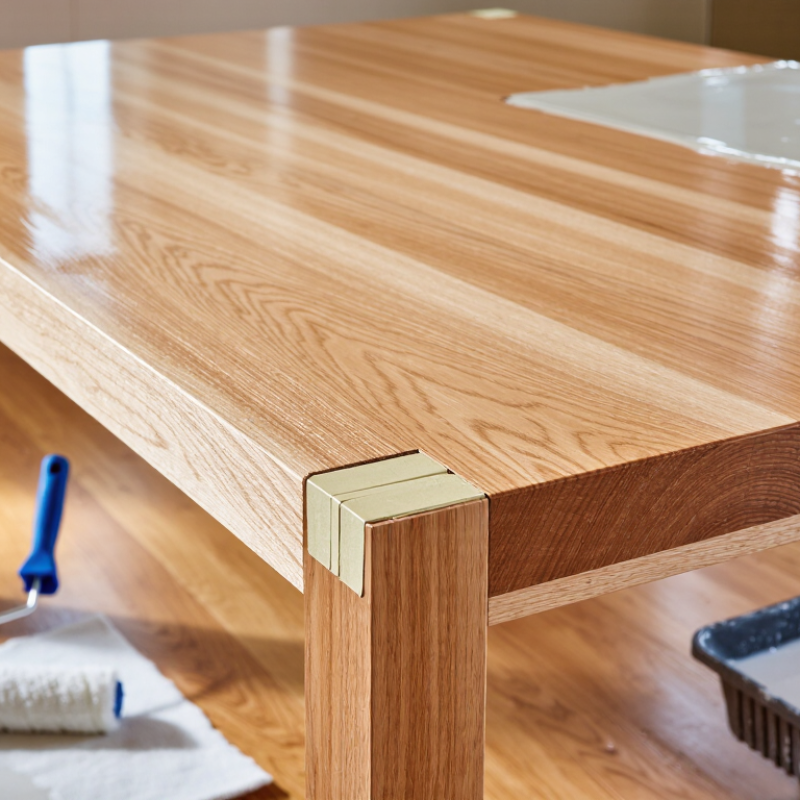
Water-based urethane is a coating made from urethane or polyurethane polymers dispersed in water. It forms a clear or colored protective film on surfaces such as wood floors, furniture, and cabinets. The water carries the polymer particles while the coating is wet. As it dries, water evaporates and the particles join into a continuous layer. That is the basic idea.
A typical formula may also contain coalescing agents, which help particles form a smooth film, and additives that control flow, foam, drying, or sheen. Some products include a crosslinker to improve resistance to wear or chemicals; others rely on a single component. There is no single recipe. The balance affects application, drying time, hardness, and how the finish feels underfoot. Small details matter.
Water-based does not mean chemical-free, and low odor does not prove that ventilation is unnecessary. Formulas differ, so the product’s technical instructions are more useful than broad assumptions. Temperature, humidity, and coat thickness can change drying and film formation. A cool room may leave a finish tacky longer than expected. That can be frustrating, and it is easy to blame the coating too soon. A thin test coat on a hidden area can reveal how the surface and finish behave together.
Water-based urethane turns from a milky liquid into a clear protective film as water leaves the coating. As droplets evaporate, polymer particles move closer, deform, and knit together across the surface. Some formulas also use crosslinking chemistry to improve resistance to water, abrasion, and household cleaners. The exact process depends on the product, temperature, humidity, and film thickness.
Air movement helps, but a strong draft can dry the surface unevenly. A cool room or heavy coat may slow water release, leaving the film soft beneath a dry-feeling surface. That is why “dry to touch” does not mean fully cured. Follow the label’s recoat and cure times, and test an inconspicuous area when the wood or room conditions are unfamiliar. Slightly frustrating, but worth it.
Water-based does not mean zero VOC. The U.S. EPA’s Architectural Coatings rule sets a 100 g/L VOC limit for floor coatings (40 CFR §59.203); that benchmark applies to the category, not every product or jurisdiction. VOC content also does not predict cure speed or film strength. For a reliable finish, apply thin, even coats and allow air to circulate without blowing dust onto the wet surface. A door edge or tabletop corner can reveal problems before the whole piece is coated.
Water-based urethane coatings use water as the main carrier for dispersed resin, rather than relying primarily on strong solvents. As the water evaporates, the coating forms a protective film. Common options differ in how they cure, how much wear they tolerate, and the surfaces they suit.
One-component coatings come ready to apply and are often chosen for furniture, trim, and residential floors. They are simpler to handle, but may offer less chemical or abrasion resistance than two-component systems. Two-component coatings combine a base with a separate hardener. Once mixed, they can provide a tougher film for busy floors or work surfaces. Pot life matters: leftover mixed coating may not remain usable for long. Read the product instructions carefully.
Acrylic-urethane hybrids blend acrylic resins with urethane properties. They are often used where color retention and a durable finish both matter, such as painted cabinetry or interior woodwork. Aliphatic water-based urethanes generally resist yellowing better than aromatic types, making them useful as clear topcoats. Still, “water-based” does not mean odor-free or instantly safe to touch. Drying time changes with airflow, humidity, and temperature. No coating is magic; surface preparation can matter as much as the formulation. A small test patch is worthwhile.
Water-based urethane is widely used to protect interior wood floors, where it helps resist everyday scuffs, spills, and wear. It also suits cabinets, furniture, doors, stair treads, and trim. A clear finish can show the grain of oak or maple without adding much color. In a busy hallway, that matters: shoes, grit, and chair legs can quickly mark an unprotected surface. The finish is often chosen for its relatively low odor and faster drying compared with many solvent-based options. Still, “water-based” does not mean odor-free or instantly ready for heavy use.
It can also be used on some concrete or previously finished surfaces, but only when the product label lists that material and the surface is properly prepared. Formulas differ. A coating intended for indoor furniture may not withstand outdoor sun, rain, or temperature changes. For best results, apply thin, even coats to a clean, dry surface, and allow adequate time between coats. Full curing may take longer than the surface’s dry-to-touch time. That detail is easy to overlook.
Tips: Test the finish on a hidden area first; it may slightly change the wood’s appearance. Lightly sand between coats if the instructions recommend it, and remove dust with a clean cloth. Keep the room ventilated while applying and drying. Don’t rush the final cure. A beautiful finish can still scratch if furniture goes back too soon.
What Is Water Based Urethane and What Is It Used For?
Key Benefits and Limitations of Water-Based Urethane Coatings
Water-based urethane is a protective coating made with urethane resins dispersed in water. As the water evaporates, the coating forms a clear film. It is commonly used on hardwood floors, furniture, cabinets, and trim. Many formulas have less odor and lower volatile organic compound emissions than traditional solvent-based coatings, though exact levels vary. It often dries quickly and tends to keep light-colored wood from becoming noticeably amber. That can help pale maple stay pale. Still, “clear” does not mean invisible; sheen and grain can look different after application.
The trade-offs matter. A fast-drying finish may leave little time to smooth brush marks, and cool, humid rooms can slow drying. Some surfaces need careful sanding or compatible primer for reliable adhesion. The film may feel dry before it has fully cured, so early heavy use can cause scratches or dents. Performance also depends on product formulation, surface preparation, and the number of coats. I would not assume every water-based coating suits every floor.
Tips: Test the finish on an inconspicuous spot first, since color and sheen can surprise you. Apply thin, even coats with good ventilation, and follow the label’s drying and recoating times. Avoid rushing the final cure. A few extra days can matter.
| Topic | What It Means | Practical Uses or Considerations |
|---|---|---|
| Definition | A coating in which water is the primary carrier for urethane-based polymer particles or resin. As the coating dries, water evaporates and the film forms; some products also rely on chemical curing. | Used as a protective finish on suitable wood, concrete, metal, and other prepared surfaces, depending on the product formulation. |
| Common applications | Available in formulations designed for interior or exterior use and for different substrates. | Examples include wood floors, furniture, cabinets, doors, trim, and certain concrete or metal surfaces. Always confirm that the product label lists the intended surface and location. |
| Lower odor and VOC potential | Many water-based products have less odor and lower volatile organic compound (VOC) content than comparable conventional solvent-based coatings, but levels vary by formulation. | Can be a practical option for indoor projects. Check the product’s safety data sheet, VOC information, ventilation guidance, and local requirements rather than assuming all products are low-VOC. |
| Faster drying | Water-based coatings often become touch-dry relatively quickly under suitable temperature, humidity, and airflow conditions. | Shorter drying times can help with recoating and project scheduling. Drying time is not the same as full cure; follow the label before heavy use or placing rugs and furniture. |
| Easy tool cleanup | Tools can generally be cleaned with water while the coating is still wet. | Rinse brushes and rollers promptly. Once the film has dried or cured, water alone may not remove it. |
| Appearance and clarity | Many clear water-based urethanes have a relatively low-amber appearance compared with some oil-based finishes, though sheen and color effects vary. | Useful when the goal is to preserve a lighter wood appearance. Test on a hidden area because the substrate, stain, and coating can affect the final color. |
| Durability | Performance depends on resin chemistry, number of coats, film thickness, surface preparation, and curing conditions. | Products are available for a range of wear requirements. Select a floor-rated or otherwise application-specific coating where abrasion, moisture, or frequent cleaning is expected. |
| Surface preparation | Cleanliness, dryness, and compatibility are essential for adhesion and a uniform finish. | Remove dirt, grease, wax, and loose material; sand where directed; and use a compatible primer or sealer if specified. Test adhesion and appearance on an inconspicuous area. |
| Application sensitivity | Water-based coatings can show lap marks, raised wood grain, or uneven sheen if applied too heavily or allowed to dry unevenly. | Apply the recommended thin, even coats and maintain a wet edge. Sand between coats only as directed by the manufacturer. |
| Temperature and humidity | Cool conditions, high humidity, poor airflow, or unsuitable surface temperatures can slow drying and affect film formation. | Follow the product’s application range and allow adequate ventilation. Avoid recoating until the previous coat meets the stated recoat requirements. |
| Limitations | Not every water-based urethane is suitable for every substrate, exposure level, or chemical environment. Some formulations may require more coats or have different appearance and wear characteristics than alternatives. | Do not use it as a waterproofing solution unless the product is specifically rated for that purpose. Check exterior suitability, water exposure limits, chemical resistance, and maintenance instructions. |
| Best selection practice | Choose by substrate, indoor or outdoor exposure, expected traffic, desired sheen, and applicable safety requirements. | Read the technical data sheet and label for coverage, coat count, recoat time, full-cure time, surface preparation, and cleanup directions. |
Join our mailing list to receive the latest news and updates from our team.