
Chenglong Emergency Vehicle is designed to move people, equipment, and coordinated assistance when ordinary transport is not enough. Its potential roles include ambulance support, fire-response logistics, mobile command, rescue transport, and disaster-relief operations. The exact function depends on the body design, medical equipment, payload, and local service requirements.
The need is measurable. The World Health Organization’s Global Status Report on Road Safety 2023 recorded approximately 1.19 million annual road deaths worldwide. In emergencies, minutes matter. A vehicle must reach difficult locations, protect its crew, and keep essential systems operating under pressure. WHO’s Emergency Care Systems framework also emphasizes timely access, trained personnel, and reliable transport. Dr Tedros Adhanom Ghebreyesus, WHO Director-General, stated, “Emergency care is a critical component of universal health coverage and the Sustainable Development Goals.”
That principle gives Chenglong Emergency Vehicle a practical meaning beyond its name. It is not merely a truck with warning lights. It can become a mobile treatment space, equipment carrier, or coordination platform. Strong chassis construction, stable handling, accessible storage, and maintainable components may improve field performance. However, specifications alone do not prove real emergency readiness. That is an important limitation.
Operators should examine response routes, climate, road conditions, crew training, maintenance access, and equipment compatibility. Reports from WHO and the International Organization for Standardization show why system reliability matters. A vehicle can look capable in a brochure yet perform differently on flooded roads or crowded streets. Therefore, this article explores what Chenglong Emergency Vehicle is used for, where it fits operationally, and which details deserve careful verification before purchase or deployment.
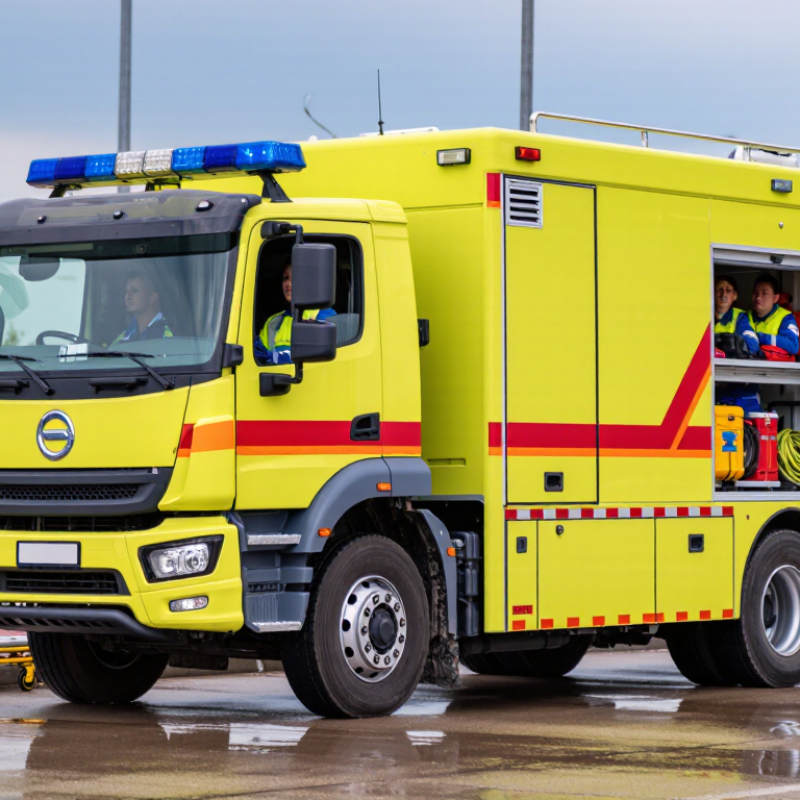
An emergency vehicle is a purpose-built unit designed to move people, equipment, or medical supplies during urgent incidents. It may serve as an ambulance, rescue truck, command vehicle, or mobile support platform. Unlike a standard commercial truck, it usually combines reinforced storage, warning systems, communication equipment, and specialized interior space.
Its value depends on response speed and operational reliability. The World Health Organization reported about 1.19 million annual road deaths in its Global Status Report on Road Safety 2023. This figure explains why rapid medical access matters, especially after collisions or disasters. Inside the vehicle, crews may find stretcher mounts, oxygen holders, first-aid cabinets, scene lighting, and washable surfaces. Small details matter. A loose cabinet can delay treatment.
Fire and rescue demand is also substantial. The National Fire Protection Association reported that medical aid and rescue calls represented about 64% of U.S. fire department calls in 2020. Therefore, an emergency vehicle must support more than transportation. It should provide stable equipment access, clear crew movement, and dependable power for radios or medical devices. Field experience shows that poor storage planning creates avoidable delays. That point is easy to overlook. Buyers should examine payload, suspension, cooling, maintenance access, and electrical redundancy before choosing a configuration. No vehicle is perfect, and real emergencies often expose weaknesses that showroom inspections miss.
Emergency vehicles are built for controlled speed, safe access, and reliable work under pressure. A manufacturer in this field may produce several vehicle types, each serving a different operational need. The right choice depends on terrain, crew size, equipment load, and local response plans.
Fire engines carry pumps, hoses, ladders, and water tanks for structural and roadside fires. Some models use compact bodies for narrow urban streets. Others provide larger tanks for rural areas with limited water access. Ambulances are designed for patient transport and basic medical care. Their interiors may include stretchers, oxygen systems, storage cabinets, and shock-absorbing mounts. Every detail matters.
Rescue trucks support road accidents, floods, and difficult recovery work. They can carry cutting tools, lifting equipment, lighting towers, and portable generators. Water tankers extend firefighting capacity when hydrants are unavailable. Command vehicles may provide radios, workstations, and coordination space at large incidents. These vehicles are not interchangeable. A tanker cannot replace a medical unit, and a small rescue truck may struggle with heavy equipment.
In real operations, specifications on paper are never the whole story. Turning radius, maintenance access, crew training, and road conditions can change performance. No vehicle suits every incident. Careful planning still matters more than impressive equipment.
| Emergency Vehicle Type | Primary Use | Typical Configuration | Main Equipment | Common Operating Environment |
|---|---|---|---|---|
| Firefighting Truck | Suppresses structural, industrial, roadside and vegetation fires. | Crew cab with a water tank, pump system and hose storage. | Fire pump, water tank, hoses, nozzles, ladders, breathing-apparatus storage and warning lights. | Urban areas, industrial sites, highways and rural communities. |
| Water Tender | Delivers large quantities of water where hydrants or fixed water supplies are limited. | Large-capacity tank mounted on a heavy-duty chassis, often with a transfer pump. | Water tank, pump, fill connections, discharge outlets and hose reels. | Rural fire zones, construction areas, remote facilities and disaster sites. |
| Rescue Truck | Performs vehicle extrication, technical rescue and emergency recovery operations. | Enclosed equipment body with organized compartments and a reinforced work area. | Hydraulic cutters, spreaders, lifting tools, winches, jacks, ropes and stabilization equipment. | Road crashes, collapsed structures, tunnels, bridges and confined spaces. |
| Emergency Ambulance | Provides first aid, patient stabilization and transport to medical facilities. | Medical compartment with stretcher access, seating and storage cabinets. | Stretcher, oxygen system, defibrillator, patient monitor, suction unit and first-aid supplies. | Urban response, highways, public events and inter-facility transport. |
| Command and Communication Vehicle | Coordinates personnel, vehicles and resources during large or complex incidents. | Mobile office with workstations, communications equipment and incident-planning space. | Radios, satellite communications, mapping systems, power supply and incident-management displays. | Natural disasters, major fires, public emergencies and extended operations. |
| Hazardous Materials Response Vehicle | Identifies, contains and supports the cleanup of chemical or hazardous-substance incidents. | Specialized body with segregated storage for protective and containment equipment. | Detection instruments, protective suits, spill-control materials, decontamination equipment and sealed containers. | Industrial plants, laboratories, transport routes and storage facilities. |
| Mobile Lighting Vehicle | Provides temporary illumination for night-time rescue, firefighting and recovery work. | Generator-equipped vehicle with a deployable mast and lighting fixtures. | Generator, telescopic light mast, floodlights, power outlets and cable reels. | Night incidents, disaster areas, road closures and remote work sites. |
| Aerial Ladder or Platform Truck | Reaches elevated floors for rescue, firefighting and exterior building operations. | Heavy-duty chassis fitted with a hydraulic ladder or elevated work platform. | Telescopic ladder or platform, waterway, basket controls, stabilizers and rescue access equipment. | High-rise buildings, warehouses, industrial facilities and dense urban areas. |
| Disaster Relief and Utility Vehicle | Transports supplies, tools and personnel for emergency recovery and humanitarian support. | Cargo body, enclosed service compartment or modular equipment platform. | Portable pumps, generators, tools, food and water containers, tents and emergency supplies. | Floods, earthquakes, storms, remote communities and post-disaster areas. |
Emergency vehicle specifications vary according to local regulations, rescue-agency requirements, payload, terrain and the intended mission.
Emergency vehicles are built for tasks where minutes, visibility, and equipment access matter. Their main role is to reach an incident quickly and support trained responders on site. Medical units carry stretchers, oxygen, monitoring equipment, first-aid supplies, and protective gear. Crews can stabilize injured people before transport, especially when hospitals are far away.
These vehicles also support fire response, rescue work, roadside assistance, and disaster operations. A larger unit may carry water tanks, pumps, lighting towers, generators, ropes, and cutting tools. Strong storage systems help crews find equipment without wasting precious time. Bright warning lights and clear markings improve visibility near traffic, at night, or in heavy rain. Some vehicles provide mobile command space, allowing teams to coordinate radio messages, maps, and field reports from one location.
Practical use is not always perfect. A heavy vehicle can struggle on narrow streets, soft ground, or crowded parking areas. That limitation is easy to overlook. Regular inspections matter, including tire pressure, battery condition, pump performance, medical supplies, and communication equipment. Crews must also practice loading procedures because a poorly secured stretcher can create unnecessary risk. Vehicle design supports emergency work, but training and coordination decide how well that support becomes real assistance. Even a well-equipped unit may arrive late when routes are blocked or dispatch details are incomplete. Better planning remains necessary.
Emergency vehicles serve as mobile workstations during fires, traffic crashes, floods, and medical incidents. Their deployment begins with a verified call, location data, and an initial risk assessment. Dispatchers then select vehicles according to crew skills, equipment, distance, and road access. A medical unit may carry oxygen, monitors, stretchers, and trauma supplies. A rescue unit may bring cutting tools, lighting, pumps, or protective equipment.
During an emergency, crews usually approach through the safest available route. The first arriving team secures the scene and reports changing conditions. Other vehicles may stage nearby instead of entering immediately. This keeps access clear for ambulances and creates space for evacuation. Commanders coordinate radio traffic, assign sectors, and request extra support when conditions worsen. At night, portable lights can turn a dark roadside into a controlled working area.
Plans are rarely perfect. A flooded street, weak signal, or curious crowd can delay the response. Crews must reassess often, even after receiving accurate information. One small detail can change the whole deployment.
Tips: Keep emergency lanes clear and follow official instructions. Share the exact location, nearby landmarks, and visible hazards. Do not approach operating vehicles without permission. Leave room for crews to turn, unload equipment, and move injured people safely. Reliable communication helps, but field judgment still matters.
Emergency vehicles are deployed according to the incident type and operational need. Fire apparatus support fire suppression, rescue, hazardous-material response, and medical first response. Ambulances focus on patient care and transport, while rescue, command, and hazardous-material units provide specialized capabilities. The values show the number of core emergency functions commonly associated with each vehicle category, not incident-frequency statistics.
An emergency vehicle is used to move trained crews, medical supplies, and rescue equipment quickly to urgent scenes. It may support road accidents, severe weather incidents, industrial injuries, or community medical calls. Its design must balance speed, safety, and working space. Visibility matters. High-intensity warning lights, reflective markings, and a clear siren help other drivers notice the vehicle sooner. These systems should remain effective in rain, darkness, and heavy traffic.
Inside, organized storage supports faster decisions. Medical bags, oxygen cylinders, fire extinguishers, and protective clothing need fixed positions. Secure compartments prevent equipment from shifting during sudden braking. A wide side door and rear access make loading easier in narrow streets. Slip-resistant flooring also helps responders work safely when the ground is wet.
Some vehicles include adjustable lighting, climate control, radio communication, and auxiliary power for equipment used away from hospitals.
The chassis and suspension must handle extra weight without reducing stability. Reliable brakes, strong tires, and regular inspections are essential for repeated emergency operation. In field use, small details matter, such as grab handles near the entrance and washable interior panels. No layout is perfect. A large storage module may improve capacity but restrict movement inside. Operators should review real call records and adjust the arrangement over time. Local regulations, crew training, and maintenance schedules must guide every modification.
Join our mailing list to receive the latest news and updates from our team.