What Is a Meditation Drum and How Does It Work?
A Meditation Drum is a percussion instrument used to support focused listening, steady breathing, or quiet reflection. It may be a hand drum, frame drum, or tongue drum, and each produces a distinct sound. A soft palm strike can create a low, rounded beat; a mallet may draw out a brighter, ringing tone. The instrument itself does not cause meditation or guarantee calm. Its sound can simply give attention something steady to notice.
How does it work? A drumhead or resonant body vibrates when struck, moving air and producing sound. In a quiet room, that sound may linger for several seconds, depending on the drum’s design and how firmly it is played. A slow, even rhythm can help some people settle into a breathing pattern. Others may find the beat distracting. That difference matters. There is no single rhythm that works for everyone.
To try one, sit comfortably and play a gentle beat, leaving space between each strike. Notice the sound’s beginning, its fading, and any tension in your hands or shoulders. You might use a timer, or stop when the practice feels complete. Keep the volume comfortable, especially in a small room, and avoid striking harder just to make the sound feel more powerful. The drum is a tool, not a test. Some sessions may feel peaceful; others may feel ordinary or restless. That is worth noticing, too.
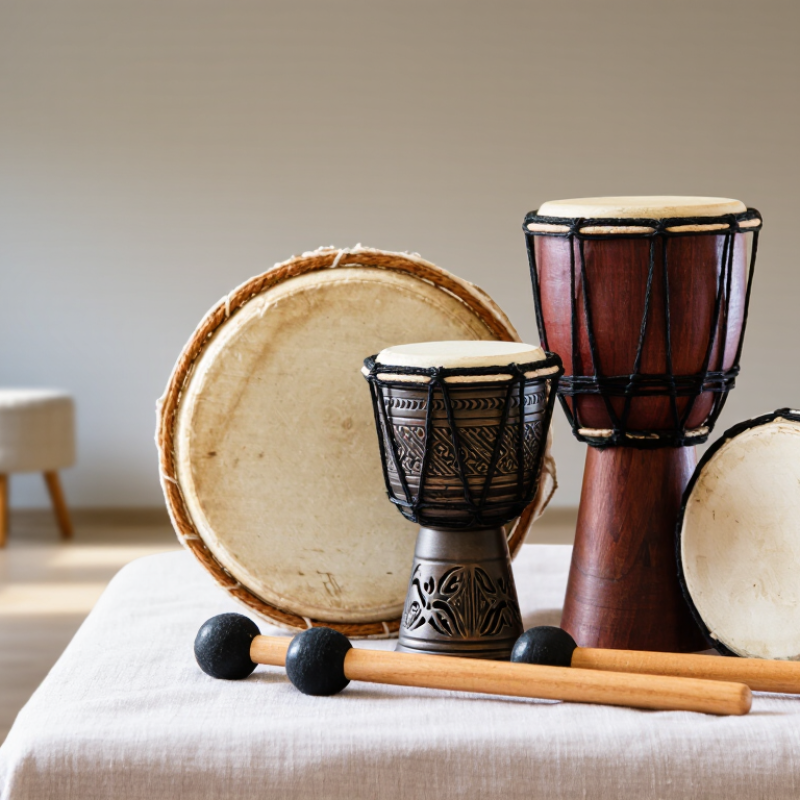
What Defines a Meditation Drum
A meditation drum is a percussion instrument chosen for its steady, resonant sound and its ability to support quiet attention. The term describes a use, not one precise shape. Some drums have a shallow frame and a stretched hide or synthetic head; others use a solid metal body that rings when tapped. Their shared feature is a clear, sustained tone that can mark a breathing rhythm or signal a transition in practice.
The sound comes from vibration. A hand or soft mallet strikes the surface, making it move and set nearby air in motion. The drum’s size, material, tension, and shape affect its pitch and how long the note lingers. A gentle strike may produce a low, warm pulse. A firmer one can sound brighter and carry farther. Try listening from a short distance. Notice the attack, the fading resonance, and the silence after it.
That silence matters. In a small room, a drum may feel grounding; in a reverberant space, the same note can seem overwhelming. There is no single correct tone or technique. Even an uneven rhythm can be useful, though it may distract some listeners. Choosing a meditation drum is partly practical: consider volume, comfortable handling, and whether its sound helps you return to attention without demanding it.
Common Materials and Drum Designs
A meditation drum is usually a frame drum: a shallow wooden ring with a stretched head, played by hand or soft beater. Common frames use maple, birch, or other hardwoods; lightweight plywood and molded materials also appear in contemporary designs. The USDA Forest Products Laboratory’s Wood Handbook reports basic specific gravity values for many woods, a useful measure of density when comparing frame materials. Denser wood can make a frame feel more substantial, but it does not guarantee a better sound. Diameter, shell depth, head tension, and room acoustics all matter. A small drum may speak quickly, while a larger head often gives a lower, slower-feeling pulse.
Heads are commonly made from animal hide or synthetic film. Hide can respond sensitively to touch, but humidity may change its tension; synthetic heads tend to be more consistent across changing conditions. Neither is automatically superior. That point is easy to overlook. Some designs include a fixed head, while adjustable models use tuning hardware to alter tension. When testing one, listen for a clear tone at a gentle strike and check whether the rim feels comfortable against your hand. The USDA handbook also explains why wood properties vary with moisture and species, so a drum’s material label alone cannot predict its exact tone. A quiet room, a light touch, and a few minutes of listening tell you more.
How a Meditation Drum Produces Sound
A meditation drum produces sound when a hand or soft beater briefly pushes its stretched head inward. The head then vibrates back and forth, disturbing nearby air and creating pressure waves. The drum’s shell reinforces some frequencies and weakens others. Its size, head tension, material, and room all shape the result. A loose head often gives a lower, softer tone; a tighter head may sound brighter. The change can be subtle, but listeners can feel it in the palm.
Sound also travels through the room. The U.S. National Institute of Standards and Technology gives the speed of sound in air at 20°C as about 343 metres per second. Reflections from a wooden floor or bare wall can blur each beat, while curtains and cushions tend to absorb some sound. That is why the same drum may feel warm in a small, furnished room and sharp in a hall. Strike near the centre for a rounder note; move toward the edge for more overtones. Not every beat will sound even, and that imperfection can be useful: it invites attention rather than demanding a perfect rhythm.
How a Meditation Drum Produces Sound
A strike makes the drumhead vibrate, pushing the surrounding air into sound waves. The waveform below is an illustrative, normalized example: its oscillations represent vibration, while the gradually shrinking peaks show how the sound typically decays over time.
Ways Drums Support Meditation Practice
A meditation drum gives attention a steady, audible point to return to. Its low pulse can mark the start and end of a session, while the pauses between strikes invite slower breathing. Keep the rhythm gentle: a small hand drum, soft mallet, and quiet room are enough. Notice the sound fading, rather than trying to force the mind blank. That can be harder than it sounds.
Drums may also make group practice easier to follow. A measured beat offers newcomers a shared pace, and a final strike can signal a transition back to silence. The sound is not a treatment, and responses vary; people sensitive to noise may prefer a softer instrument or no drum at all. The National Center for Complementary and Integrative Health reported that meditation use among U.S. adults rose from 4.1% in 2012 to 14.2% in 2017, based on National Health Interview Survey data. Those figures describe meditation broadly, not drum use. That distinction matters. Try three slow strikes, then sit quietly for a minute and notice whether the rhythm steadies attention or becomes another distraction.
Types of Meditation Drums and Their Uses
Meditation drums create steady sound that can support breathing, attention, or a quiet transition into practice. Common types include frame drums, tongue drums, and ocean drums. A frame drum produces a warm, low pulse when tapped with the fingers or a soft beater. Its flexible rhythm suits guided breathing and group meditation. Tongue drums have tuned metal tongues; each note rings clearly, making simple, repeating patterns easy to play. Ocean drums contain small beads that roll across an internal surface, creating a wave-like sound for relaxation or visualization. The sound is evocative, not the sea itself.
These uses are practical choices, not proven treatments. The US National Center for Complementary and Integrative Health’s 2017 National Health Interview Survey reported that 14.2% of US adults had used meditation in the previous year. That figure describes meditation use, not drum effectiveness. Evidence for specific sound-based benefits remains limited, so treat a drum as a focus aid rather than a medical intervention. Even a gentle beat can feel distracting. That matters.
Tips: Try a frame drum for a slow pulse, or a tongue drum for distinct notes. Keep the volume comfortable, strike lightly, and leave pauses between sounds. For an ocean drum, tilt it slowly so the beads move like a soft wash. Notice which sound helps you settle; personal preference varies, and it may change from day to day.