Why Choose a Pneumatic Conveyor?
Why choose a Pneumatic Conveyor? For many facilities, the answer begins with the material and the route. A closed pipeline can move powders or granules between process areas while keeping the product out of open-air transfer points. The layout may pass above equipment or through a crowded production space. That can save floor space. It can also reduce dust release when the system is properly designed and maintained. Small details matter: particle size, moisture, fragility, throughput, bends, and transfer distance all affect performance.
David Mills, author of Pneumatic Conveying Design Guide, is a recognized specialist in this field. A useful paraphrase of his design guidance is: “Design the conveying system around the material’s behavior.” This is a paraphrase, not a verified verbatim quotation. The distinction matters. A reliable selection should draw on material tests, operating data, and qualified engineering review—not a slogan or a supplier’s headline claim. A Pneumatic Conveyor may suit a plant that needs enclosed transfer, flexible routing, or fewer manual handling steps. But it is not automatically the best choice. Air demand, energy use, wear, noise, and product degradation deserve close attention. There are trade-offs. Even a well-sized line can disappoint if its feed rate varies or its filters are neglected. The sections ahead examine system types, benefits, limitations, and selection questions. The goal is practical: help readers judge whether pneumatic conveying fits their material, facility, and process.
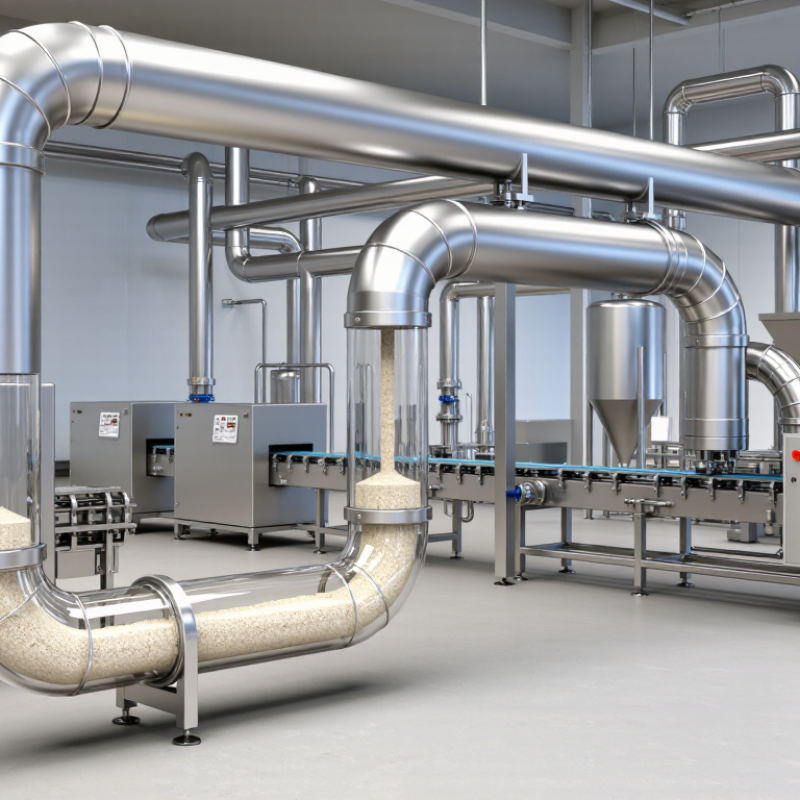
How Pneumatic Conveyors Transport Bulk Materials
A pneumatic conveyor moves bulk material by suspending it in a controlled stream of air. A blower or compressor supplies the airflow, while a feeder introduces powder or granules into the pipe. The air carries them through bends and along enclosed routes to a receiver, where a filter separates product from conveying air. A practical example is flour moving from a storage bin to a mixer without crossing an open floor.
Velocity depends on the material and system design. Klinzing and co-authors’ engineering reference, Pneumatic Conveying of Solids (2010), describes dilute-phase conveying at roughly 15–30 metres per second, while dense-phase systems commonly operate around 3–10 metres per second. These are broad design ranges, not guaranteed settings. Fragile particles may break at high speeds; dense flow can reduce damage but requires careful control. That matters.
In operation, engineers check particle size, moisture, bulk density, pipe length, and bends before selecting airflow and feeder settings. A clear pipe route helps, but elbows still create wear and pressure losses. Filters also need monitoring as dust builds up. One detail is easy to underestimate: material behavior changes with humidity and handling. A design that works well on a dry test sample may need adjustment on a busy production line.
Types and Core Components of Pneumatic Conveying Systems
Pneumatic Conveying Systems move dry bulk materials through enclosed pipes using air or another gas. Their design depends on particle size, moisture, fragility, distance, and required throughput. Two common modes are dilute-phase and dense-phase conveying. In dilute phase, particles travel suspended at higher air speeds, making it suitable for many free-flowing powders and granules. Dense phase moves material in slower, concentrated plugs. It can reduce particle damage, but requires careful pressure control. Neither mode fits every product. Vacuum systems draw material toward a receiver, while pressure systems push it from a feed point to one or more destinations.
A typical system includes a blower or compressor, a feeder, conveying pipe, bends, a receiving vessel, and filtration. Rotary valves or screw feeders meter solids into the airflow. Poor sealing can waste air and destabilize flow. At the receiving end, a filter separates dust from conveying air, while a level sensor can help prevent overfilling. Bends deserve attention. Sharp turns may increase wear, especially with abrasive particles, so include them in routine inspections. Keep access practical. Controls can monitor pressure, airflow, and alarms, but readings are useful only when operators know normal operating conditions.
Selection should start with material data or conveying trials, not a catalog capacity alone. Humidity can make a seemingly free-flowing powder cling to pipe walls. In practice, small changes in feed rate can affect system stability, a detail that is easy to underestimate. Component choices also need to account for cleaning and inspection, since a system that is difficult to access may be harder to maintain reliably.
Why Choose a Pneumatic Conveyor? – Types and Core Components
Pneumatic conveyors move bulk materials through enclosed pipelines using air. The chart compares indicative conveying-air velocity ranges for dilute-phase and dense-phase systems; actual operating conditions depend on the material and system design.
Types and components: Systems may use positive-pressure or vacuum conveying, and operate in dilute or dense phase. Core components commonly include an air mover, material feeder, conveying pipeline, receiver or separator, filter, and controls.
Key Advantages for Industrial Material Handling
Why Choose a Pneumatic Conveyor?
Key Advantages for Industrial Material Handling
Pneumatic conveyors move powders and granules through enclosed pipes using air or another conveying gas. For a plant handling flour, plastic pellets, or mineral fines, they can replace open belts and repeated manual transfers. Dust stays contained. Fewer exposed transfer points can support cleaner floors and more consistent housekeeping, though seals and filters still need routine checks.
A major advantage is routing flexibility. Pipes can pass above equipment, around columns, and between floors where a straight conveyor might not fit. This matters in crowded facilities, especially when a process line changes. Diverter valves can also feed several silos or machines, reducing forklift trips and intermediate storage. Less handling helps.
Performance depends on material behavior, not just distance. Fine, moist powders may bridge or build up, while abrasive granules can wear elbows faster. Before selecting dilute- or dense-phase conveying, engineers assess particle size, bulk density, moisture, throughput, pipe bends, and required air velocity. That assessment is easy to rush. A poorly matched system can use excess energy or damage products. Operators should monitor pressure and inspect filters and bends; a small blockage can interrupt an entire production shift.
Materials and Applications Suited to Pneumatic Conveying
Why Choose a Pneumatic Conveyor? Materials and Applications Suited to Pneumatic Conveying
Pneumatic conveying suits dry, relatively free-flowing materials that can travel through enclosed pipes: flour, plastic pellets, cement, and some food ingredients. A line can cross overhead spaces and reach sealed bins, reducing transfer points where dust escapes. It is especially useful when a plant needs flexible routing between several pickup and delivery locations. Fine powders need care. They may cake, abrade equipment, or separate from coarser particles during transport.
Material behavior matters more than a generic capacity figure. Particle size, moisture, bulk density, and fragility influence whether dilute-phase or dense-phase conveying is appropriate. A trial with the actual material can reveal issues a catalog estimate misses. Small details count: a damp powder may cling to a pipe bend, while brittle pellets can arrive chipped. Not every powder travels well.
Energy deserves equal attention. The U.S. Department of Energy’s 2016 Improving Compressed Air System Performance sourcebook reports that compressed air can account for about 10% of industrial electricity use, and up to 30% in some plants. That is not a conveyor-specific figure, but it is a reason to assess air demand, leaks, and duty cycle before installation. I would be cautious about choosing a pneumatic system solely for its clean, enclosed appearance; a short mechanical conveyor may use less energy for a steady, single-route transfer.
Factors to Consider When Selecting a Pneumatic Conveyor
Why Choose a Pneumatic Conveyor?
Factors to Consider When Selecting a Pneumatic Conveyor
A pneumatic conveyor moves powders or granules through enclosed pipes, helping reduce spills and route material around obstacles. Choose equipment based on the material, not just the target capacity. Check bulk density, particle size, moisture, temperature, and fragility. Damp mineral fines behave differently from dry flour. Capacity estimates can look sound on paper yet fail when material bridges at the hopper outlet.
Match route length, elevation, bends, and throughput to the conveying method. Also assess air supply, pressure loss, filtration, receiver size, noise, and cleaning access. Long routes and sharp elbows may increase wear and energy use. The U.S. Department of Energy’s Improving Compressed Air System Performance sourcebook reports that compressed air accounts for about 10% of industrial electricity use. This figure covers industrial applications broadly, not conveyor power alone, but it makes energy assessment worthwhile. Request a trial using representative material and operating conditions.
Tips: Test a real sample. Measure its moisture and flow behavior, then check whether bends cause breakage or buildup. Revisit the design assumptions; they may be wrong.