
Why Choose an L6e Quadricycle for Global Buyers?
Why choose an L6e Quadricycle for global buyers? The answer begins with proportion, not fashion. These compact vehicles suit short urban journeys, narrow streets, and limited parking spaces. Their small footprint can reduce driving stress in crowded districts. Some models also use electric power, supporting quieter travel and simpler daily operation.
Professor Peter Wells, an automotive-industry researcher at Cardiff Business School, has emphasized a closely related principle: “Vehicle design should reflect the journey it serves, rather than imitate a conventional car.” This idea gives the L6e Quadricycle practical meaning. It is not a smaller family car. It is a purpose-built mobility option for commuting, errands, campuses, and controlled city routes. Buyers should examine seating, battery range, charging access, weather protection, and after-sales support before choosing one.
Details matter.
A global buyer may value a narrow body in an old European street. Another may need stronger cabin insulation in a colder region. Electric versions can feel smooth at low speeds, yet charging reliability remains a real concern. Performance expectations must stay realistic. An L6e Quadricycle is generally designed for light urban mobility, not long-distance travel or high-speed highways.
The category still has weaknesses. Storage can be limited, and local registration requirements may differ. That uncertainty deserves honest attention. However, when the vehicle matches the journey, its modest size becomes an advantage. It can offer accessible, efficient, and less intimidating mobility for many daily trips. The best choice depends on evidence, not excitement.
Definition and Core Features of an L6e Quadricycle
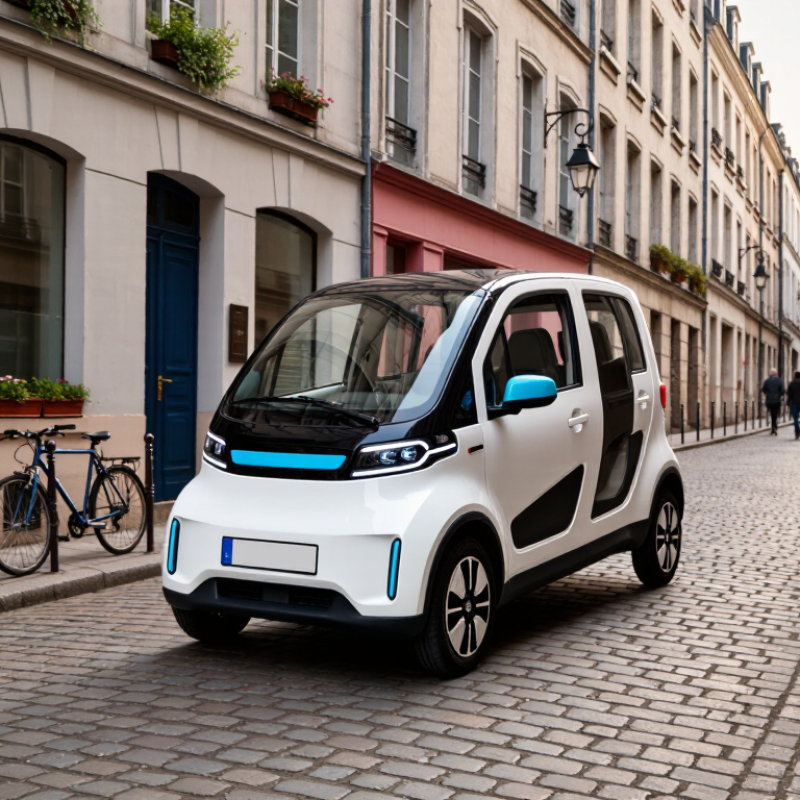
An L6e quadricycle is a lightweight four-wheeled vehicle designed for short-distance mobility. In many European regulatory frameworks, it has a maximum speed of 45 km/h. Its rated power commonly stays within 6 kW. The permitted mass is also limited, although exact thresholds can vary by vehicle class and jurisdiction. Always confirm current local requirements before importing or registering one.
Small, but not toy-like. A typical L6e model may include two seats, a compact cabin, basic safety equipment, and electric or conventional low-power propulsion. Its narrow body can fit older streets and crowded parking areas. During a practical inspection, buyers should check visibility, braking response, turning space, battery condition, and weather protection. A clean specification sheet cannot reveal every daily weakness.
For global buyers, the category offers lower energy use and simpler urban operation. However, comfort, charging access, road quality, and climate affect its real value. A vehicle suitable for a mild coastal town may struggle in heavy rain or steep terrain. That matters. Buyers should review certification documents, service support, spare-part availability, and user requirements before purchase. L6e classification is not automatically identical worldwide, so professional verification remains essential.
Why Choose an L6e Quadricycle for Global Buyers? - Definition and Core Features of an L6e Quadricycle
| Data Dimension | Definition or Requirement | Practical Meaning for Global Buyers |
|---|---|---|
| Vehicle Category | L6e light quadricycle under the European Union vehicle-type approval framework | An L6e is a four-wheeled motor vehicle positioned between a powered two-wheeler and a conventional passenger car. Exact registration and driving rules may differ outside the European Union. |
| Maximum Design Speed | Not more than 45 km/h | The speed limit is suitable for urban streets, residential areas, campuses, resorts and short-distance commuting. It may restrict access to motorways or high-speed roads, depending on local law. |
| Maximum Mass | Unladen mass must not exceed 425 kg, excluding the mass of traction batteries for electric vehicles | The low mass can support efficient energy use and easier low-speed handling. Buyers should confirm the certified mass, payload and battery-treatment rules for the target market. |
| Maximum Continuous Rated Power | Not more than 6 kW for electric powertrains and other applicable propulsion systems | The power ceiling is designed for light urban mobility rather than high-speed or long-distance performance. Actual acceleration depends on vehicle mass, gearing, battery output and road conditions. |
| Internal-Combustion Engine Limit | For positive-ignition engines, engine capacity is generally limited to 50 cm³ under the L6e definition | This supports the classification as a light quadricycle. Other engine types may be subject to different technical limits within the applicable approval rules. |
| Electric Powertrain Option | Battery-electric propulsion is commonly used, but the L6e category itself does not require a specific energy-storage technology | Electric versions can provide quiet operation, zero tailpipe emissions and simplified urban maintenance. Total environmental impact still depends on electricity generation, battery production and vehicle usage. |
| Driving Environment | Best suited to urban and low-speed road networks | A compact footprint and a 45 km/h speed ceiling make the vehicle practical for city errands, commuting, delivery routes and shared-mobility services where full-size car performance is unnecessary. |
| Energy Consumption | Usually lower than that of a full-size passenger car because of the vehicle's lower mass, power and speed | Actual electricity or fuel consumption varies with battery size, weather, payload, traffic, driving style, tyre pressure and road gradient. Buyers should compare certified test data with real operating conditions. |
| Charging Consideration | Electric models require compatibility between the vehicle, charger, plug type, voltage and local electrical standards | Before importing, confirm the charging connector, onboard charger rating, charging time, household-voltage compatibility and availability of replacement charging equipment. |
| Vehicle Dimensions | No single universal length, width or height is prescribed for every L6e model | Dimensions are model-specific. Verify overall length, width, height, turning circle, door clearance and parking-space requirements before selecting a vehicle for a particular city or facility. |
| Occupant Capacity | Occupant layout is model-specific and may include one or more seating positions, subject to the approved vehicle design | Check the certified number of seats, seat-belt configuration, interior dimensions, luggage capacity and accessibility requirements for the intended use. |
| Safety Equipment | Required equipment depends on the applicable type-approval and national registration rules | Review braking systems, lighting, mirrors, seat belts, occupant protection, tyres, battery safety and any local requirements before purchase or importation. Safety equipment can differ between markets. |
| Driving Licence | Licence requirements are jurisdiction-specific | Some jurisdictions recognize an L6e-related light-vehicle or moped licence category, while others require a regular car licence or impose minimum-age rules. Confirm local requirements before delivery. |
| Registration and Type Approval | A vehicle approved for one market is not automatically approved for every other market | Global buyers should verify conformity documents, VIN information, certificates, customs classification, lighting requirements, emissions rules and registration procedures in the destination country. |
| Typical Use Cases | Short-distance personal transport, campus mobility, tourism, hotel operations, local delivery and urban fleet services | The category is attractive where low operating speed, compact parking and lower energy demand are more important than highway capability, large cargo volume or long-range travel. |
| Key Buying Checks | Confirm legal classification, certified specifications, after-sales support and replacement-part availability | A reliable purchase decision should include checks on warranty coverage, battery warranty, service network, spare parts, software support, insurance, import taxes and total cost of ownership. |
Regulatory note: The technical limits shown above summarize the European Union L6e light-quadricycle classification. National rules, approval procedures, licensing requirements, safety obligations and road access rules may vary by destination market. Always verify the current requirements with the relevant local authority.