7 Best Electric Valves for Global Buyers?
Choosing among the 7 Best Electric Valves for Global Buyers? requires more than comparing prices. Electric valves now support water treatment, HVAC systems, food processing, energy facilities, and automated manufacturing lines. Their real value appears at the pipeline, where accurate movement prevents leaks, pressure shocks, and costly downtime.
Grand View Research reports continued expansion in the global industrial valves market, driven by automation, infrastructure renewal, and stricter process-control requirements. Fortune Business Insights also identifies smart manufacturing and digital monitoring as important growth factors. These reports suggest strong demand, but market growth does not guarantee product suitability. A valve designed for clean water may fail quickly in abrasive slurry, corrosive chemicals, or high-temperature steam.
Béla G. Lipták, editor of the Instrument Engineers’ Handbook, wrote, “The control valve is the final control element in most process control loops.” That principle remains practical today. Buyers should examine actuator torque, voltage compatibility, enclosure protection, response time, sealing materials, manual override design, and regional certification needs. A small detail matters. A 24-volt actuator can simplify factory integration, while an incorrect IP rating can expose electronics to moisture. This guide compares seven electric valves through those real purchasing conditions. The ranking is useful, not absolute. Application data, maintenance skill, and supplier support can change the best choice. Some specifications also look clearer than they really are. สำนักเลขานุการองค์กร need verification.
What Are Electric Valves and How Do They Work?
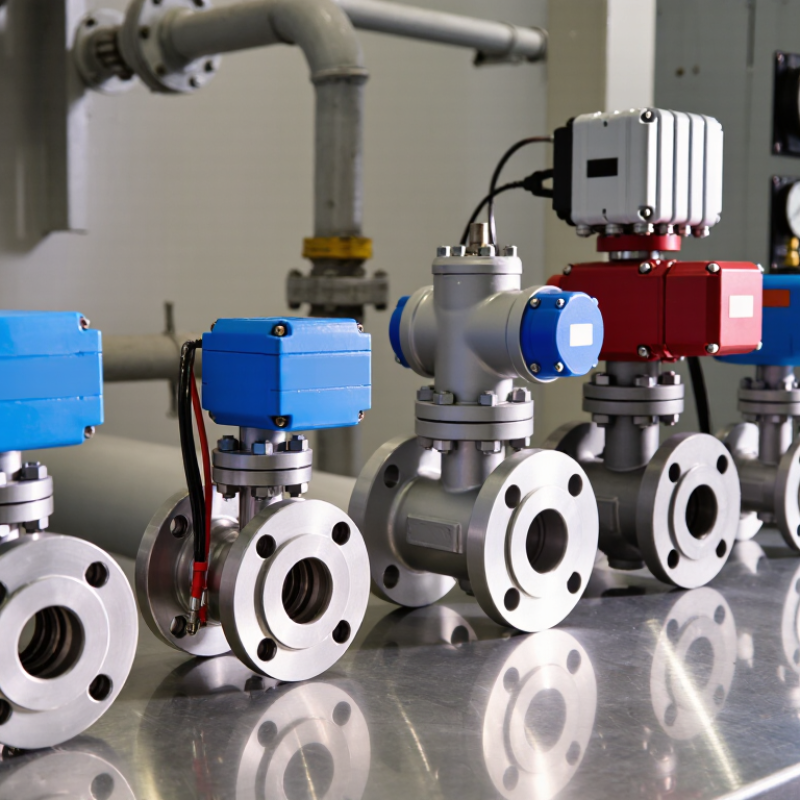
Electric valves control fluid flow through an electrically driven actuator. A control signal energizes a motor, which turns a stem, gear, or rotary disc. Some designs move linearly instead. The valve then opens, closes, or holds a selected position.
The operating sequence is simple, but the details matter. A controller sends power to the actuator, while limit switches confirm the end position. More advanced units use position feedback for gradual flow adjustment. For example, a valve on a cooling-water pipe may open to 40% when temperature rises. A sealed enclosure protects electrical parts from dust and moisture.
In practical installations, checking torque is essential. A valve that looks suitable may stall under pressure, especially when deposits build around the seat. Voltage, connection type, response time, and failure position also require careful review. Normally closed operation can reduce risk during power loss, but it is not ideal for every process. Manual override is useful during testing or maintenance.
Installation experience often reveals small problems. Cable glands may admit water, and incorrect wiring can reverse the movement. That mistake is easy to miss. I would also question fixed opening times, because pipe size and fluid viscosity change performance. Testing the valve under realistic pressure gives more reliable results than bench testing alone.
How to Choose Electric Valves for Different Industrial Needs
Choosing the right electric valve starts with the process, not the purchase list.
Ball valves suit fast, tight shutoff.
Butterfly valves reduce weight in large water lines.
Globe valves offer better throttling.
Gate valves work best when fully open or closed.
Diaphragm valves protect sensitive fluids.
Pinch valves handle abrasive slurries.
Check valves prevent reverse flow without continuous actuation.
Each option behaves differently under pressure, temperature, and cycling demands.
MarketsandMarkets estimates the industrial valve market could grow from about 78.6 billion dollars in 2024 to 103.3 billion dollars by 2029. That growth reflects wider automation, but automation alone does not guarantee reliability. For water projects, the UN World Water Development Report 2024 notes that agriculture represents roughly 70% of global freshwater withdrawals. This supports corrosion-resistant materials, accurate position feedback, and dependable sealing in irrigation systems. Chemical plants need compatibility charts, not guesswork. Food processors should examine cleanability and dead-leg risks.
Check the actuator’s duty cycle and available power supply.
Confirm the required fail-open or fail-closed position. Then verify enclosure protection, manual override, response time, and control-signal compatibility. IEC 60529 ratings help compare protection against dust and water, although site conditions still matter. I have seen oversized actuators waste energy and undersized ones stall during startup. That mistake is easy to repeat. A lower purchase price may hide higher maintenance, leakage, or downtime costs. Pilot testing remains sensible, especially with viscous, abrasive, or high-temperature media.
Seven Electric Valve Types Suitable for Global Buyers
Global buyers need more than voltage compatibility when selecting electric valves. Seven electric valve types cover common process needs: solenoid, motorized ball, butterfly, globe, gate, diaphragm, and electric control valves. Each behaves differently. Solenoid valves suit rapid on-off service. Motorized ball valves provide tight shutoff with low operating torque. Butterfly valves save space in larger pipelines. Globe valves offer accurate throttling, but pressure loss can be significant. Gate valves work well for isolation, not frequent adjustment.
Diaphragm valves help protect clean or corrosive media from internal metal contact. Electric control valves continuously regulate flow, pressure, or temperature through a signal. Their sizing requires real operating data, not only catalog figures. Pipe condition changes actual performance. A cheaper valve may look attractive, yet that judgment is often incomplete. Check actuator duty cycles, enclosure protection, fail position, connection standards, and available replacement parts. Confirm the local power supply before ordering. Small mismatches can stop an entire line.
Tips: Request pressure, temperature, media, flow range, and pipe-size data from the installer. Compare tested leakage ratings and service records, not marketing language alone. For outdoor use, inspect corrosion protection and cable-entry design. Ask whether manual override is available during power loss. If the application is unusual, obtain a written engineering review. Even experienced teams sometimes overlook installation direction or maintenance clearance. Leave room for access.
Key Specifications for Comparing Electric Valve Performance
7 Best Electric Valves for Global Buyers?
Comparing electric valves starts with the application, not the catalog photo. Ball valves suit quick isolation, while butterfly valves reduce weight in larger pipelines. Globe valves provide better throttling control. Gate valves work well when flow stays fully open or closed. Diaphragm valves protect sensitive fluids from metal contact. Pinch valves handle abrasive media. Electrically actuated check valves support controlled one-way flow, but they need careful response testing.
Check torque or thrust against the valve’s real operating load. Include a safety margin, but avoid oversized actuators that waste power. Review flow coefficient, pressure rating, temperature range, and body materials together. A stainless body may resist corrosion, yet the seal could fail first. Small details matter. Measure the pipeline, not only the valve.
Electrical specifications deserve equal attention. Confirm supply voltage, current draw, duty cycle, enclosure rating, and manual override access. For outdoor installations, moisture protection and cable entry design can decide service life. Modulating applications need feedback accuracy, response time, and positioning resolution. On-off service may need less complexity. I have seen projects choose fast actuators, then struggle with water hammer. That mistake is easy to repeat. Check fail-open or fail-closed behavior, signal compatibility, maintenance access, and regional certification requirements before purchase. A clean comparison sheet helps, but field conditions still deserve the final word.