
How to Choose Actuated Valves in 2026?
Choosing actuated valves in 2026 requires more than comparing catalog prices. The correct choice affects safety, energy use, maintenance, and process continuity. A valve may operate perfectly in a laboratory, yet fail prematurely beside hot pipes, abrasive fluids, or repeated pressure shocks. Field experience matters.
Industry forecasts show continued demand for automation. MarketsandMarkets has projected the global industrial valves market to grow steadily through this decade, supported by water treatment, energy, chemical processing, and manufacturing investments. Grand View Research also identifies automation and digital monitoring as important growth drivers for control valves. However, published estimates differ because researchers use different product definitions and regional assumptions. Treat forecasts as guidance, not certainty.
Start with the process conditions. Record fluid type, temperature, pressure, flow rate, pipe size, and required shutoff class. Then match the actuator to the duty cycle. Electric actuators suit precise positioning and sites without instrument air. Pneumatic actuators often deliver fast, reliable movement in hazardous or high-cycle environments. Hydraulic systems may serve very large valves, but they require careful power-unit maintenance.
Do not ignore the installation environment. Dust, moisture, corrosion, freezing temperatures, and limited access can change the specification. Check enclosure ratings, manual override arrangements, fail-safe requirements, feedback signals, and communication protocols. IEC 60529 ingress protection ratings and relevant IEC 61508 safety principles provide useful reference points, but project standards still require professional review.
A neat checklist can still mislead. Total cost includes wiring, air preparation, calibration, spare parts, downtime, and technician training. Reliable selection combines manufacturer data, independent testing, site measurements, and documented maintenance experience. In 2026, the best actuated valves will not simply be the most connected; they will be the ones that remain predictable, serviceable, and safe under real operating conditions.
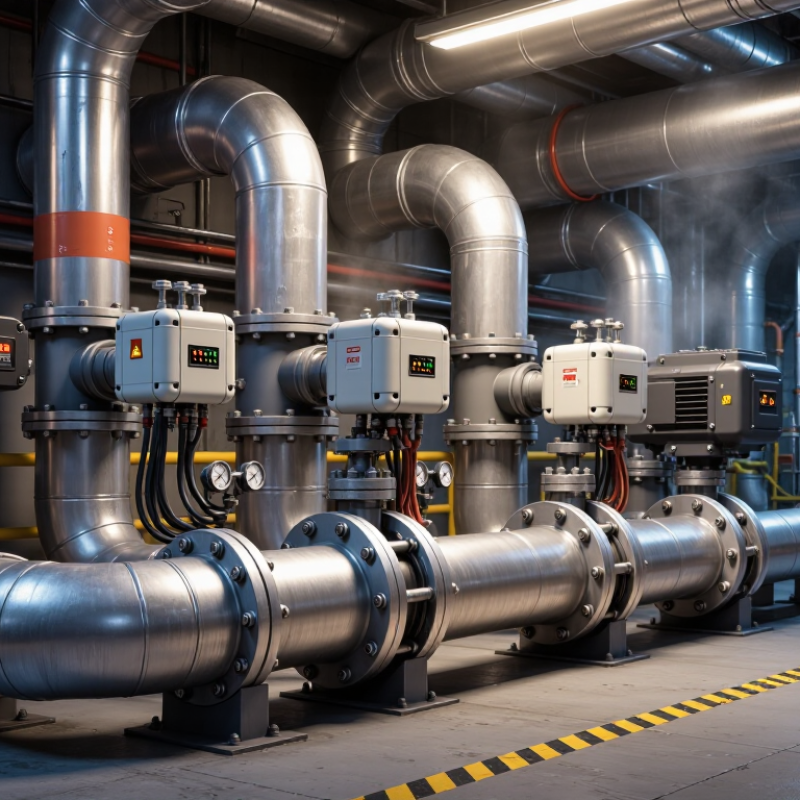
Define the Process, Media, and Performance Requirements
Choosing an actuated valve in 2026 starts with the process, not the actuator. Record flow range, pressure drop, temperature, cycle frequency, and fail position. Then describe the media precisely: abrasive slurry, wet gas, oxygen service, solvent, or clean water. Small details matter. A trace contaminant can change elastomer compatibility, torque, and maintenance intervals. The U.S. Department of Energy’s Industrial Decarbonization Roadmap reports that process heating consumes about 51% of U.S. industrial energy. Thermal duty deserves careful attention.
For performance, convert operating needs into testable numbers. Specify shutoff class, leakage limit, response time, positioning accuracy, allowable noise, and expected cycles. Size the valve at minimum, normal, and maximum flows, not just line diameter. IEC 60534 sizing methods support capacity and cavitation-risk calculations. ISO 5211 defines actuator-to-valve interface dimensions, while ISO 15848 addresses fugitive-emission performance. The International Energy Agency’s Energy Technology Perspectives 2024 projects clean-energy technology markets above two trillion dollars by 2035 under stated policies. Reliable valve control will support that expansion.
In practice, request a complete duty cycle, not a brochure rating. Show me the cold start. Measure media temperature at the valve, not upstream. Check actuator torque after deposits, long idle periods, and emergency operation. I still see teams choosing oversized valves for comfort. That shortcut can reduce controllability and increase wear. The uncomfortable part is that published data often uses clean laboratory media. Validate representative samples through documented acceptance tests and independent inspection.
| Process Requirement | Key Selection Question | Typical Valve Solution | Suitable Media | Typical Pressure Range | Typical Temperature Range | Recommended Actuator | Performance Considerations |
|---|---|---|---|---|---|---|---|
| On/off isolation | Is the valve primarily required to start or stop flow rather than regulate it? | Ball valve or butterfly valve | Water, air, gases, hydrocarbons, and many compatible chemicals | Up to approximately 100 bar | Approximately −40°C to 200°C | Electric or pneumatic quarter-turn actuator | Ball valves generally provide tight shutoff; butterfly valves are lighter and more compact at larger nominal sizes. |
| Flow throttling | Must the valve continuously modulate flow, pressure, or temperature? | Globe valve or characterized rotary valve | Water, steam, gases, and clean process liquids | Up to approximately 250 bar | Approximately −20°C to 550°C | Electric or pneumatic modulating actuator with positioner | Check the required flow coefficient, installed flow characteristic, rangeability, and allowable pressure drop. |
| Large-diameter water service | Is low weight, compact installation, and low operating torque important? | Butterfly valve | Cooling water, chilled water, treated water, seawater, and air | Commonly up to 25 bar | Approximately −20°C to 150°C | Electric, pneumatic, or hydraulic quarter-turn actuator | Confirm disc clearance, liner compatibility, cavitation risk, and the torque required at maximum differential pressure. |
| High-integrity gas shutoff | Is low leakage and rapid isolation required for flammable or hazardous gas? | Full-port ball valve | Natural gas, nitrogen, instrument air, hydrogen blends, and compatible hydrocarbons | Approximately 16–420 bar | Approximately −46°C to 200°C | Spring-return pneumatic actuator or electric actuator with emergency power | Specify the required leakage class, fire-safe design where applicable, anti-static provisions, and fail position. |
| Steam service | Will the valve operate with high temperature, thermal cycling, or condensate? | Globe valve, gate valve, or high-temperature ball valve | Saturated steam, superheated steam, boiler feedwater, and condensate | Approximately 10–250 bar | Approximately 180°C–550°C | Electric or pneumatic actuator with high-temperature accessories | Use suitable body, trim, packing, and gasket materials; evaluate thermal expansion and pressure-drop losses. |
| Abrasive or solids-laden media | Does the medium contain suspended solids, slurry, powder, or fibrous material? | Pinch valve, slurry knife-gate valve, or lined ball valve | Mineral slurry, wastewater sludge, pulp stock, powders, and abrasive mixtures | Commonly up to 25 bar | Approximately −20°C to 150°C | Pneumatic or electric actuator sized for high breakaway torque | Evaluate abrasion rate, particle size, solids concentration, dead zones, erosion, and maintenance access. |
| Corrosive chemicals | Are the process fluid and concentration compatible with all wetted materials? | Diaphragm valve, lined butterfly valve, lined ball valve, or alloy valve | Acids, alkalis, oxidizers, brines, and aggressive chemical solutions | Commonly up to 25 bar | Approximately −20°C to 180°C | Pneumatic or electric actuator with corrosion-resistant accessories | Verify body lining, diaphragm or seat material, shaft sealing, permeation resistance, and chemical compatibility at operating concentration. |
| Hygienic processing | Must the system support clean-in-place, sterilization, and low-contamination operation? | Sanitary diaphragm valve or hygienic butterfly valve | Food, beverage, dairy, biotechnology, and pharmaceutical fluids | Commonly up to 16 bar | Approximately 0°C to 150°C | Pneumatic actuator with hygienic feedback sensors | Specify surface finish, drainability, dead-leg limits, elastomer compatibility, and cleaning or sterilization temperature. |
| Emergency shutdown | Must the valve move to a safe position automatically after loss of power or control signal? | Quarter-turn ball valve or butterfly valve designed for shutdown duty | Hydrocarbons, toxic gases, process liquids, and utility gases | Application-dependent; commonly up to 420 bar | Application-dependent; approximately −46°C to 200°C | Spring-return pneumatic actuator with solenoid valve and partial-stroke testing | Define safe failure position, closing time, shutdown class, diagnostic coverage, and required proof-test interval. |
| Remote automation | Will the valve be integrated into a PLC, DCS, SCADA, or industrial network? | Any compatible valve with an intelligent actuator package | Selected according to the process and valve materials | Selected according to valve design | Selected according to actuator and enclosure rating | Electric actuator with digital control, position feedback, and network communication | Confirm voltage, duty cycle, enclosure protection, manual override, feedback accuracy, cybersecurity, and communication protocol. |
| Energy-efficient operation | Is minimizing air consumption, electrical demand, or pressure loss a priority? | Low-torque ball valve or optimized butterfly valve | Water, air, gases, and low-to-medium viscosity liquids | Commonly up to 40 bar | Approximately −20°C to 150°C | Electric actuator or properly sized pneumatic actuator | Compare total cost of ownership, actuator sizing, operating frequency, pressure drop, compressed-air use, and standby consumption. |
| Selection note: The pressure and temperature values are typical engineering ranges, not universal limits. Final sizing must be confirmed against the valve design, pressure class, materials, actuator torque, leakage requirement, applicable standards, and the actual process conditions. | |||||||
Related Posts
-

How to Choose the Right Actuated Valves for Your System?
-

Why Electric Valves are Essential for Efficient Fluid Control Systems
-

Understanding the Importance of Gate Valves in Modern Energy Infrastructure
-
How to Choose the Best Stainless Steel Ball Valves for Your Needs?
-
How to Choose the Best Automated Valves in 2026?
-

Understanding Gate Valves: The Key to Efficient Fluid Control in Industrial Applications